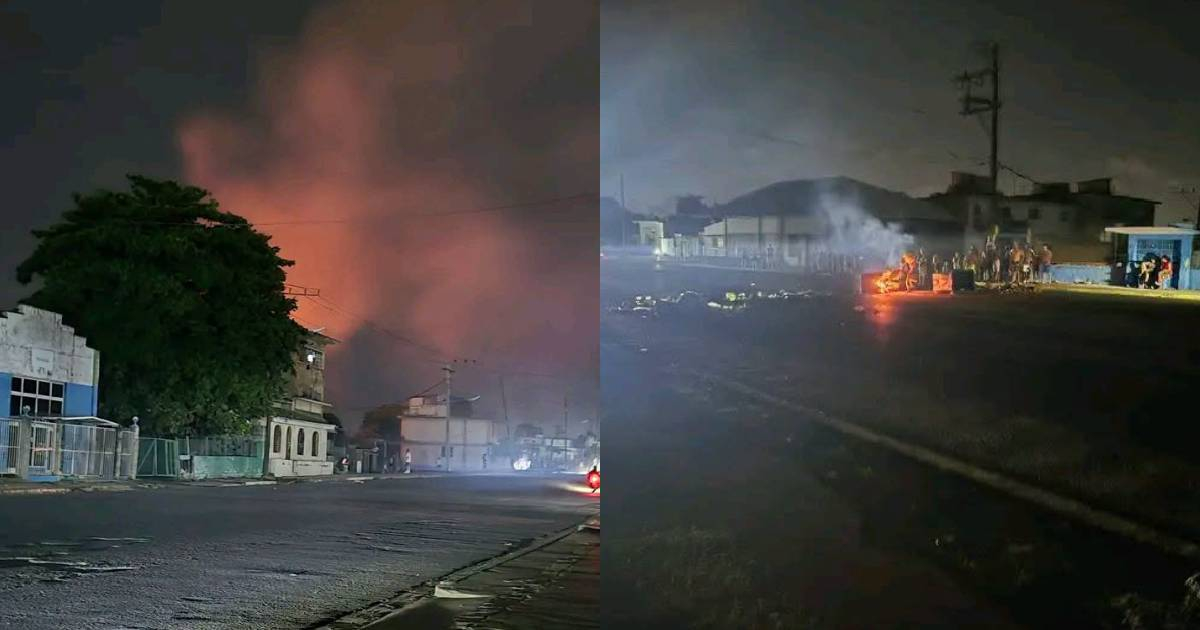
Residents of Dolores Park, in the Lawton neighborhood of Havana, took to the streets on Friday night to protest by banging pots and pans and using fire extinguishers to amplify the noise. This day of "cacerolazos" spread to multiple points in Havana, Santiago de Cuba, and Cienfuegos, just ahead of July 26th.
The protests coincided with a call from the Assembly of the Cuban Resistance, which urged for a national pot-banging event starting at 9:00 p.m. in response to the growing frustration over power outages that in some areas exceed 24 consecutive hours.
"Lawton has heated up, Dolores Park, strike of kettles and extinguishers to make it feel really high, turn on the current," posted on Facebook by user Yuriel Fernández.
In the comments of that same post, the author summarized the overall mood: "The people are tired, these blackouts are unbearable, the heat, the mosquitoes, etc.," in addition to sharing images of various expressions of discontent in the Cuban capital.
Another resident reported from La Cumbre, in San Miguel del Padrón: "We've been without electricity for over 40 hours."
The protests were not limited to Lawton. On the borders of San Agustín and La Coronela, also in Havana, what a witness described as a "tremendous pot-banging demonstration" was also recorded.
Residents of La Lisa also reported protest activity in that area of the capital during the night.
From Santiago de Cuba, the independent journalist Yosmany Mayeta Labrada published images of pot-banging protests taken in the complete darkness of a blackout.
Similarly, the first live broadcasts under the hashtag #CacerolazoNacional came from Cienfuegos.
The energy context fueling these mobilizations is the worst in the recent history of the island. This Thursday, the National Electric System nearly reached another record deficit, with 2,315 MW of impact at 9:10 PM, just shy of the historical maximum of 2,341 MW recorded on July 8.
Lawton has a long history of mobilizations in 2026. On July 18, there was a cacerolazo with burning trash on Dolores Street, and the following day, residents took to the streets with slogans of "We want light!" and "Freedom!".
This Friday, protests were also reported in other areas of the Diez de Octubre municipality. Women blocked the Calzada de Diez de Octubre in front of the Church of Jesus the Good Shepherd, and a demonstration erupted at the intersection of 10 de Octubre and Correa Street, documented in video by the Council for the Transition of Cuba.
The protests on July 24 carry additional political significance, as they take place on the eve of the date the regime celebrates as a national holiday for the assault on the Moncada Barracks in 1953, making the pot-banging a direct response to that official commemoration.
According to data from the Cuban Observatory of Human Rights, in the first half of 2026, there were 1,949 repressive actions and around 257 arbitrary detentions across the island, with 107 protests recorded just in June, 82 of which took place in Havana.
Related videos:
Filed under: