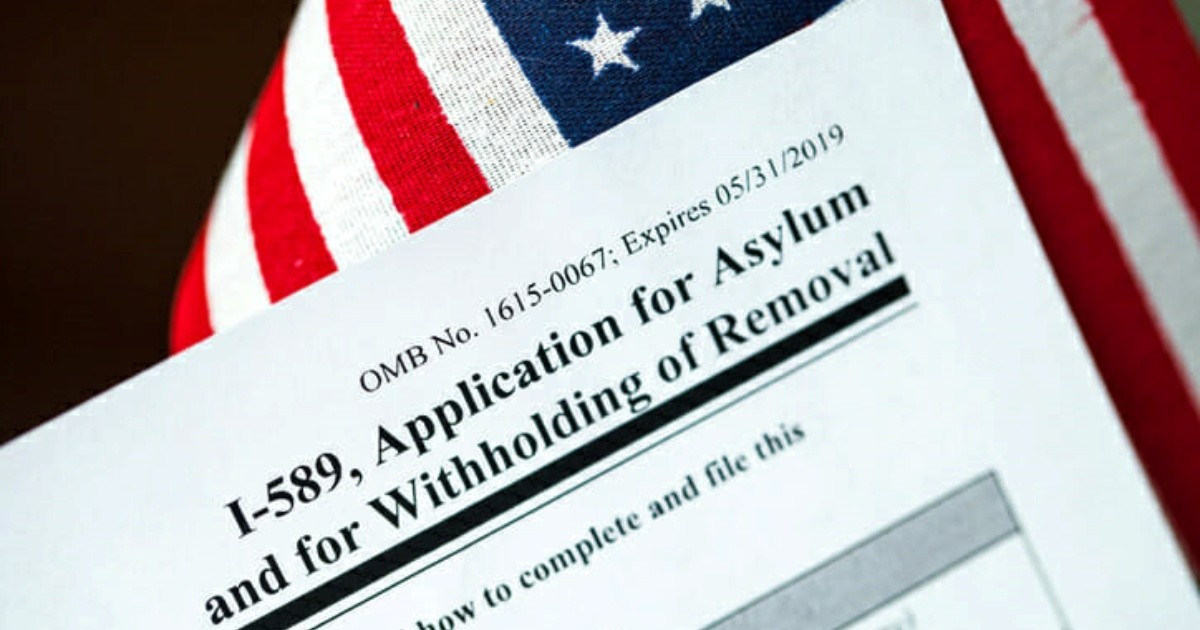
The U.S. Citizenship and Immigration Services (USCIS) announced this Monday a final interim rule that transforms the affirmative asylum application process.
From now on, the agency will be able to refer cases directly to immigration judges without the need to interview the applicant first.
The measure, published in the official statement from the Department of Homeland Security (DHS), takes effect immediately.
How did the system work before?
The asylum system in the United States operates through two distinct pathways.
The affirmative asylum is the process for individuals who are not in deportation proceedings and submit their application directly to USCIS.
The defensive asylum, on the other hand, pertains to those who are already facing removal proceedings before an immigration judge.
Under the previous scheme, USCIS was required to interview the applicant before deciding whether to approve the case or refer it to an immigration court.
That intermediate step served, in practice, as a second chance for the applicant to review.
What changes with the new rule?
The final provisional rule eliminates that mandatory interview: USCIS will be able to send certain affirmative asylum cases directly to immigration court without having taken a statement from the applicant.
The regulation also removes the regulatory references to the applicant's "right" to an interview with an asylum officer, as reported by Bloomberg Law.
According to DHS estimates, approximately 444,000 of the nearly 1.4 million pending affirmative asylum cases could be affected by this change.
USCIS will accept public comments for 60 days and will subsequently issue a final definitive rule.
The reasons put forward by the administration
The director of USCIS, Joseph Edlow, justified the measure with a straightforward argument:
“For too long, the asylum system has been exploited for purposes of delay and work authorization, not for legitimate claims of protection. The U.S. asylum system exists to protect individuals who genuinely fear persecution, and this rule will help ensure that resources are directed toward the timely resolution of those applications, rather than to those seeking to use the system as a legal loophole.”
The General Counsel of DHS, James Percival, was more emphatic:
"One of the biggest barriers to the effective enforcement of immigration law is the intentional delays caused by illegal aliens and the open borders lawyers representing them. My office works every day with the immigration components of DHS to improve efficiency and fulfill the president’s mandate. This rule will do exactly that."
The context: A system on the brink of collapse
The measure comes at a time when the asylum system is facing an unprecedented strain.
The total backlog -including cases before USCIS and immigration courts- reached nearly 4 million pending applications in April 2026, with immigration courts recording 3.3 million active cases in March of that year.
The asylum approval rate has plummeted since the beginning of the Trump administration.
Under the Biden administration, judges granted 48.1% of the applications in fiscal year 2023.
That figure plummeted to 8.8% in the first half of fiscal year 2026, the lowest level in over a decade.
Of more than 150,500 decisions made during that period, only 5,086 resulted in asylum grants, representing just 3.4% of the total.
This new rule adds to a series of measures that have reconfigured the immigration system:
-the imposition of an annual fee of $102 on applications pending for more than a year.
-the hiring of 120 new immigration judges trained in just three to four weeks.
-el historic ruling by the Supreme Court on June 25, 2026 that authorized the rejection of asylum seekers at the border with Mexico without processing their applications.
The researcher Andrew R. Arthur, from the Center for Immigration Studies, predicted that the trend will continue:
"It is to be expected that asylum denials will increase and grants will decrease, both in actual numbers and as a percentage of total decisions, at least while Trump is president."
Related videos:
Filed under: