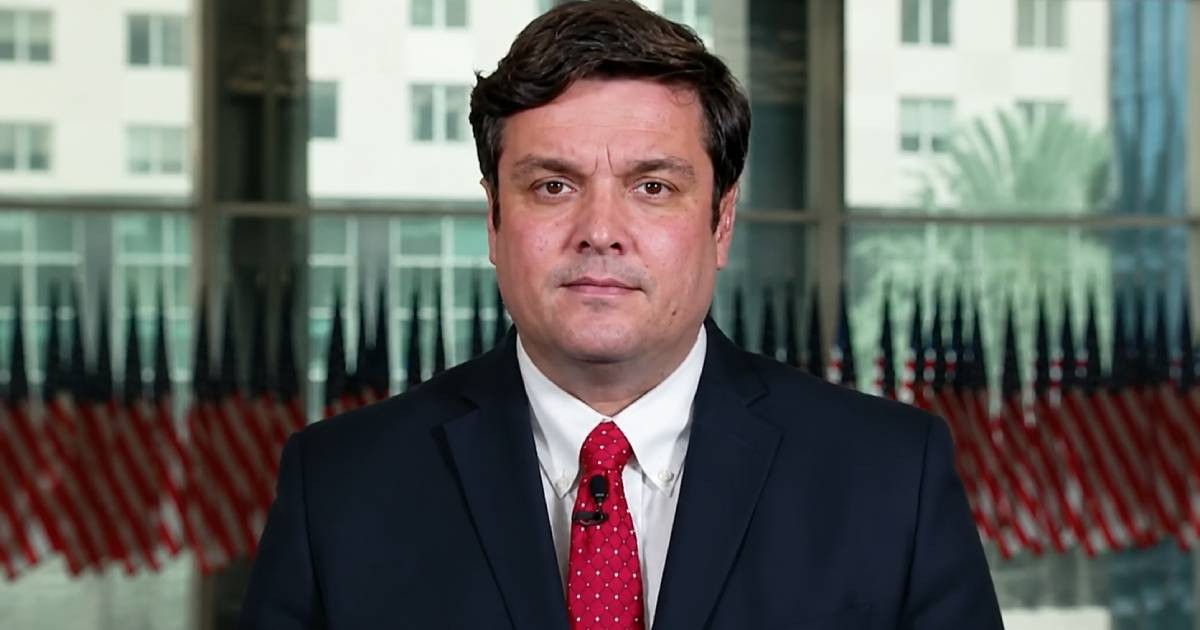
The U.S. State Department released on Monday excerpts from two interviews given by its main spokesperson, Tommy Pigott, in which he defended the report “Cuba: The Capital of 21st Century Communism” and stated that the document reveals for the first time to the American public the extent of the political and ideological influence exerted by the Cuban regime over decades.
In statements to Local 10 and Univisión, Pigott asserted that the study, released on July 20, reveals a sustained campaign of espionage, indoctrination, and influence driven from Havana.
"The purpose of this report for the American people is to allow them to see for themselves this decades-long campaign of influence and espionage that the Cuban regime has been supporting," stated the official, according to a video released by the official account of the State Department on the social media platform X.
The spokesperson described the Cuban regime as the "link and node" of transnational left-wing extremism, asserting that Havana has used the so-called "revolutionary tourism" for years to attract tens of thousands of activists, ideologically train them, and strengthen networks that subsequently operate in U.S. territory.
As an example, he mentioned the organization National Network on Cuba (NNOC), which in June of this year published a "rapid response plan" calling for mobilization and resistance, along with information about the locations of military facilities and Immigration and Customs Enforcement (ICE) detention centers.
"We see the Cuban regime acting as the nexus and hub of this left-wing extremism, and this report clearly presents the case for the first time as a truly unknown story for the American people to know," he stated.
Pigott added that, according to the assessment by the State Department, left-wing terrorism currently represents more attacks and plots against the U.S. government than any other ideological movement.
Is the U.S. preparing an action against Cuba?
In an interview with Local 10 regarding whether the report aims to lay the groundwork for potential military action against the island, the spokesperson avoided giving a direct answer.
Instead, he stated that the document's objective is to strengthen Washington's counterterrorism strategy and to highlight a threat that, in his view, has been ignored for decades.
"We are focused on counterterrorism in general, and what this ministerial conference aimed to do was address a blind spot that has existed for decades," he noted.
Sanctions, humanitarian aid, and political prisoners
During the interview with Univisión, Pigott also defended the new round of sanctions announced on July 23 against nine entities and two high-ranking Cuban officials, including the Minister of Public Health and the Director of the Central Unit of Medical Cooperation. The measures also target structures that, according to Washington, help to evade existing sanctions against the military conglomerate GAESA and the Cuban medical mission program.
The official also confirmed that the United States is coordinating a $100 million humanitarian aid package for Cuba, to be funneled through the Catholic Church and without the involvement of the Cuban government. The first shipment, he noted, left on July 21.
Pigott also reiterated Washington's demand to release the more than 700 political prisoners who, according to the U.S. government, remain imprisoned on the island. As an example, he cited the artist Luis Manuel Otero Alcántara, who regained his freedom on July 18 after five years in prison and arrived in Miami the next day.
When referring to the U.S. administration's policy toward Havana, the spokesperson recalled a phrase from Secretary of State Marco Rubio, which, he said, summarizes Washington's view on the Cuban regime: “The only thing worse than communists are incompetent communists”.
Related videos:
Filed under: