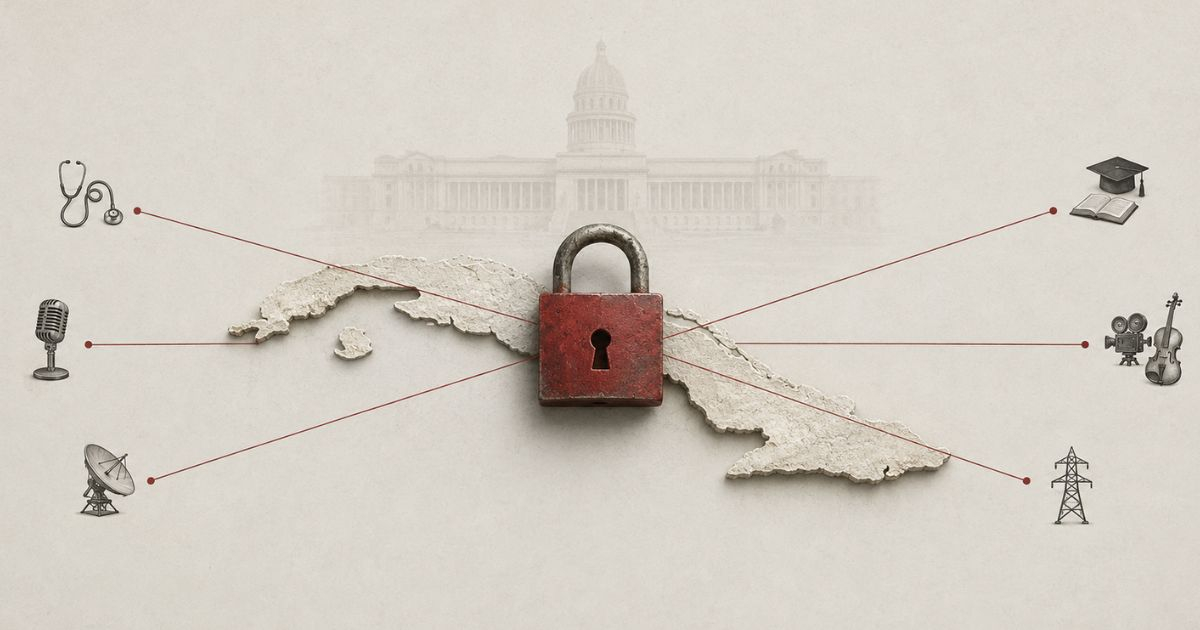
The Cuban regime published on Tuesday in the Official Gazette the Decree 160, a regulation that redefines what private companies, small and medium-sized enterprises, non-agricultural cooperatives, and self-employed workers can and cannot do on the island, and which lists for the non-state sector.
Signed by Prime Minister Manuel Marrero Cruz and published in the Official Gazette No. 62 Ordinary on July 28, the decree comes into effect on August 4, 2026 and repeals Decree 107 from August 2024, which established a uniform list of 125 prohibited activities.
The new regulation introduces four categories of restrictions: absolute prohibition, activity reserved for the State, activity restricted only to self-employed workers, and authorizable or conditional activity.
The text itself justifies the change by noting that the approved economic transformations necessitate "replacing the homogeneous list with a differentiated regulation by type of economic actor, clearly distinguishing between unauthorized activities, conditioned activities, or those that can be authorized."
List of the 79 activities regulated by Decree 160
Agriculture, livestock, forestry, and fishing
- Ordinary hunting and trapping for commercial purposes. Authorized or conditioned activity. Requires environmental authorization and compliance with the quotas set by the competent authority.
- Fishing of protected, threatened, endangered, toxic, or restricted species. This activity is absolutely prohibited, without prejudice to the species and types of fishing authorized by legislation.
Mining and quarrying exploitation
- Extraction of crude oil and natural gas. Authorizable or conditioned activity. It can be ordered through administrative concession, economic partnerships, national joint ventures, or modalities of foreign investment. The direct exercise by private companies, small and medium-sized private enterprises, and non-agricultural cooperatives requires state approval.
- Extraction of metallic minerals. Activity not authorized for self-employed workers. Small-scale mining in controlled areas may be authorized for private companies, private SMEs, and non-agricultural cooperatives. Large-scale mining is reserved for economic partnership schemes and foreign investment.
- Exploration of other mines and quarries. Authorizable or conditional activity, subject to the corresponding licenses and permits.
Manufacturing industry
- Manufacturing of tobacco products. Activity not authorized for non-state economic actors and reserved for the State.
- Manufacturing of specialized custom orthopedic footwear. This activity is not authorized for non-state economic actors, in accordance with the medical and technical requirements established by the Ministry of Public Health and the regulatory authority.
- Printing or issuing currency, stamps, duty stamps, securities, checks, official seals, and guarantee documents. Activity subject to absolute prohibition.
- Manufacturing of petroleum refining products. Activity not authorized for non-state economic actors. It is regulated through foreign investment, economic partnerships, technical services, or financing.
- Manufacturing of basic chemical substances. Permissible or conditional activity. Requires authorization and environmental and safety certifications.
- Manufacturing of gunpowder, pyrotechnic products, detonators, matches, and other unauthorized explosives. Activity of absolute prohibition.
- Manufacturing of pharmaceutical products. Authorizable or conditional activity. Requires permission from the Ministry of Public Health and the regulatory authority. It can be developed through partnerships and linkages with the state industry.
- Manufacturing of common metals. Activity not authorized for non-state economic actors. It is organized through administrative concessions, economic associations between national entities, or forms of foreign investment.
- Manufacturing, repair, and maintenance of firearms, airguns, accessories, and ammunition. Activity of absolute prohibition.
- Manufacturing of military uniforms and insignias. This activity is not authorized for non-state economic actors, except when the products are requested and contracted exclusively by the ministries of the Interior and the Revolutionary Armed Forces.
- Manufacturing and assembly of motor vehicles. Activity not authorized for self-employed workers. It may be carried out by private small and medium-sized enterprises and non-agricultural cooperatives, subject to technical certification and compliance with industrial standards.
- Shipbuilding and boat construction. Authorizable or conditional activity. Non-state actors can build vessels intended for non-state commercial fishing and authorized recreational activities.
- Manufacturing and assembly of aircraft and unmanned systems. Activity not authorized for non-state economic actors. Civil unmanned systems are governed by their specific regulations.
- Manufacturing of military vehicles. Activity not authorized for non-state economic actors, except when they are requested and contracted exclusively by the Ministries of the Interior and the Revolutionary Armed Forces.
- Manufacturing and assembly of scooters, motorcycles, tricycles, trailers, and semi-trailers. Activity not authorized for self-employed workers. It may be authorized for private micro, small, and medium enterprises and non-agricultural cooperatives that meet the technical requirements.
Supply of electricity, gas, steam, and air conditioning
- Transmission, distribution, and marketing of electrical energy through the national grid. Authorized or conditioned activity. Private management of the national grid is not permitted, except through economic partnerships or joint ventures between national entities. The generation of renewable sources and its marketing can be undertaken by non-state actors.
- Gas manufacturing and distribution of gaseous fuels through pipelines. This activity is not authorized for non-state economic actors. It is regulated through administrative concessions, economic partnerships, joint ventures, or foreign investment modalities.
Water, sanitation, waste, and decontamination
- Collection and handling of hazardous waste. Activity not authorized for non-state economic actors.
- Decontamination and other waste management services. Authorizable or conditional activity. Requires environmental authorization and certification. The collection of urban solid waste, plastics, and other recyclable materials can be carried out by non-state actors.
Wholesale and retail trade; vehicle repair
- Wholesale trade of the products authorized in this section. Activity not authorized for self-employed workers. The marketing of certain health products, means of transport, metals, minerals, and safety equipment is subject to special regulations. The sale of weapons, accessories, and ammunition is absolutely prohibited.
- Wholesale sale of twisted and leaf tobacco. This activity is not authorized for non-state economic actors and is reserved for the State.
Transport and storage
- Piping transportation, including the operation of gas stations. This activity is not authorized for self-employed workers. It may be authorized for private companies, private micro, small, and medium enterprises, and non-agricultural cooperatives through concessions, economic partnerships, joint ventures, or foreign investment.
- International maritime transport, cruises, and tourism. This activity is not authorized for non-state economic actors. It is regulated through administrative concessions, economic partnerships, joint ventures, or foreign investment modalities.
- Exploitation of terminals, railway stations, roads, tolls, bridges, and tunnels. Activity not authorized for self-employed workers. It may be carried out by private companies, private micro, small, and medium enterprises, and non-agricultural cooperatives through concession, leasing, or other rights over state assets.
- Services related to water transport. Authorizable or conditional activity. The salvage of smaller vessels and the operation of authorized marinas can be carried out by non-state actors.
- Services related to air transport. Activity not authorized for self-employed workers. Non-critical services may be provided by private companies, private micro, small and medium enterprises, and non-agricultural cooperatives, subject to prior authorization or through economic association.
- Transshipment services, customs and shipping agents, and transport documents. Activity not authorized for non-state economic actors.
- Universal postal service and issuance of postage stamps. Activity not authorized for non-state economic actors.
Information, communication, and telecommunications
- Publication of newspapers, books, and magazines; publishing houses and editorial labels. Activity not authorized for non-state economic actors.
- Professional audiovisual and cinematographic production. An authorized or conditioned activity, in accordance with Decree-Law 373. It can be carried out by private companies, private small and medium enterprises, and non-agricultural cooperatives.
- Creation of record labels, music publishing companies, and entities to market records and other phonographic media. Authorized or conditioned activity. Recording, sound post-production, operation and leasing of equipment, selection of casts, and other auxiliary activities can be carried out by non-state actors.
- Radio broadcasts. Activity not authorized for non-state economic actors. Technical and production services may be enabled when authorized.
- Programming and television broadcasts. Unauthorized activity for non-state economic actors. Technical and production services may be enabled when they are authorized.
- Satellite telecommunications and certain public telecommunications services. Activity not authorized for non-state economic actors. This includes public internet access, data centers with critical infrastructure, mobile radio communication, signal transmission, subscription television, and other transmission services.
- Operation of satellite communication terminals and related facilities. It includes the resale of telecommunications without an agreement with the operator, specialized applications, telemetry, and radar stations. Activity not authorized for non-state economic actors.
- Cybersecurity services, incident investigation, analysis of public or state networks, cyberattack simulation, and vulnerability detection. Unauthorized activity for non-state economic actors.
- News agencies and news information services. Activity not authorized for non-state economic actors. Specialized press and non-news content may be allowed when authorized.
Financial and insurance activities
- Life insurance, general insurance, and reinsurance. Activity not authorized for non-state economic actors.
- Pension funds. Activity not authorized for non-state economic actors.
- Auxiliary activities of insurance and pension funds. Activity not authorized for non-state economic actors. Insurance agents constitute an authorized or conditioned activity that can only be carried out by self-employed workers.
Professional, scientific, and technical activities
- Regulated professional and technical activities. Activities that are authorized or conditioned upon the corresponding professional qualification. Bookkeeping, design, decoration, photography, programming, certified translation and interpretation, veterinary medicine, and engineering for renewable energies can be performed by non-state actors.
Administrative and support services
- Leasing of intellectual property and similar products. Authorized or conditioned activity. Works protected by copyright and industrial property are excluded.
- Employment Activities. Activity not authorized for non-state economic actors.
- Security and physical protection. Unauthorized activity for private companies, private micro, small, and medium enterprises (mipymes), and non-agricultural cooperatives. The roles of doorman, property caretaker, and night watchman can only be performed by self-employed workers. The activities of escorts or bodyguards and security in public spaces are not permitted.
- Security system services. Authorizable or conditional activity. The installation of fire protection systems requires certification. Alarm systems and closed-circuit television can only be installed by private companies, private small and medium-sized enterprises, and non-agricultural cooperatives.
- Safety and protection of controlled hazardous substances. Unauthorized activity for non-state economic actors. Certain operations with low-risk substances and in reduced quantities are exempted, subject to prior authorization from the Ministry of the Interior.
- Call centers and contact centers. Authorizable or conditional activity.
- Call for and organization of international events. Authorized or conditional activity. Non-state actors can participate in its management when requested by the inviting state institution.
- Support services related to minutes, records, and business transcripts. Activity not authorized for non-state economic actors.
Public administration, defense, and mandatory social security
- Public administration. Unauthorized activity for non-state economic actors.
- Regulation of healthcare, educational, cultural, and social services. Activity not authorized for non-state economic actors.
- Regulation and facilitation of economic activity. Unauthorized activity for non-state economic actors.
- Population and housing censuses. Activity not authorized for non-state economic actors. Technical processing and logistics services may be enabled when authorized.
- Foreign relations, diplomatic missions, and international organizations. Activity not authorized for non-state economic actors.
- Defense. Activity of absolute prohibition.
- Public order and safety. Activity of absolute prohibition.
- Mandatory Social Security. Unauthorized activity for non-state economic actors.
Education
- Formal education and official certification. Activity not authorized for non-state economic actors. The establishment of academies or formal education with official certification is not permitted. Childcare may be authorized, while certain private classes can only be taught by self-employed workers without hiring employees.
Human health care and social assistance
- Technical and professional activities in medical and social care, including dental services. This activity is not authorized for non-state economic actors, both within and outside the National Health System. Pharmaceutical, optical, care, and rehabilitation services may be authorized for private companies, private micro, small, and medium-sized enterprises, and non-agricultural cooperatives.
- Medical and scientific research on human beings. Unauthorized activity for non-state economic actors. It may be conducted by entities authorized and certified by an ethics committee through partnerships with the biopharmaceutical industry.
- Institutional attention to individuals with psychosocial disorders and addictions. Unauthorized activity for non-state economic actors.
Artistic, entertainment, and recreational activities
- Journalist activities. Activity not authorized for non-state economic actors.
- Literary, artistic, and cultural programming activities in public spaces. Permissible or conditional activity. These can only be managed with authorization from the authorized institutions.
- Management of concert halls, video rooms, bookstores, cultural centers, theaters, and other similar facilities. Activity not authorized for non-state economic actors. The sale of used books is exempted.
- Group activities, circuses, companies, orchestras, or bands. Activity not authorized for non-state economic actors. The professional practice for commercial purposes is prohibited without state representation, with exceptions for certain audiovisual, film, and visual and applied arts creators.
- Activities of physical or digital libraries, archives, information centers, museums, and the management of historical sites and buildings. Activity not authorized for non-state economic actors.
- Management of natural reserves and preservation of flora and wildlife. Activity not authorized for non-state economic actors. Ecotourism, agritourism, and environmental services may be authorized.
- Gambling and betting. Activity of absolute prohibition.
- Management of sports facilities. Authorizable or conditioned activity. Private companies and private micro, small, and medium enterprises can manage them in partnership with state-owned entities. Non-state management of golf courses, bowling alleys, gyms, and swimming pools is also permitted.
- Sports clubs. Activity not authorized for non-state economic agents.
- Other sporting activities, including those of producers, promoters, referees, judges, and timers. Activity not authorized for non-state economic actors.
Other service activities
- Business and professional associations. Unauthorized activity for non-state economic actors.
- Union activities. Activities not authorized for non-state economic actors, although the right to associate and establish union organizations is recognized in accordance with the legislation, their statutes, and regulations.
- Other associations. Unauthorized activity for non-state economic actors.
The decree also includes a provision that requires non-state actors renting homes to individuals living abroad to report the identification details of the tenant and their companions to the Ministry of the Interior.
The Council of Ministers must review the regulation at least every two years at the proposal of the National Institute of Non-State Economic Actors.
Decree 160 is part of the package of 176 economic and social measures presented by Marrero Cruz to the National Assembly on June 18, 2026, regarded as the most significant attempt at structural reform since the Special Period, which also removed the limit of 100 workers for small and medium-sized enterprises and opened the door to private banking.
Related videos:
Filed under: