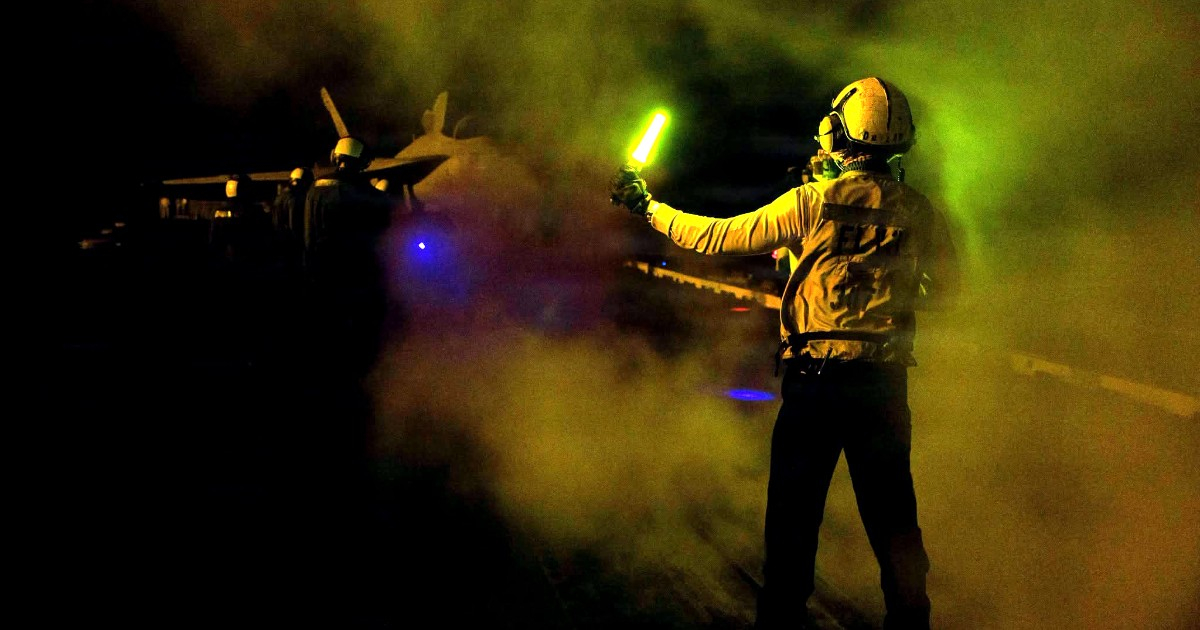
The United States Central Command (CENTCOM) carried out a new and massive wave of bombings against Iran on Wednesday night, in direct response to the ballistic missile attack launched by the Islamic Revolutionary Guard Corps (IRGC) on Tuesday against American military positions in the Middle East.
According to the official statement from CENTCOM, the operation concluded at 10 p.m. Eastern Time and was described as a "heavy wave" of attacks. The targets hit included military command centers, missile and drone facilities, surveillance sites, coastal defense, and maritime capabilities of the IRGC.
The Central Command specified that the objective was "to further reduce the threats from Iran and its representatives to U.S. forces, maritime commerce, and neighboring Gulf countries."
On Tuesday, the IRGC fired multiple ballistic missiles in what CENTCOM described as an attempted surprise attack. All were successfully intercepted by U.S. defenses.
According to reports from Reuters and Axios, the target was a military facility in Jordan, possibly the Muwaffaq Salti airbase. Jordan reported having intercepted five missiles over its territory.
This new exchange of blows occurs within the framework of a conflict that has intensified and eased in various phases since the beginning of the Epic Fury Operation, the joint offensive by the U.S. and Israel that began on February 28, 2026, with the declared purpose of dismantling the missile program and defense capabilities of the Iranian regime.
After 38 days of intensive bombings —during which the Pentagon reported over 7,000 targeted strikes and more than 100 Iranian vessels damaged or destroyed— Washington and Tehran signed in June a memorandum of understanding in Switzerland that established a 60-day ceasefire.
The truce lasted only a few weeks. On July 6 and 7, Iran attacked three commercial ships in the Strait of Hormuz, prompting President Donald Trump to declare the agreement "terminated" on July 8 during the NATO summit in Ankara. CENTCOM resumed bombings immediately.
On July 18, Iran formally suspended its commitments under the memorandum. Nine days later, on July 27, Trump ordered a temporary halt to the attacks to create space for negotiations, but Tehran refused to recognize it as a genuine ceasefire. The following day, the IRGC responded with the missile attack that triggered the new offensive on Wednesday.
The conflict has had severe consequences for global maritime traffic: ship traffic in the Strait of Hormuz fell by 70% since the beginning of Operation Epic Fury, according to data from the Council on Foreign Relations of the United States.
CENTCOM emphasized that over 50,000 U.S. troops remain deployed in the Middle East and are "highly vigilant, focused, lethal, and ready."
Related videos:
Filed under: