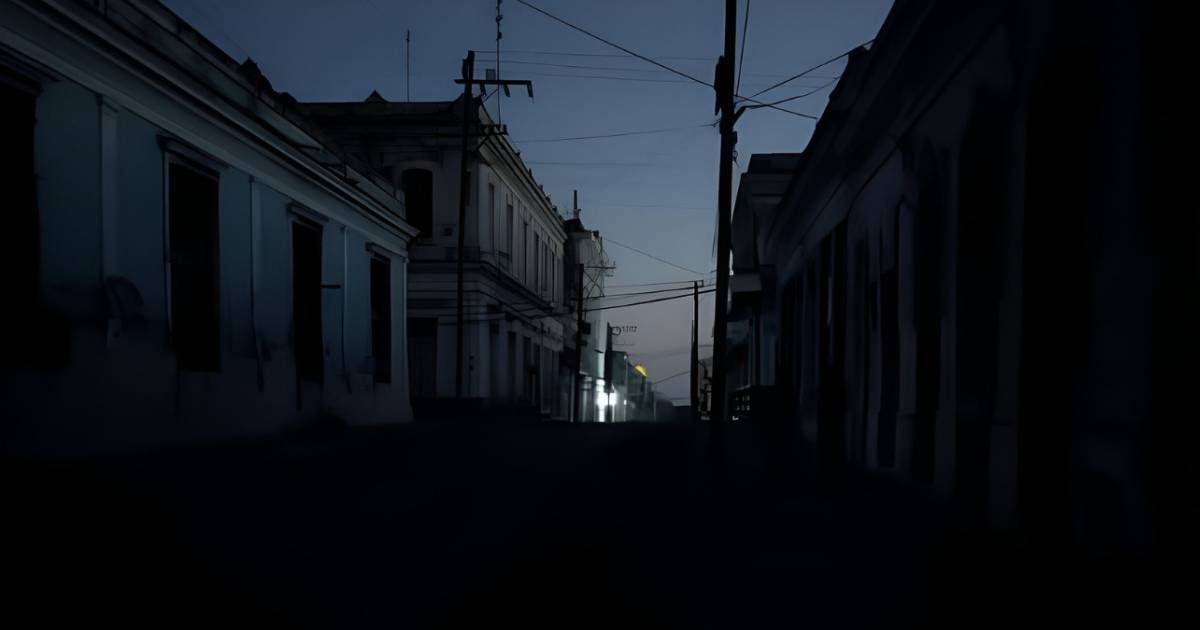
Cuba plunged once again this Thursday into one of the most critical nights of the year due to the energy crisis. At 7:00 p.m., the Electric Union (UNE) reported an impact of 2,042 MW on the National Electroenergetic System (SEN), with an availability of only 1,013 MW against a demand of 3,114 MW. In practice, the country had the capacity to cover only 32% of the electricity it needed.
The gap between available generation and demand exceeded 2,100 MW, leaving a significant portion of the national territory without electricity during peak consumption hours.
The seriousness of the situation was evident from the early hours of the day. By 6:00 a.m., the deficit had reached 1,820 MW, and the UNE had predicted that during peak hours, the impact could reach up to 2,280 MW, with an estimated demand of 3,250 MW and only 1,000 MW of generation available. According to official data, blackouts could simultaneously affect up to 70% of the country.
Among the main causes of the crisis are 106 distributed generation plants out of service due to a lack of fuel, in addition to the Patana de Regla, Patana de Melones, Mariel Fuel Central, and Moa Fuel Central, all inactive.
As millions of Cubans faced another day of blackouts, the Minister of Energy and Mines, Vicente de la O Levy, appeared before the National Assembly of People’s Power and acknowledged the seriousness of the situation.
"There are communities and settlements that have been without electricity for as long as 105 consecutive days," admitted the official during his statement.
He also did not provide an encouraging outlook on a possible recovery of the system. “The road is long”, he stated, attributing part of the crisis to the theft of dielectric oil from transformers and the ongoing fuel shortage. However, he avoided mentioning the structural deterioration of the thermoelectric plants, which has been pointed out for years as one of the main causes of the energy collapse.
Frustration was once again felt in the streets. In Santiago de Cuba, residents of the Sueño neighborhood held another protest with pots and pans to denounce the prolonged power outages. Independent journalist Yosmany Mayeta Labrada reported 907 citizen incidents related to the blackouts in that city, where the average time without service hovers around 24 hours.
July has become the most critical month of the year for the Cuban electrical system. On July 6, the third total collapse of the SEN in 2026 occurred, leaving approximately 9.6 million people without electricity. Two days later, on July 8, a record deficit of 2,341 MW was recorded, affecting around 73% of the country simultaneously. Another national collapse took place on July 14 following the shutdown of unit Felton 1, and on July 24, the impact once again surpassed 2,300 MW.
The electrical crisis continues to affect the supply of drinking water, as many pump stations rely on electricity to operate, worsening the daily struggles of millions of Cubans.
With another night marked by a deficit exceeding 2,000 MW and no signs of a short-term recovery, the energy crisis continues to deepen, while the Government itself acknowledges that a solution is still far off.
Related videos:
Filed under: