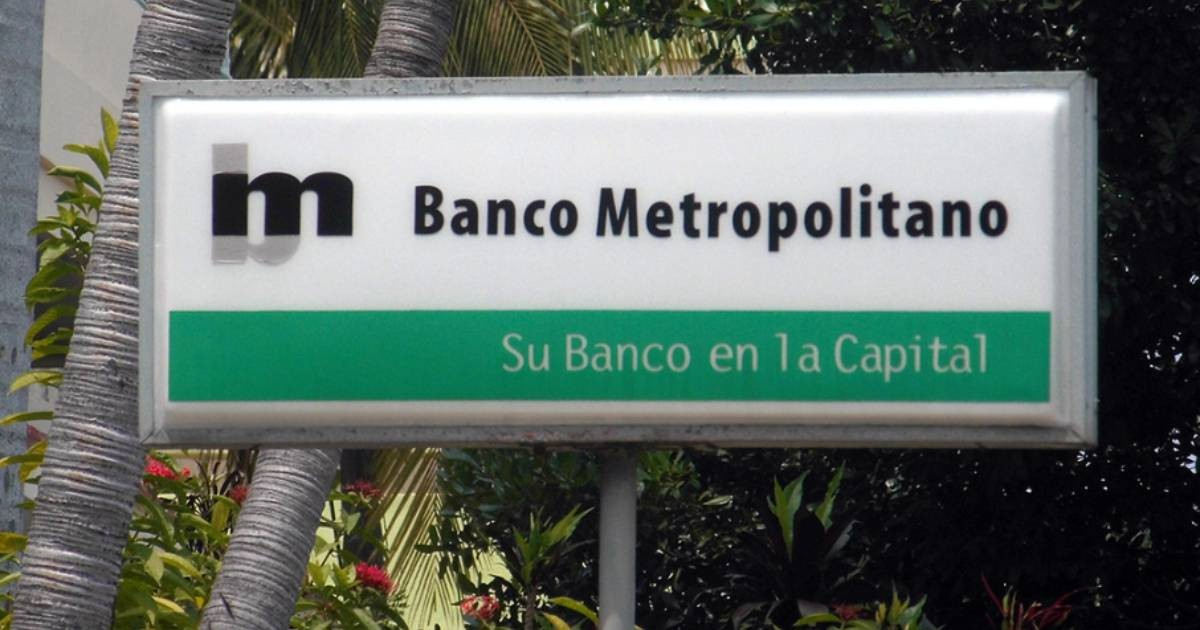
The Metropolitan Bank issued a statement this Friday to deny a rumor circulating on social media about a supposed robbery at a branch on Galiano Street in Central Havana, and the death of a security guard during the incident. According to the state agency ACN, the financial institution labeled that information as "categorically" false and warned the public about the spread of fake news on digital platforms.
The rumor, spread through messages on social media, claimed that the road had been closed by authorities due to a robbery and that a guard had lost his life. The branch in question is located on one of the busiest commercial arteries in the Cuban capital.
The banking institution issued a clarification from its official Facebook profile and urged clients and followers to consult only its institutional channels for accurate information, warning that "all official and reliable information is published exclusively through our institutional channels."
The episode does not occur in a vacuum. In June 2026, a real robbery at the Metropolitano Bank branch in Lawton —during a nighttime blackout, just hours before pension payments— demonstrated that robberies of banking institutions are a reality on the island. In that case, the criminals forced an ATM to gain entry to the branch; the following day, retirees who arrived to collect their pensions found the doors closed. There was no official information about arrests or the amount stolen.
That recent background lends credibility to rumors like those surrounding Galiano and reflects the atmosphere of tension and uncertainty surrounding the Cuban banking system, exacerbated by cash shortages, frequent blackouts, and the long lines that have become a common part of daily life across the country.
The pattern of disinformation regarding the Cuban financial system is recurring. The Central Bank of Cuba had to report in December 2025 a scheme of mass deceit that promised money deposits in accounts of the Metropolitan Bank, the BPA, and Bandec, attributed to a supposed official. In January 2026, the BCC denied a supposed halt in banking services, asserting that they were operating "fully." In December 2025, the Ministry of Tourism refuted a rumor about an alleged distribution of 1,100 dollars per person at a hotel in Santiago de Cuba, which had drawn large crowds.
The MININT was also compelled to dispel a viral rumor in May 2026 about a supposed national curfew, clarifying that it had not issued any official notice regarding night restrictions. The speed at which these falsehoods spread through WhatsApp and Facebook highlights the high informational vulnerability of the Cuban population amid the crisis.
The regime, for its part, systematically attributes these episodes to what it describes as a “cognitive and unconventional war promoted from the United States.” According to “specialists” cited by the state agency ACN, these practices “aim to generate citizen confusion, incite social conflicts, and discredit the legitimacy of the institutions of the State and the Cuban Government.” The official narrative characterizes the phenomenon as a “direct aggression against the sovereignty and revolutionary project of the Island,” a framing that omits the real context: the structural economic crisis generated by 67 years of dictatorship is the main breeding ground for the spread of rumors.
The banking institution reiterated its call to citizens to verify any information through its official pages before sharing it, in a country where mistrust towards inefficient institutions and economic despair cause any news—whether true or false—about the financial system to spread with unusual speed.
Related videos:
Filed under: