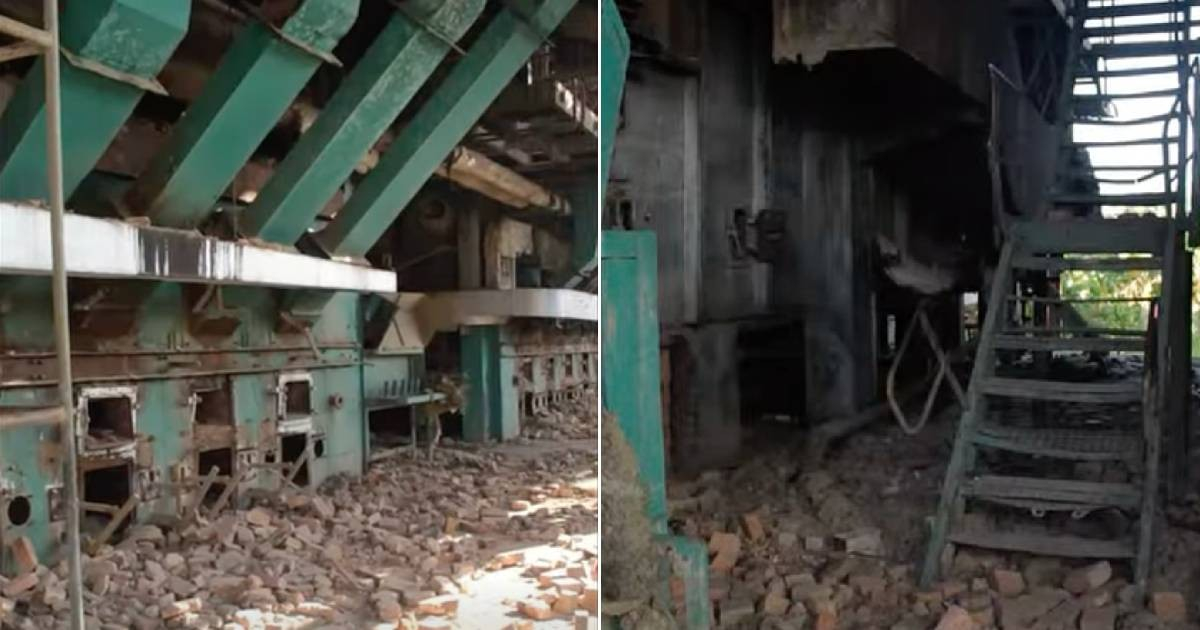
Deteriorated railways, rusty train cars, and weeds growing among crumbling industrial buildings: this is the scene depicted in a recent video by La Hora de Cuba about the Argentina sugar mill, located in the municipality of Florida, Camagüey province.
"The scene we encountered at this site was truly disheartening. A sugar mill that produced large quantities of sugar for years is now in a state of coma, and the deterioration is becoming increasingly evident," describes the report, filmed by José Manuel Ventura Pardillo and Carmen Torreblanca De la Cruz.
The central has a history that contrasts sharply with its current state. Founded in 1915 under the name Central Florida, with capital from the Punta Alegre Sugar Co. of New York, it reached its highest yield in 1925-1926 with 405,189 bags of sugar produced. Following the nationalization in 1959, the regime renamed it Central Argentina.
What followed was a sustained decline that the State never reversed.
In 2002, the regime implemented the so-called Álvaro Reynoso Task, which initially closed 70 of the 155 existing sugar mills and eliminated more than 100,000 jobs in the sector. Far from stabilizing the industry, that restructuring accelerated its collapse: nearly 98 mills were dismantled in total.
The consequences are evident in the numbers. The 2024-2025 harvest produced less than 150,000 metric tons of sugar, the lowest level in over a century, compared to a target of 265,000 tons. In January 2025, only six of the 14 planned mills for that campaign were operational.
Camagüey, the province where the Argentina mill is located, concluded that same harvest with only 4,512 tons of raw sugar from a target of 23,521 tons, achieving just 19.2%.
Cuba needs between 600,000 and 700,000 tons of sugar annually to meet domestic consumption, a figure that current production levels do not come close to, forcing the country to import a product that for decades was its main source of foreign currency.
The deterioration of the Argentina sugar mill also has a concrete human dimension. In February 2026, Florida residents were seen collecting water on the mill's tracks, amid the severe water crisis affecting the province.
The abandonment of the sugar mill is not an isolated case in the area. In July 2026, the deterioration of the Florida Zoo was reported, with rusty and poorly maintained facilities. In April 2026, the Japanese Park in Camagüey was described as completely abandoned, with destroyed attractions.
The Argentina sugar mill joins a growing list of former sugar refineries documented in ruins, such as the Urbano Noris mill in Holguín and the sugar town of Preston, all testimonies to the failure of over six decades of sugar policy under the Cuban dictatorship.
Related videos:
Filed under: