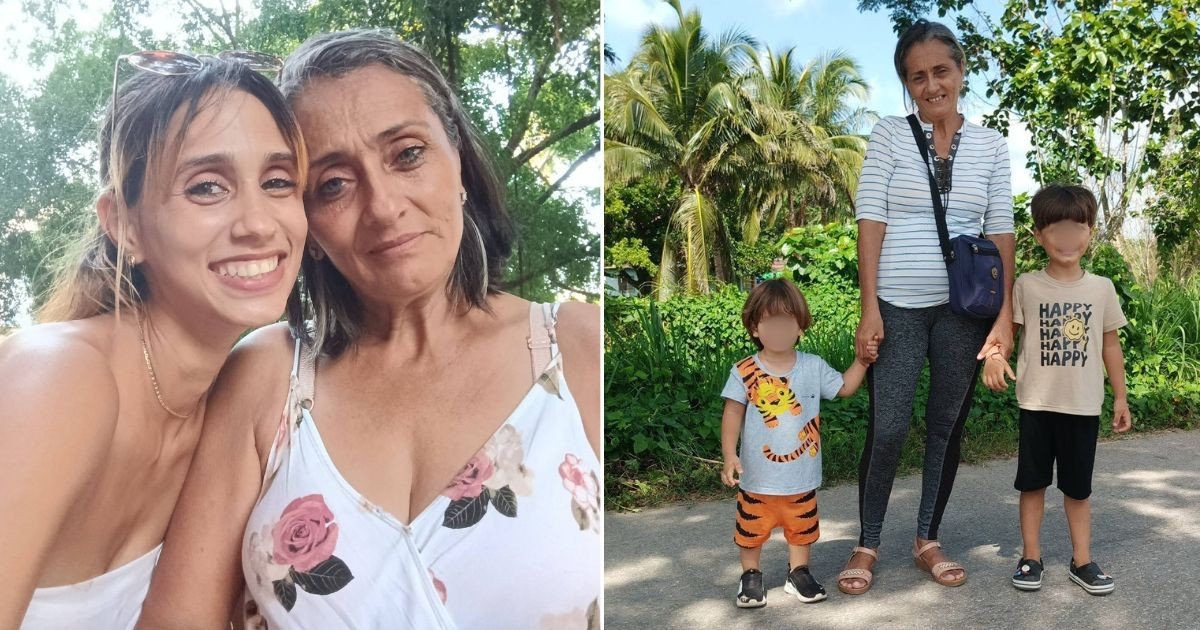
Odette Brito posted this Saturday a cry for help in the Facebook group "San Antonio de Las Vegas," in Mayabeque, to obtain the chemotherapy medications her mother needs, which are unavailable in the medical facilities the family has contacted in Havana.
The patient, known in her community as "Normita the pharmacist," received a diagnosis in June of invasive ductal carcinoma of no special type, grade 2, with marked tumor necrosis.
The oncologist prescribed a regimen that includes adriamycin —eight vials—, cyclophosphamide —four vials— and Taxol —four vials—, and she warned that the treatment should start as soon as possible.
"Despite being in an early stage, the doctor recommends treatment as soon as possible, as it is growing day by day," wrote Odette.
According to their account, an indicator identified as "growth level" increased from 3 to 5 in just 15 days, implying the urgency of their request for assistance.
The family first tried to enroll the patient at the Oncology Institute, but the delay forced them to seek other alternatives.
"We tried to enroll her in the oncology center, but it wasn't possible, and due to the delay in resolving the registration, we had to look for other options, as the oncologist told her that she needed to start treatment right away and couldn't keep wasting time, and without registration at the oncology center, they won't provide treatment," Odette said.
Thanks to friends' contacts, they managed to enroll her at the Joaquín Albarrán Clinical Surgical Teaching Hospital —known as the "Clinic of 26"— where, according to her daughter, the doctors showed full willingness to care for her.
The problem is that the center also does not have the prescribed medications, emphasized the distressed daughter.
"The wonderful care from the doctors, who are very willing to help, but unfortunately, like so many problems in this country, there isn’t the medication needed for my mom in that hospital," she wrote.
The family also searched for the medications at other hospitals, but they did not find them there either.
Other patients subjected to the same scheme reported that the drugs are sold in the informal market.
"In the street, several people have the medication for sale; the prices range from 90 to 200 dollars per vial," Odette noted.
If that range were to apply to each of the 16 bulbs prescribed, obtaining just those medications could mean an expense of between 1,440 and 3,200 dollars, not including other drugs, supplies, and costs associated with the treatment.
The family's economic situation makes it impossible to take on that cost. The mother earns 4,000 Cuban pesos monthly; one of her sons receives around 12,000 pesos; and the father is retired and unable to work due to a stroke he suffered three years ago, which left his entire right side affected.
Odette is a homemaker and has two young children, aged two and four. She explained that her husband supports her financially each month, but that money is completely consumed by food and charcoal for a family of six.
"Obviously, 16,000 pesos aren't enough to feed a family of six for even a week," she lamented.
Odette requested any form of collaboration: chemotherapy medications, ondansetron, vitamins, and other products to counteract the adverse effects, as well as the surgical supplies that will be needed for the operation following the treatment.
She also requested financial assistance or "a simple share to reach those who can help."
The case arises amid a deep health and oncology crisis in Cuba.
In February, the Minister of Public Health, José Ángel Portal Miranda, stated that 12,400 patients were undergoing chemotherapy in a context where the shortage of medications, fuel, and supplies threatened the continuity of essential treatments.
An analysis by Think Global Health published in May, based on data from March, pointed out that more than 3,000 patients were waiting for chemotherapy due to a shortage of essential chemotherapeutic agents.
The same report counted over 4,000 people waiting for radiotherapy and 3,541 awaiting oncological surgeries.
The instability in the supply is not new. In 2022, authorities from BioCubaFarma acknowledged that the production of cytostatic drugs would remain unstable due to funding issues and difficulties in acquiring raw materials and supplies.
Among the affected medications were paclitaxel —the active ingredient in Taxol— and doxorubicin, commercially known as Adriamycin, which are precisely two of the drugs prescribed to Odette's mother.
Similar cases have occurred on the island, where patients and their families turn to social media to find medications, supplies, or financial resources that the state system does not provide.
Related videos:
Filed under: