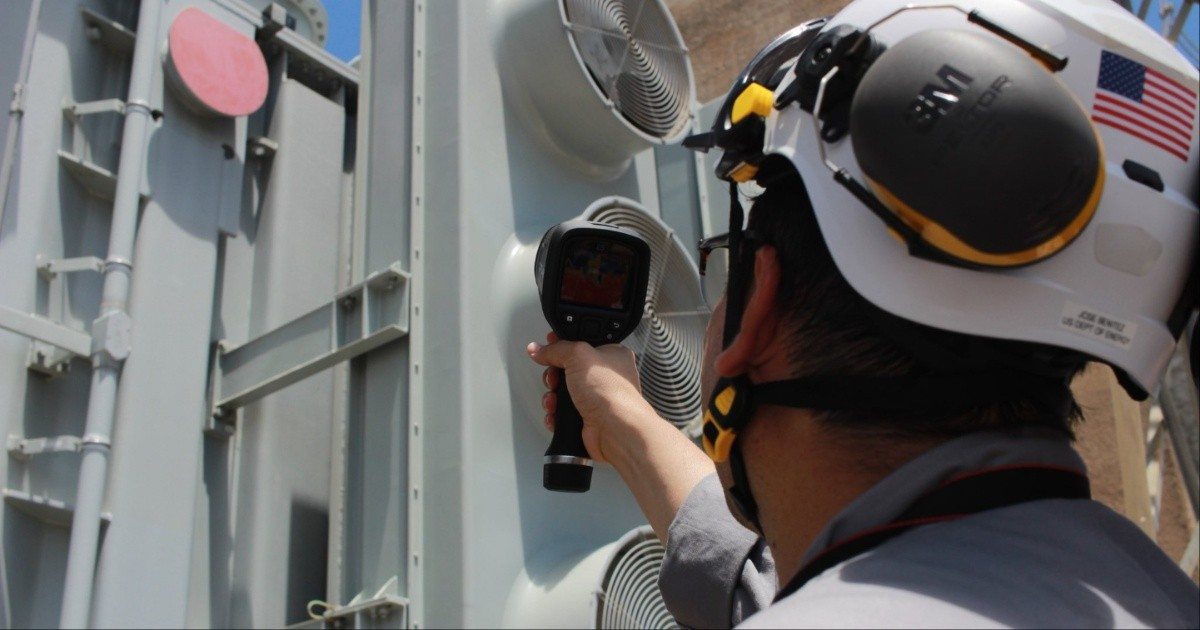
Technical experts from the United States Department of Energy visited the Guri Dam (Simón Bolívar Hydroelectric Plant) this Monday, the largest hydroelectric plant in Venezuela, to conduct an assessment that will lay the groundwork for the modernization of the National Electric System, as announced by the U.S. Embassy in Caracas through its official account on X.
John M. Barrett, Chargé d'Affaires of the U.S. embassy in Caracas since April 2026, personally accompanied the technical team during the visit to the dam, located in the Bolívar state on the Caroní River.
The work was carried out in coordination with the Venezuelan Ministry of Electric Energy and the state-owned Corpoelec, with support from the Department of State.
Barrett described the action as a step that "will help define a path for the modernization of the National Electric System" and framed it within the three-phase plan designed by President Trump and Secretary of State Marco Rubio for the recovery of Venezuela.
That plan includes an initial phase of stabilization, a second phase of economic recovery —in which the country is currently situated— and a third phase of political transition with legitimate elections.
The Venezuelan electric sector was identified from the outset as a strategic priority, as stable electricity is a necessary condition to reactivate oil production, the country’s main economic asset.
The Department of Energy itself had previously described the Venezuelan electrical system as "deteriorated and fragile" and as the "most critical bottleneck" for the country's recovery, with estimates that a complete rehabilitation could cost between 15 billion and 40 billion dollars and take between five and 15 years.
The Guri Dam, with an installed capacity of 10,235 MW, along with the Caruachi and Macagua dams, generates between 70% and 80% of the national electricity. However, the system operates well below its potential: the available capacity is around 12,000-12,500 MW compared to a demand of 15,500-15,700 MW, resulting in a chronic deficit that explains the blackouts and rationing.
Monday's visit is part of a series of concrete actions that the U.S. has initiated since Delcy Rodríguez took office as acting president following Nicolás Maduro's capture in January 2026.
In February of that year, Energy Secretary Chris Wright traveled to Venezuela and met with Rodríguez at the Miraflores Palace to discuss both the revival of the oil industry and electrical modernization.
In April, Venezuela negotiated with Siemens and General Electric to address the crisis in the Zulia state.
On June 15, the Venezuelan government signed a memorandum of understanding with GE Vernova and Corpoelec to add 1,000 MW in 24 months and over 5,000 MW in four years, according to Reuters.
The context is further complicated by the devastating earthquakes of June 24, 2026, with magnitudes of 7.1 and 7.5, which left more than 5,398 fatalities and damage estimated by the World Bank at 19.6 billion dollars, adding additional pressure to the already fragile infrastructure of the country.
Rubio, who on Sunday advocated for a transition that allows for investments and generates prosperity in Venezuela, summarized Washington's stance: "The role that the government of the United States can continue to play is that of a facilitator in all of this."
Related videos:
Filed under: