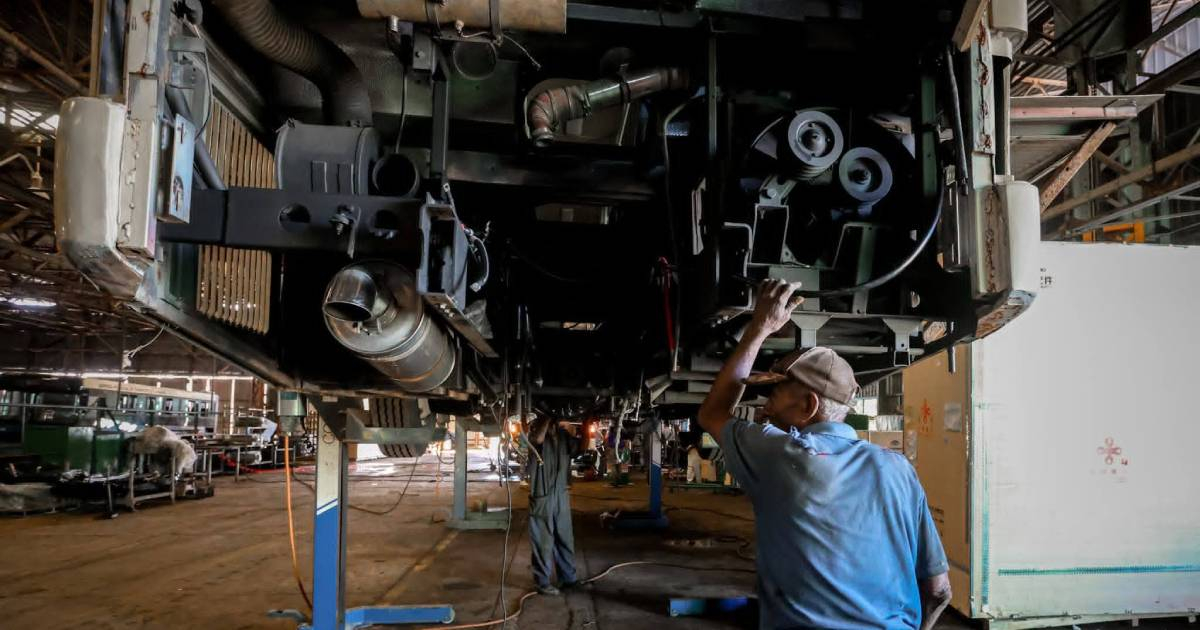
The Cuban regime took a new step in the reform of its automotive policy by publishing on Tuesday in the Official Gazette the regulations that establish who will be able to manufacture and assemble vehicles in the country and under what conditions. This measure paves the way for new economic players, although under a strict system of state authorizations.
The provisions are part of the and the Resolution 52/2026 of the Ministry of Transport, published in the , which also update the rules regarding the import, marketing, and transfer of vehicle ownership in Cuba.
One of the most significant changes is that the Government authorizes the assembly and manufacturing of motor vehicles, trailers, and semi-trailers by state-owned companies, entities with foreign investment, and joint ventures between state and non-state actors, as long as they have authorization and this activity is included in their corporate purpose.
Additionally, the decree stipulates that Cuban non-state legal entities, with prior authorization from the Council of Ministers through the Ministry of Transportation (Mitrans), may directly import —or through authorized companies— the necessary components to assemble or manufacture new mopeds, motorcycles, tricycles, and electric cars intended for commercialization. The regulation requires that these projects include charging stations powered by renewable energy sources that ensure complete coverage.
However, companies wishing to engage in this activity must first meet the technological requirements and procedures established by the Ministry of Transportation before starting operations. Additionally, only entities authorized by the Ministry of Foreign Trade and Foreign Investment will be able to import sets, components, and accessories intended for the assembly or manufacture of vehicles for companies previously registered by Mitrans.
The regulation also establishes a Motor Vehicle Evaluation Committee, chaired by the Minister of Transportation and consisting of representatives from numerous state agencies. This body will be responsible for approving suppliers, brands, and vehicle models that can be marketed in Cuba through importation, assembly, or domestic manufacturing, as well as overseeing the implementation of the policy and suggesting adjustments.
As part of the announced incentives, the Government establishes a lower tax burden for electric vehicles assembled in the country. While imported electric vehicles will be subject to a special tax of 5%, those assembled by authorized legal entities will be taxed at 3%. Additionally, those marketed alongside charging stations based on renewable energy will be exempt from the tax.
The new regulations also amend the Road Safety Code. Until now, the legislation prohibited the construction of vehicles through the assembly of parts and components, except for certain state entities. With Decree-Law 122, the regime expressly authorizes the manufacture and assembly of vehicles using legally acquired components, leaving the regulation of this activity to the Council of Ministers.
A measure announced since June
The provisions published this Tuesday are part of the reforms announced by the Cuban government during the extraordinary session of the National Assembly held in June of this year.
At that time, authorities indicated that they would ease restrictions on vehicle imports, allow individuals to directly import electric cars, and open the possibility of assembling electric vehicles in Cuba. However, they had not defined the requirements or the legal framework to do so.
With the publication of these regulations, the Government specifies those measures and establishes the conditions under which state-owned enterprises, foreign investors, and certain non-state economic actors will be able to participate in the manufacturing and assembly of vehicles within the country.
Related videos:
Filed under: