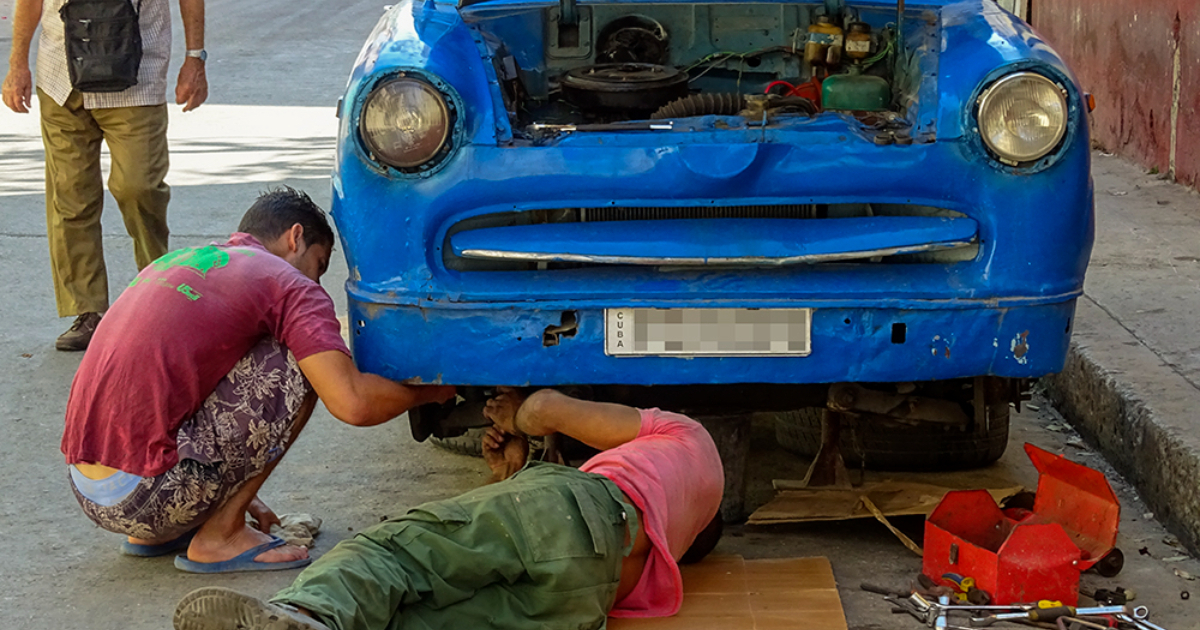
Thousands of people who have kept motorcycles and mopeds assembled with parts from different vehicles in operation for years will have a new opportunity to legalize them in Cuba.
The Ministry of Transport (Mitrans) approved an extraordinary procedure that will allow them to be homologated and officially registered in the Vehicle Registry, provided they meet the technical requirements and can demonstrate the legal origin of the parts used.
The measure was established in the , published this Tuesday in the , and is part of the extensive package of reforms concerning the automotive sector announced by the Cuban regime.
The regulation opens a new process exclusively for individuals who own mopeds, motorcycles, tricycles, quad bikes, sidecars, trailers, and semi-trailers assembled from parts and components that were not included in previous homologation processes.
Who will be able to apply for the process?
The resolution makes it clear that the benefit is not available for just any artisanal vehicle. Only those who own one of these vehicles and have been excluded from previous calls will be able to participate.
This point is relevant because the Government had already initiated a similar process in 2024. At that time, the authorities presented it as the "second and final census" to legalize vehicles assembled from parts, insisting that the construction of new vehicles of this kind would not be authorized.
The first step: register on a website
The entire process will begin with a digital registration on a platform that will be enabled by the Ministry of Transportation. If the owner is outside of Cuba or has health issues, a legal representative will be able to handle the procedure.
Registration will remain open for 60 calendar days from the effective date of the resolution. Once this deadline has passed, the platform will stop accepting new applications and will only allow users to check the status of existing files.
What information must be presented?
To register, it will be necessary to provide numerous details about the owner and the vehicle, including the following:
- Identification number.
- Volume and page of birth registration.
- Place where the engine and the frame were purchased.
- Class and model.
- Dominant and secondary color.
- Engine and chassis number, when applicable.
- Type of fuel.
- A side photograph of the vehicle.
- Contact phones.
- Email (if you have one).
- Permanent residence address.
Once the form is correctly completed, the system will automatically generate a case number that will accompany the applicant throughout the entire process.
Only one vehicle per owner
The regulation also sets an important limit: each owner or their legal representative may only register one moped, motorcycle, tricycle, or quadricycle. Additionally, they may register one sidecar, trailer, or semi-trailer.
The technical review will be crucial
After the registration period concludes, the Automotive Technical Review (RTA) stage will begin, organized by the provincial transport authorities in conjunction with the Automotive Technical Review Company and the Ministry of the Interior.
Owners must present the vehicle in good technical condition, fully operational, and completely equipped. Additionally, they must prove the legal provenance of the main parts used in its construction.
The Homologation Commission will classify each vehicle as:
- Suitable, if it meets the technical requirements and the legal origin of its components is proven.
- Not suitable when there are safety deficiencies or when the origin of the parts cannot be justified.
Those who are deemed unfit will have a second chance. However, if they fail the evaluation again, they will permanently lose the right to homologate the vehicle, and it will not be allowed to circulate on the country’s roads.
The final step to obtain legalization
When the vehicle is declared fit for use, the Commission will issue a Technical Report.
With that document, the owner will have 90 calendar days to permanently register the vehicle in the Vehicle Registry. While completing that process, they may drive with the Technical Inspection Certificate in hand.
The resolution also states that, once approved, the owner must update the technical inspection certificate each year in order to continue driving legally.
A new opportunity amid the transportation crisis
The new procedure arrives in a context where thousands of Cubans have turned for years to assembling motorcycles and other vehicles with recovered parts due to the shortage of cars, spare parts, and public transportation.
In 2024, the Government initiated a similar process to regularize these vehicles, after announcing a new census for those who had been left out of previous calls. That initiative aimed to organize a vehicle fleet, largely built through the ingenuity of citizens in response to decades of transportation crises.
Related videos:
Filed under: