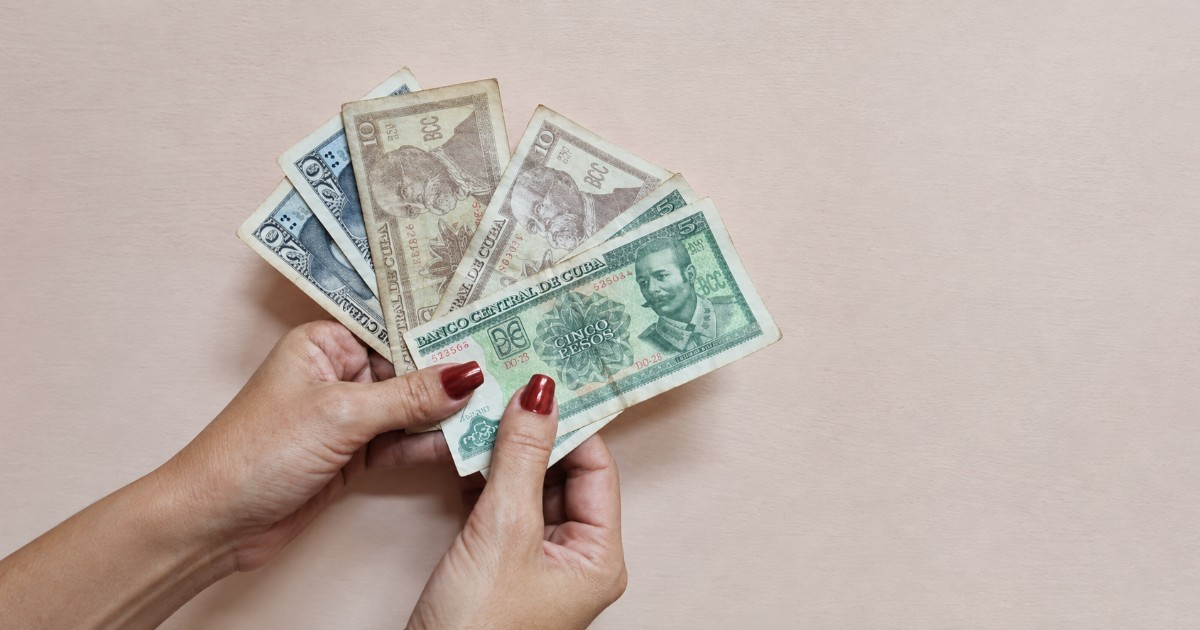
The Bank of Credit and Commerce (Bandec) warned that no establishment in Cuba can refuse low-denomination bills or independently decide which cash they will accept, as all denominations of the national currency remain valid and are legal tender.
The institutional profile Comunicadores Bandec Santiago shared this clarification on Facebook this Thursday and affirmed that the Central Bank of Cuba has not prohibited the use of any denomination of the Cuban peso.
"Nobody decides which denominations a business accepts; the customer is the one who decides how to pay and also the payment method," the publication stated.
Bandec indicated that consumers can choose between online payment, the use of point-of-sale terminals —known as POS or TPV— and cash.
The statement did not specify what penalties businesses could face for refusing to accept legally valid banknotes.
The recurrence of these official statements shows that the ban on refusing banknotes has not prevented the practice from spreading.
Amid inflation, the devaluation of the peso, and the shortage of cash, it is the consumers who ultimately bear the consequences of the monetary chaos.
The clarification comes after numerous private businesses in Santiago de Cuba started rejecting bills of one, five, 10, and 20 pesos, claiming that their suppliers do not accept them either.
The practice particularly affects retirees and workers who receive cash payments from the state-owned banks themselves.
Some consumers have reported that, despite having legal tender, they are unable to use it to purchase food and other basic products.
Bandec had previously issued a similar warning in Ciego de Ávila. At the beginning of July, the institution described the rejection of five, 10, and 20 peso notes as a "flagrant violation of citizens' rights" and reminded that no economic actor can choose which denominations to accept.
However, the problem is not limited to Santiago de Cuba or Ciego de Ávila. In Mayabeque, an animal welfare organization reported that a small and medium-sized enterprise refused their 20 peso bills, even though the establishment also did not accept bank transfers.
The refusal to accept different payment methods puts consumers in a bind: some businesses reject small bills, while others demand cash and refuse to accept payment by transfer.
A young Cuban recently reported that he was unable to purchase food because several businesses refused to accept the money he had in his bank account.
Related videos:
Filed under: