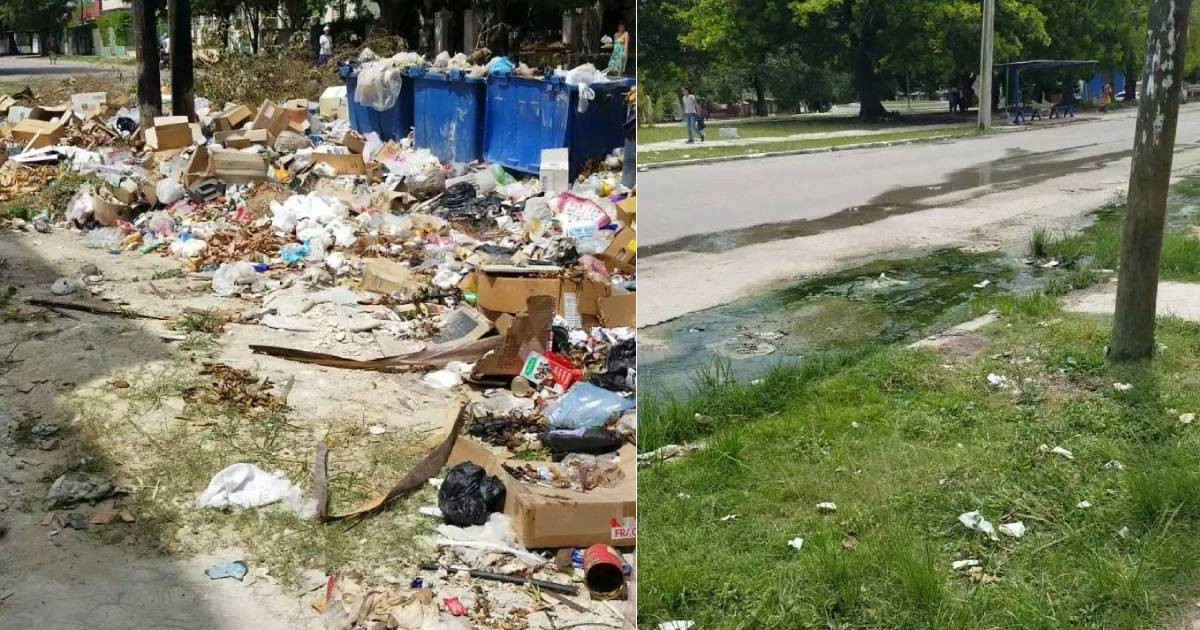
A Cuban identified as Jesús Molina shared a testimony this Wednesday on Facebook, accompanied by several images that reflect the deep deterioration of his neighborhood, marked by the accumulation of garbage, sewage on the streets, and the wear and tear of the infrastructure, in the midst of a crisis exacerbated by power outages and a lack of water.
"It's impossible... after night after night of blackouts and eight days without water... to believe that stepping outside will bring any relaxation," Molina wrote, describing a reality that, rather than providing a respite, only heightens the frustration and exhaustion of those enduring it.
The images, recorded at the end of July, show destroyed sidewalks, completely overflowing garbage containers, waste scattered across green areas, and puddles of black water invading public streets. In the background, residential buildings are seen with visible signs of deterioration.
In his post, the Cuban also questions the official narrative that insists on highlighting "the positive and beautiful side of Cuba, the most beautiful," a phrase to which he responds with a brief yet powerful comment: "it was."
Regarding the ongoing discussions about who is responsible for the crisis, Molina downplays the debate with irony: "Whether it's Chicho's fault... Toti's fault or the mother of tomatoes... that's just blah, blah, blah."
For him, the problem goes beyond finding blame. "The situation is that the balance of things has gotten out of hand, and the chaos is leviathan," he states.
The testimony adds to a long list of citizen reports that in recent months have highlighted the deterioration of basic services in Cuba. In July of this year, residents of El Fanguito, in Havana, blocked 23rd Street after being without electricity, water, or gas for over 48 hours. In neighborhoods like Lawton and Alamar, residents even resorted to setting fire to the accumulated garbage due to the lack of waste collection.
The publication coincides with one of the most critical moments for the Cuban electrical system. On August 3rd, the island experienced the sixth total collapse of the National Electroenergetic System in 2026. Just a few days prior, on July 29th, the Electric Union reported a record deficit of 2,380 megawatts, enough to impact electrical service for nearly 74% of the country during peak demand hours.
The prolonged power outages have a direct impact on water supply. In Havana, 87% of the pumping system depends on electric power, so each extended interruption leaves hundreds of thousands of people without access to the service for several days.
According to specialists from Aguas de La Habana, in July, more than 500,000 residents of the capital did not have regular access to water supply. Months earlier, the government itself acknowledged that nearly three million Cubans were facing issues with access to water resources across the country.
This is compounded by the waste collection crisis. Since February, it has been reported that only 44 of the 106 garbage trucks in Havana were operational, a situation that resulted in the daily accumulation of tens of thousands of cubic meters of waste and worsened sanitary issues in the capital. As of now, it is unknown whether the situation has changed.
Molina concludes his post with a phrase full of resignation and sarcasm, a tone that is increasingly common among Cubans using social media to express their dissatisfaction with the deterioration of their living conditions: "Patience... if that's okay."
Related videos:
Filed under: