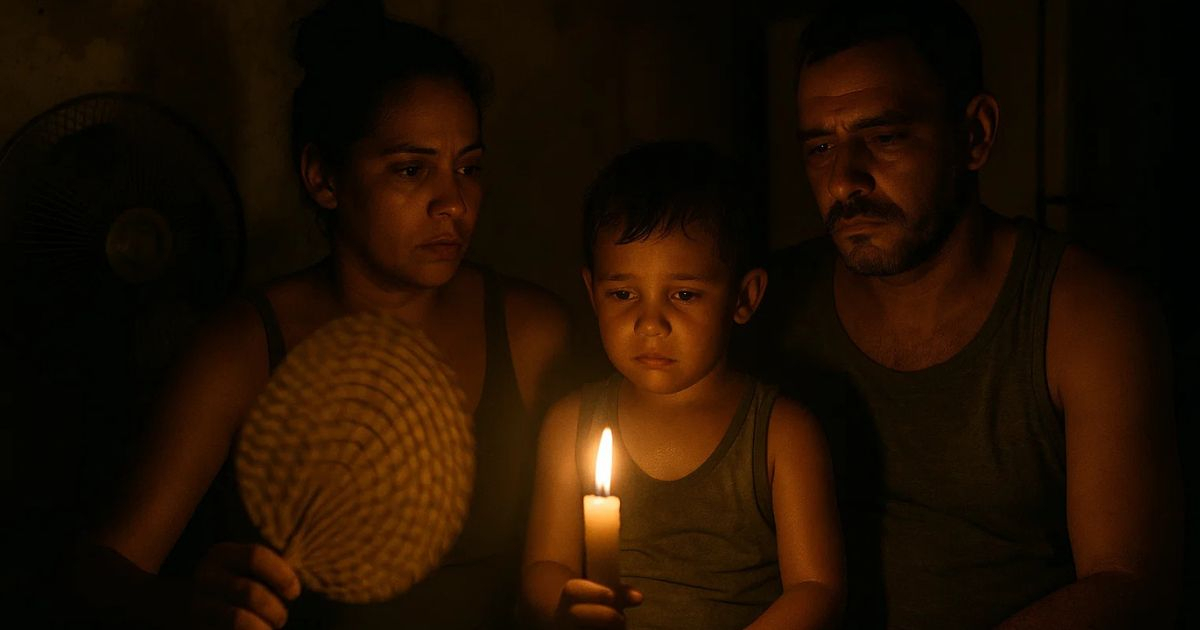
A Cuban mother identified as Arais Barbara posted a heartbreaking complaint on Facebook this Tuesday about the conditions in which she raises her baby in Cuba, accompanied by an image showing the child with dozens of mosquito bites on his back and torso.
"This is the worst torture of living here, in Cuba: no electricity, all the streets filled with garbage, and a lot of mosquitoes because of the filth everywhere, plus the unbearable heat. Until when, my God. They don't respect children, the elderly, the sick... no one. But that’s not the saddest part; the saddest part is when people get sick, and when you arrive at the hospital, you have to bring your own medicine or go back home because there's nothing." wrote Arais Barbara on her Facebook profile.
The testimony comes a day after the sixth nationwide blackout that Cuba experienced in 2026, recorded on Monday, as reported by Infobae regarding the accumulated electrical crisis.
Daily power cuts in Havana have reached between 15 and 30 hours in 2026, while in the interior of the country, they exceed 48 consecutive hours without supply.
The lack of electricity prevents the use of fans, air conditioners, and electric mosquito nets, leaving babies and young children exposed to extreme heat and insects in the midst of the Caribbean summer.
This scenario is further compounded by the collapse of the waste collection service: in Havana, only 44 out of 106 garbage trucks are operational—barely 41.5% of the fleet—resulting in mountains of waste over a meter high in neighborhoods of the capital, creating ideal breeding grounds for the Aedes aegypti mosquito.
That lethal combination of blackouts, heat, trash, and mosquitoes has caused a spike in cases of dengue and chikungunya across the island.
Cuba ended 2025 with at least 81,909 combined cases of both diseases and 65 official deaths, including 29 minors.
At the beginning of 2026, the outbreak remained active in all 14 provinces of the country, with over 2,800 cases reported in 134 municipalities.
The Pan American Health Organization warned in February 2026 that children under one year old—especially those under three months—are the group at greatest risk for severe complications and death from chikungunya.
The case of Arais Barbara is not the first to circulate on social media this year. On June 1, another Cuban mother showed her son's body covered in mosquito bites, linking it to cuts of more than 20 hours a day in Havana.
On Monday, an image of a baby drenched in sweat during a blackout also shocked social media users.
And on that same day, Cubans reacted on social media to the latest power outage, highlighting the specific impact on children.
The mother also reports that when the children fall ill and arrive at the hospital, the response from the healthcare system is equally disheartening: either the family has to bring their own medicines or they return home empty-handed, as there is nothing available.
The visible rash in the image of Arais Barbara's baby could be due to mosquito bites, extreme heat, or other dermatological causes specific to the context, although only a doctor can provide a diagnosis.
The testimonies of Cuban mothers denouncing the suffering of their children have become a constant theme in 2026, reflecting a crisis that combines energy collapse, deteriorating urban sanitation, and an epidemiological emergency that the regime has failed to contain.
Related videos:
Filed under: