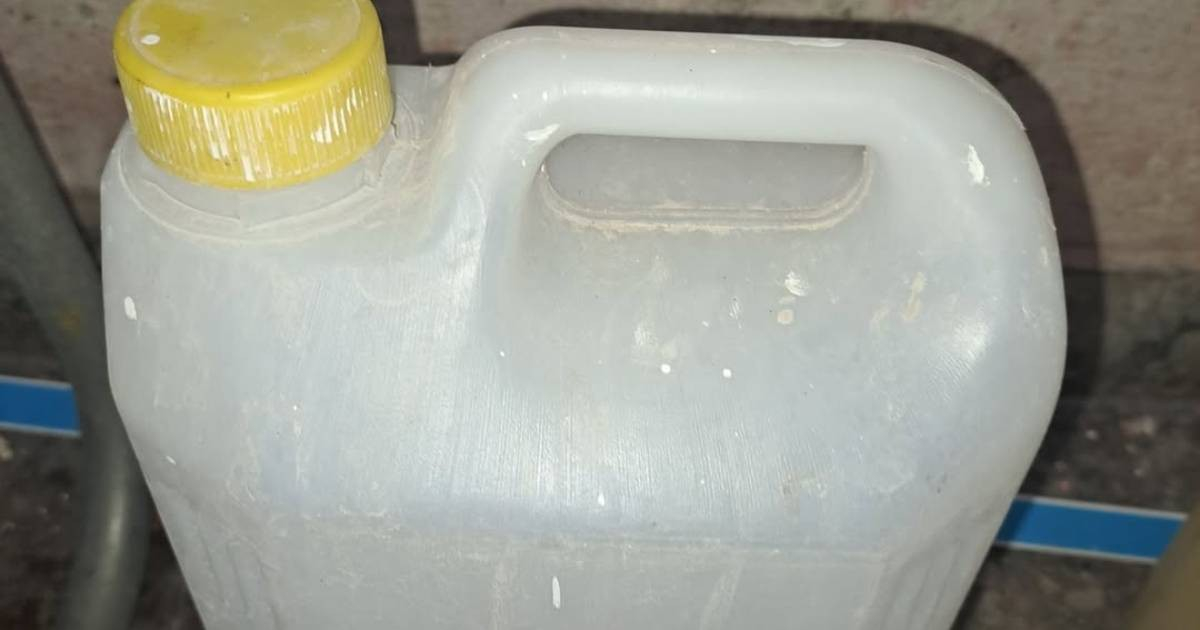
Two seven-year-old girls, thin and wearing flip-flops, were each carrying a gallon of water from the cistern of a primary school in Havana, a harsh reminder of the reality on the island.
The scene was described this Friday by Yulieta Hernández Díaz in a testimony published on Facebook that encapsulates, in one image, the water crisis that the Cuban capital is experiencing.
"Today I saw two little girls, slim and petite. They were about 7 years old, alone, each carrying a gallon of water from the school cistern," wrote Hernández Díaz.
The cistern belongs to the primary school Mariana Grajales and has become a supply point for the local residents, due to the lack of regular water supply in their homes.
What she describes is not just a picture of precariousness: days earlier, a neighbor from that same school died of a heart attack while carrying water from that cistern. "He died carrying water, I have no other way to express it," the author wrote.
The testimony contrasts the childhood that she and her children experienced—bathing under the garden hose, playing in rivers and lagoons during family vacations—with the current reality.
"There is no transportation, no fuel, no family trips, no vacations, no electricity to pump water, and no supply of drinking water. The children no longer laugh or sing," he noted.
The scene is not exceptional. In July 2026, more than half a million inhabitants of Havana lacked regular access to drinking water, according to specialists from Aguas de La Habana.
The figure had surged from about 200,000 affected in April to 376,055 in May, and exceeded half a million in July. On a national scale, estimates from that same period place the number of Cubans with severe water shortages at 2.7 million.
The structural cause is that approximately 87% of the supply system depends on electric pumping, which causes it to collapse with every power outage.
In light of the severity of the shortages, the regime mobilized tank trucks from the Armed Forces in municipalities such as El Cotorro, while in the informal market a 55-gallon tank reached prices between 2,000 and 2,500 pesos.
Hernández Díaz wrote his testimony while it was raining in Havana. He noted that in his community, neighbors collect rainwater as a survival alternative, but the rain no longer brings him relief: "I used to like the rain, but now it makes me sad; I no longer bathe in downpours. And while it rains, I think about collapses, about buildings that are in MIRACULOUS STATIC, in a COUNTRY THAT IS CRUMBLING."
In response to the official announcements about solar systems for water pumping and Cuban delegations in China studying municipal autonomy, the author posed rhetorical questions: "Now? How long will it take? How long will it last? Will the water arrive?" She also questioned the digital social assistance platform: "Will they be able to request social assistance? Are more than 8 million Cubans not vulnerable? I feel vulnerable."
Citizen complaints are piling up. This very Friday, a Cuban mother reported that her water was cut off and she was threatened, and the day before another Cuban revealed that she hasn't received water in her neighborhood for nine months. The UN warned in May 2026 that the combination of blackouts and lack of water increases the risk of dengue, chikungunya, and other diseases.
Hernández Díaz concluded his post with a single word that encapsulates what millions of Cubans experience: "We continue to OVERLIVE."
Related videos:
Filed under: