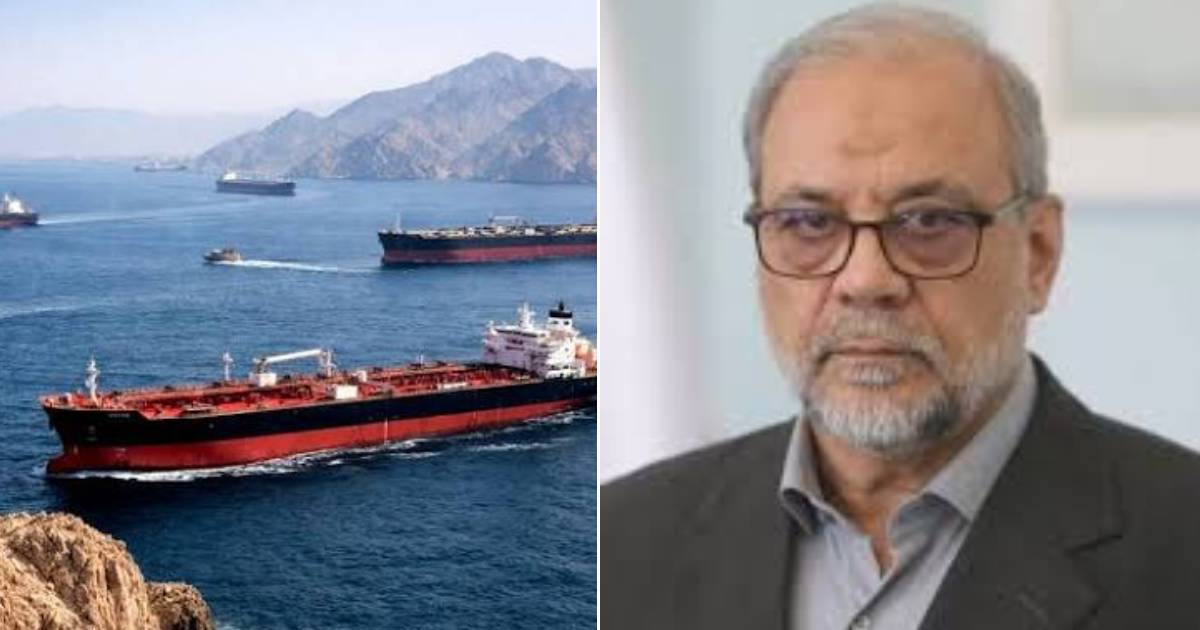
The top security official of Iran presented an extensive list of conditions that Tehran demands from Washington before reopening the Strait of Hormuz, abruptly dampening expectations of a diplomatic agreement that seemed imminent.
Mohammad Bagher Zolghadr, secretary of the Iranian Supreme National Security Council, issued a statement through state media outlining Tehran's demands: withdrawal of the U.S. military presence from the vicinity of Iran, lifting of the naval blockade and sanctions, and payment of reparations for war damages.
Additionally, the release of frozen Iranian assets, the cessation of attacks against Iran's regional allies in Lebanon, Palestine, Yemen, and Iraq, and an end to threats against the Islamic Republic.
"Until the United States corrects its behavior, the Strait of Hormuz will not be opened," Zolghadr warned in the statement.
The Iranian Foreign Minister, Abás Araqchí, added another condition to the list: "The reopening of the Strait of Hormuz is subject to other conditions, including that the United States compensates for the violations of the Islamabad memorandum," he stated to local media, referring to the 14-point framework agreement mediated by Pakistan and signed in June 2026.
The spokesperson for the Revolutionary Guard, General Hosein Mohebí, reinforced the message with an unequivocal ultimatum: "When the American side accepts the conditions of the Islamic Republic of Iran and abandons its interventionist approach, the conditions for the reopening of the Strait of Hormuz will undoubtedly be created."
The statements come at a time when Iran and Oman were engaged in advanced discussions about a new navigation route in the strait, with expectations of an imminent joint announcement regarding the geographical coordinates of the maritime corridor.
The Islamabad Memorandum, signed around June 17, had established a ceasefire, the reopening of Hormuz, and the lifting of the U.S. naval blockade, setting a 60-day deadline to negotiate a final agreement.
However, the agreement deteriorated quickly. In July, the U.S. resumed bombings against Iran in successive waves, and Iran reinstated the blockade of the Strait and declared the agreement with Washington suspended on the 18th of that month.
On August 2, President Donald Trump claimed to have reached "the foundations of an agreement" with Iran and indicated that he had canceled an imminent military attack.
The new demands presented this Saturday by the Supreme National Security Council contradict that narrative and highlight that the gap between both parties remains very wide.
The Strait of Hormuz is the world's most strategic maritime route for oil and gas trade, and its continued closure has a direct impact on global energy prices.
Tehran denied at the end of July that it was in direct talks with Washington and stated that it was only communicating with Oman regarding the future of the maritime passage, leaving Muscat as the only active diplomatic channel to help resolve a crisis that has persisted since the beginning of the year.
Related videos:
Filed under: