The administration of President Donald Trump took another step this Thursday in its policy of maximum pressure against the Cuban regime by imposing sanctions on five entities and eight senior officials linked to the acquisition of weaponry and the strengthening of the military capabilities of the Ministry of Revolutionary Armed Forces (MINFAR).
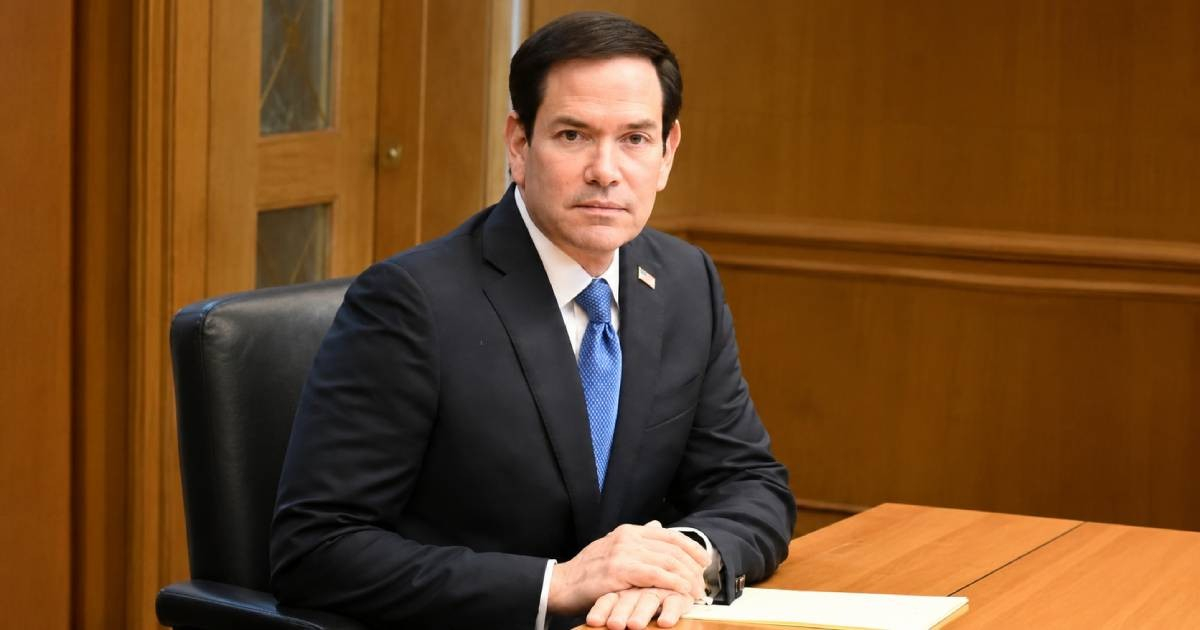
The measure was announced by Secretary of State Marco Rubio, who signed the designations under Executive Order 14404, enacted by Trump on May 1, 2026, to authorize sanctions against individuals and entities that support the Cuban repressive apparatus or pose a threat to the national security of the United States.
In a statement, Rubio described the Cuban regime as "a state sponsor of terrorism that uses its military and intelligence apparatus to spy on the United States, provide material support to violent radicals and terrorist groups, and spread pernicious Marxist ideology within our borders."
The Secretary of State also emphasized that Cuba continues to serve as a platform for the operations of Russia, China, and Iran just 90 miles from U.S. territory, and he again pointed to the military conglomerate GAESA (Grupo de Administración Empresarial S.A.) as the core of the regime's economic and repressive structure.
Unlike previous rounds, these sanctions specifically target the network that enables MINFAR to acquire weapons, equipment, and military technology in international markets, an aspect that had not been directly addressed by Washington until now.
Sanctioned companies
According to the Department of State, among the five entities included in the list are Tecnoimport, a subsidiary of GAESA that, according to Washington, allegedly participated in the importation of military equipment for the Cuban Armed Forces.
Duna S.A. was also sanctioned, a company accused of facilitating the entry of military material from China and Russia into Cuba.
The list also includes the Military Industry Union, responsible for the production, repair, and modernization of the armaments used by the Revolutionary Armed Forces.
Another affected entity is the Yuri Gagarin Military Industrial Company, which focuses on the maintenance of helicopters and military aircraft of Russian manufacture.
Complete the relationship with Tecnotex, another GAESA subsidiary associated with the defense and security sectors, involved in the repair of Russian helicopters and previous military cooperation projects with North Korea.
High-ranking officials from MINFAR were also included
The sanctions also affect eight officials linked to the Cuban military structure and the processes of acquiring weapons.
Among them is the Minister of the Revolutionary Armed Forces, Álvaro López Miera, as well as the Chief of the General Staff, Roberto Legrá Sotolongo.
Roberto Jesús Viciana Mousset, Heriberto Sánchez Alleyne, José Antonio Remón Rodríguez, Óscar Enrique Biosca Gallego, the military attaché of Cuba in Russia, Mónica Milián Gómez, and the military attaché in China, Waldo Pérez Cortés were also appointed.
According to the Department of State, all of them perform functions related to finance, international arms procurement, military relations, and the strengthening of the operational capabilities of MINFAR.
Warning to the international financial system
After the announcement, Rubio issued a warning to banks and companies from third countries that maintain relationships with individuals and entities under sanctions.
"Foreign banks and other companies that provide services to these sanctioned entities or maintain funds on their behalf must immediately cease those activities," wrote the Secretary of State on the social media platform X, warning that those who continue to collaborate with them could also become targets of U.S. sanctions.
Increasing pressure on Havana
The decision is part of a sustained escalation of sanctions initiated by the Trump administration in May of this year.
In recent months, Washington has progressively expanded the scope of measures against the Cuban regime. First, it
The accusations from Washington
The U.S. offensive is backed by national security concerns that the Trump administration deems increasingly serious.
According to intelligence information cited by Axios in May 2026, Cuba is said to have acquired over 300 military drones of Russian and Iranian manufacture and discussed possible plans to use them against the Guantanamo Naval Base, U.S. warships, and even targets in Key West, Florida.
U.S. officials also argue that up to 5,000 Cuban soldiers may have fought in Ukraine as part of Russian forces, which means that Moscow would have paid the regime around $25,000 for each deployed personnel.
This is complemented by the report "Cuba: The Capital of 21st Century Communism," published by the State Department in July of this year. The document, which spans nearly a hundred pages, accuses the Cuban regime of promoting radical left movements in the United States for over six decades and states that there are 18 signal intelligence facilities operating on the island, including two managed by Russia.
Rubio concluded the announcement by reaffirming the White House's stance towards the Cuban regime: "President Trump's determination is unwavering: the United States will not tolerate a pariah state harboring military, intelligence, and terrorist operations just ninety miles from U.S. territory."
Related videos:
Filed under: