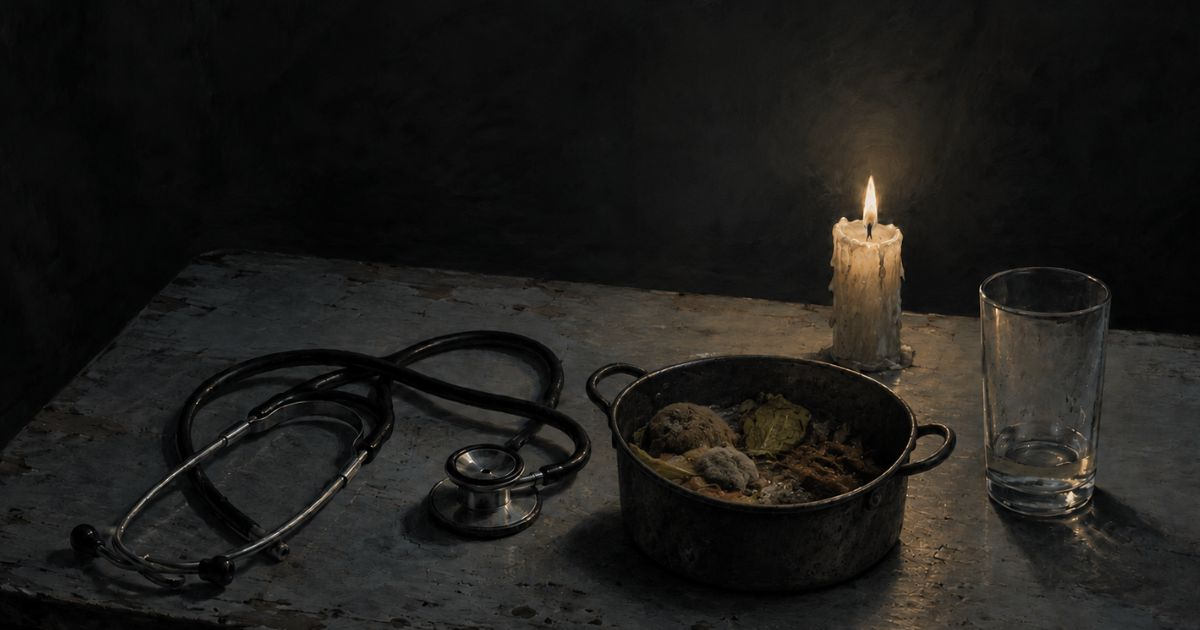
More than 100 continuous hours without electricity left Patricia, a geriatric doctor from Havana, watching as the few food items she had preserved spoiled, while her building also lost the ability to pump water, and exhaustion began to take a toll on her own health.
The testimony, published by the Food Monitor Program under the title "Patricia's Diary: More Than 100 Hours Without Power", follows the experience of this doctor residing in Playa, whose electrical circuit remained disconnected for over four days, nearing 120 hours without service.
The food was one of the first losses. A shake made of mamey and boiled pumpkin went bad; then the sausages and the meat stored in the freezer started to thaw, some of which had been sent by friends living outside of Cuba who had raised money to help her eat better.
The blackout also halted the water pumping in her building. After four days without being able to turn on the motor, Patricia estimated that soon she wouldn't have enough even for cooking or drinking, just as the food she was trying to preserve continued to deteriorate.
Her medical training made the situation even more distressing. Patricia was aware of the risks of consuming foods that have broken the cold chain and contemplated the possible consequences of falling ill in a country where obtaining medications and medical supplies has become another daily struggle.
Domestic precariousness is compounded by economic instability. According to her testimony, her salary as a doctor does not exceed 7,000 pesos per month, money with which she must buy food and personal hygiene products, pay bills, and often cover transportation to the hospital where she works.
As a geriatrician, Patricia asserts that over the past five years she has also observed a gradual decline among her patients, particularly among older adults struggling to maintain a proper diet.
The doctor describes the contradiction of explaining to families what those patients need while understanding that many simply cannot afford it.
The weariness reached such a point that, after several days without electricity, he considered going out with his pots to protest.
However, she remembered the prisoners from the 11J demonstrations and ultimately hesitated out of fear of becoming imprisoned and leaving her patients with one less doctor to care for them.
For Patricia, the reality of the day is simply overwhelming: returning from the hospital to find the house still dark, without water, and with the food that her friends managed to procure through great effort reaching the point of being unsalvageable.
At the end of his narrative, he compares that deterioration to what he feels accumulating in his own body after months and years of crisis.
Doctors in Cuba are facing one of the most challenging situations in the country: on one hand, they receive miserable salaries that, like many professionals, barely cover the most basic needs; on the other, they bear the burden of knowing how essential their work is for a population increasingly affected by the crisis.
Many Cuban doctors are currently torn between the need to survive and the responsibility of not abandoning their patients. However, Patricia's story is not unique and resonates with other recent testimonies from Cuban healthcare professionals.
In May, Liliana Isabel Salazar Villariño, a specialist in Comprehensive General Medicine, explained that she had stopped practicing because her salary was insufficient to feed her child, despite doing more than five shifts a month.
That same month, another reality was revealed when a Cuban doctor began selling flans to supplement her income, after her hospital salary proved insufficient to cover her family's basic needs.
At the end of June, Dr. Daniel Del Toro González from the Pediatric Hospital of Las Tunas described another aspect of the same issue: continuing to practice despite working "with what is available and not what is needed", in a country that, as he expressed, seems to push its doctors to leave the profession for better-paying jobs.
The wear is also reflected in the figures. Data from the National Office of Statistics and Information indicate that Cuba went from 106,131 registered doctors in 2021 to 75,364 in 2024, a decline of 30,767 professionals in just three years, amidst the exodus and the abandonment of positions within the sector itself.
Related videos:
Filed under: