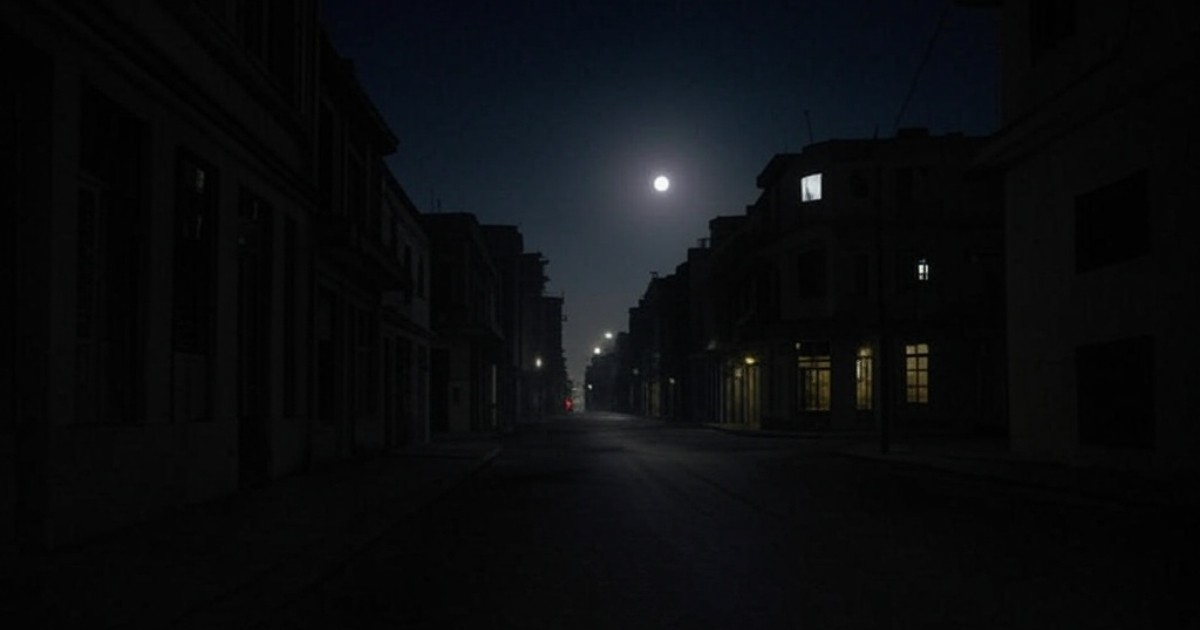
Several towns in the municipality of Caimito, in the province of Artemisa, remained 21 days without electricity following the theft of dielectric oil from transformers, a situation that prompted a heated public outcry from the Cuban journalist and troubadour Fidel Díaz Castro, known on social media as "Eldiablo Díaz," who called for life imprisonment for those responsible.
In a post on his Facebook profile, Díaz Castro —former director of the magazine El Caimán Barbudo and participant in the state-run television program La Pupila Asombrada— described the collective anguish he experienced as a direct witness during the repair work in the area.
"They should be shot. // I won't state this literally to avoid spending time responding to comments, which I don't have in abundance, but those who steal oil from transformers deserve 30 years or life imprisonment, along with the confiscation of all property and personal effects (even the toothbrush). They should be judged for theft, for sabotage in wartime, for treason against the homeland, and for quasi-genocide," wrote the journalist.
Díaz Castro recounted how linemen, authorities from various levels, and residents of Caimito and nearby towns gathered since dawn around the trucks that brought the oil needed to restore the service, amid rumors, endless debates about the technical procedures, prayers, and curses.
The wait stretched on for hours, complicated by a thunderstorm in the afternoon and by the explosion of at least one transformer, which gave credence to those who had already predicted this outcome.
The journalist vividly depicted the conditions in which families survived during those three weeks: "Families with children for more than 20 days, using mosquito nets, without even a small rechargeable fan, without cold water, buying light food for the day... in other words, what we experienced for 15 or 20 hours a day taken to the extreme."
Díaz Castro also gathered rumors about the arrest of those responsible and mentioned that, according to these same rumors, one of the individuals involved had left a note with names and details of the operations before taking his own life. This information cannot be independently verified.
The troubadour's denunciation, an intellectual integrated into the cultural system of the regime, and his demand for severe penalties reflects how far the theft of dielectric oil has exceeded tolerances, even among factions aligned with the government.
The phenomenon is not exclusive to Caimito. The Minister of Energy and Mines, Vicente de la O Levy, acknowledged before the National Assembly on July 29 that "the amount of oil that has been stolen from us is almost similar to what we are producing during the same period that we are being robbed," and warned that some communities have gone without electricity for as long as 105 days due to damage to special transformers, which operate on old and hard-to-replace voltages.
In the same province of Artemisa, in May a 36-year-old man was sentenced to 12 years in prison for stealing 70 liters of dielectric oil from a substation in Cayajabos, an incident that could have left about 4,000 people without service. In Holguín, the theft of oil led crimes against the electrical system until the end of July, accounting for more than half of the 42 incidents recorded in that province.
The oil is resold on the black market as a substitute for tractor fuel, at prices ranging from 500 to over 1,000 Cuban pesos per liter, while a single transformer, depending on its capacity, can cost between about 1,000 and more than 6,000 dollars in the international market.
Despite the —which instructed that these acts be classified as sabotage against the National Electric Power System, with penalties ranging from seven to 30 years, life imprisonment, or the death penalty in severe cases— thefts continue to multiply, and entire communities keep paying the price with weeks or months in the dark.
Related videos:
Filed under: