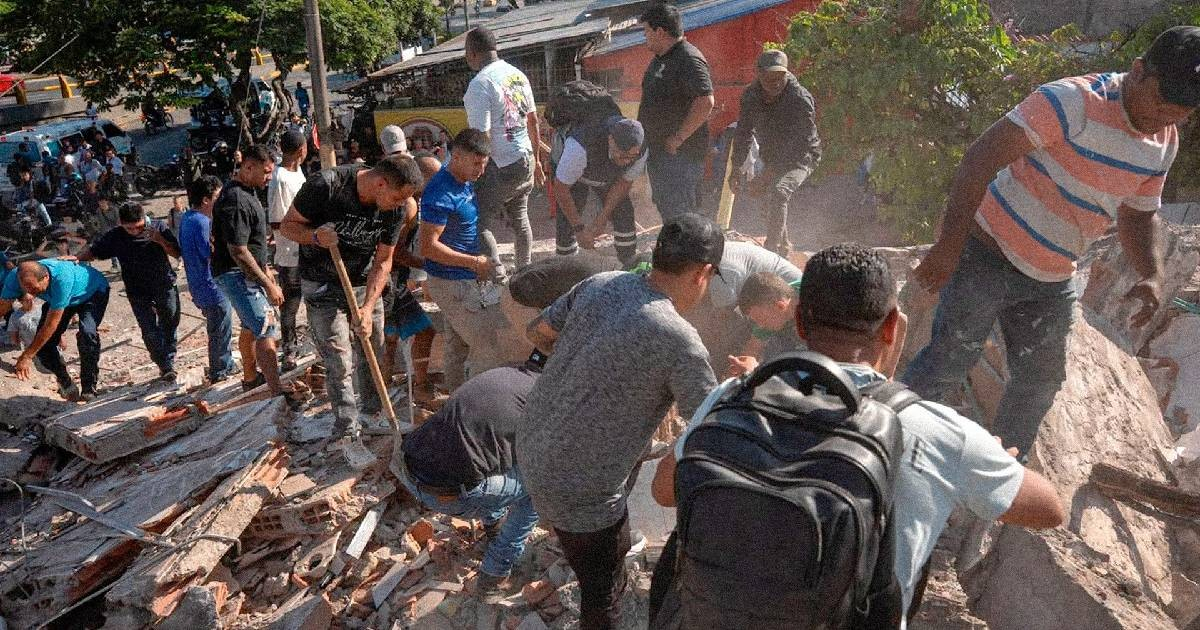
The casualty toll from the magnitude 7.4 earthquake that shook western Colombia on Monday morning continues to rise: the number of fatalities has reached 74 people according to the latest report from local authorities, with dozens of buildings collapsed and people still trapped in the rubble.
The earthquake, which occurred at 7:34 AM local time with its epicenter in the municipality of San José del Palmar in the department of Chocó, lasted approximately four minutes and was felt in the major cities of the country as well as in Ecuador and Panama. The Colombian Geological Service classified it as the strongest magnitude recorded in the country in a decade.
The most affected area is the metropolitan region of Pereira, where Mayor Mauricio Salazar confirmed 40 fatalities. "The situation is very tragic. So far, in the metropolitan area, we have reports of 40 deceased individuals, 65 collapsed buildings, and in 15 of those, it is suspected that there are people trapped," Salazar stated in an interview with La FM.
The official added that five hospitals in the city have collapsed due to the overwhelming demand for care and that there are people trapped in the megacable, although he specified that there is no immediate risk to them and they will be rescued once those in buildings at greater risk are attended to.
The 40 dead in Pereira are joined by 27 in Valle del Cauca not including Cali, four in Chocó, and three in Manizales, bringing the total to 74 fatalities.
In Cali, Mayor Alejandro Eder reported the collapse of at least 25 structures with people inside. "I have asked for help from Bogotá and Medellín to send rescuers," he wrote on his X account, also urging the public to remain calm and evacuate buildings that show serious cracks.
The governor of Chocó, Nubia Carolina Córdoba Curi, confirmed four deaths and 69 injured people in her department, and warned that although the epicenter was in San José del Palmar, there are also injured individuals and significant damage to buildings in the capital, Quibdó.
Seven airports suspended operations due to damage to their infrastructure: Cali, Pereira, Manizales, Quibdó, Armenia, Cartago, and Buenaventura. The General Maritime Directorate ruled out any tsunami threat for the Colombian Pacific coast.
The president Abelardo de la Espriella, who took office just three days earlier in a ceremony held in Cali, urgently traveled from Barranquilla to Bogotá to address the emergency at the offices of the National Risk Management Unit, where Interior Minister Rodrigo Lara and Vice President José Manuel Restrepo were already coordinating efforts.
The international response was swift. The United States and Mexico offered to send aid, while Ecuador announced the deployment of 47 rescuers with dogs and specialized equipment. Ukrainian President Volodímir Zelenski also spoke out: “We call on everyone in the world who can support the affected people and countries at this time to step forward and help.”
The United States Geological Survey issued an orange alert through its PAGER system, estimating that the most likely scenario for fatalities ranges between 100 and 1,000 people, with the possibility that the number could be even higher, indicating that the final toll could be significantly greater than currently anticipated.
Related videos:
Filed under: