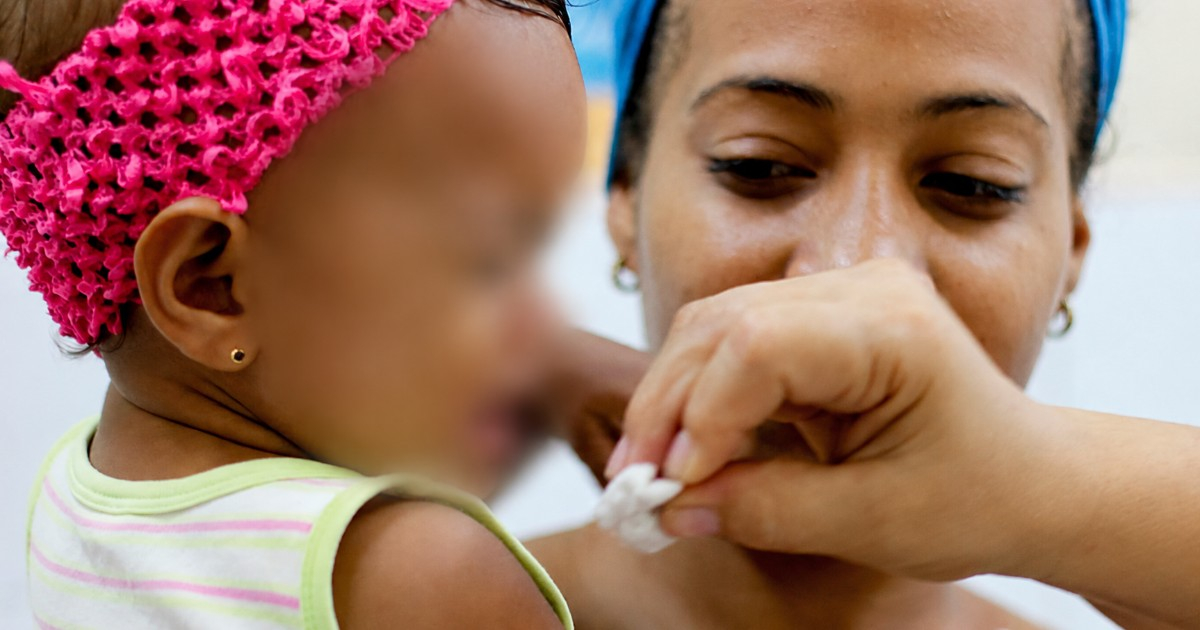
Miguel Díaz-Canel acknowledged on Monday, in front of an international audience gathered at the Palace of Conventions in Havana, that 67,000 infants under one year old born in recent months lack an up-to-date immunization schedule, a situation that the president himself described as unprecedented for Cuba.
The confession took place during the inauguration of the First International Colloquium "Fidel: Legacy and Future", held two days before the centenary of Fidel Castro's birth, in a speech of revolutionary exaltation before delegates from 63 countries.
"There are 67,000 children under one year old who have been born in recent months without an updated immunization schedule, when vaccination in Cuba and our immunization system have always been up to date," the leader admitted, emphasizing the exceptional nature of this figure.
The collapse of the vaccination program was not the only alarming indicator that the regime publicly acknowledged.
Díaz-Canel revealed that 98,500 patients are waiting on the surgical waiting list, including 12,000 children, due to a lack of resources and energy to keep the operating rooms functioning.
In addition to that number, there are 34,000 pregnant women who do not receive the necessary prenatal ultrasounds, and 117,000 adults along with 1,200 children with cancer who do not have access to primary treatments and must settle for second or third-line alternatives.
The shortage of medications has reached critical levels: according to the ruler himself, only 30% of the basic medicine supply is available, despite Cuba's capability to produce them.
Ambulances operate with a technical availability coefficient of 22% due to a lack of spare parts, and the country is facing the inability to acquire cobalt-60 sources for oncology treatments.
The situation worsens with the energy crisis: Díaz-Canel admitted that 1,400 megawatts of installed capacity remain inactive due to a lack of fuel, resulting in power outages of 20 hours or more each day, which directly impact the cold chain of vaccines and the operation of surgical rooms.
One of the most revealing pieces of information was the acknowledgment regarding infant mortality, an indicator that the regime has always showcased as a symbol of its social achievements.
“We had always maintained infant mortality rates between 4 and 5, which are rates typical of developed countries; however, in recent years the rate has doubled and currently stands at over 9.8, representing the deaths of children who could have been saved,” declared Díaz-Canel.
This figure matches the official data from the Ministry of Public Health, which reported an infant mortality rate of 9.9 per thousand live births at the end of 2025.
In Havana, the situation is even more severe: the rate reached 14 per one thousand live births in the early months of this year, the highest in over two decades.
Nonetheless, in light of this situation, Díaz-Canel insisted on highlighting the universal and free nature of the Cuban healthcare system and recalled that the country developed its own vaccines to combat the pandemic.
He also presented as part of Fidel Castro's legacy the construction of what he described as the most advanced universal healthcare system in the so-called Third World and the sending of more than 600,000 healthcare professionals to 165 countries through medical cooperation programs, valued globally as a system of modern slavery.
The leader also highlighted that Cuba has more than nine doctors for every thousand inhabitants and a life expectancy of 77.7 years, figures he used to defend the historical achievements of public health despite the current deterioration.
Related videos:
Filed under: