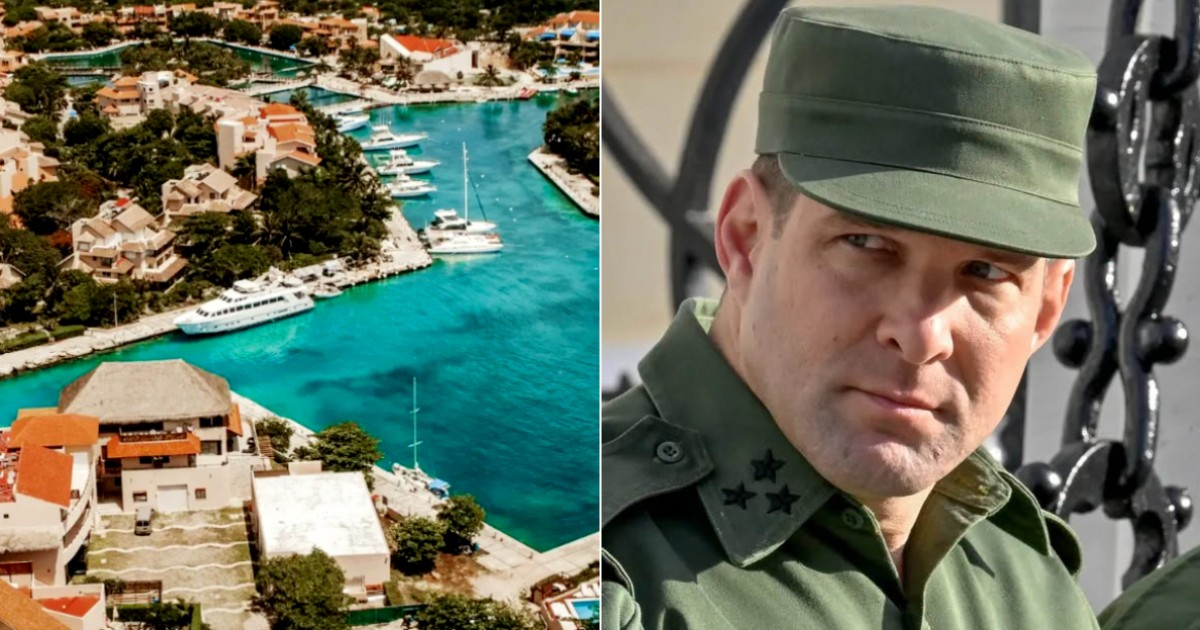
A research article from The New York Times published this Tuesday reveals the "Cuban Mafia in Quintana Roo," a transnational criminal network that for over a decade has trafficked migrants, stolen boats, and spread violence between Cuba, Mexico, Spain, and southern Florida.
Among the most striking details of the journalistic investigation is the revelation of the alleged connections of Raúl Guillermo Rodríguez Castro—nicknamed "El Cangrejo," grandson of the former Cuban leader Raúl Castro—to the supposed scheme.
The organization operated since at least 2009, when luxury vessels began to disappear from cities in southwest Florida: Sarasota, Naples, and Marco Island.
Members of the group stole more than 600 outboard motors and boats in the Tampa area to send them to their accomplices in the Mexican state of Quintana Roo, from where they clandestinely transported thousands of Cubans to the United States.
The cost of the transfer was $10,000 per person. Those who could not pay faced brutal consequences: held in safe houses, beaten with wooden planks, and subjected to electric shocks, while their families in the United States received threats of torture, starvation, and death.
According to the American media, some women were forced to work in nightclubs. According to court records consulted by the Times, approximately 25 people died during the journeys.
We applied physical punishment. Sometimes they were hit with a wooden board or a Taser gun, stated the convicted trafficker Reynaldo Crespo Márquez in 2023 before a federal court in Miami, who is serving a 20-year prison sentence.
The migrants who managed to pay were transported by bus to the border and instructed on how to apply for political asylum. Among those who took that route are shortstop Adeiny Hechavarría and the Dodgers' slugger Yasiel Puig.
The organization's violence was not limited to human trafficking. In 2009, several members conspired to kidnap and murder a man in a dispute with the Zetas cartel; the body was dismembered and thrown into the sea.
In addition, the network also purchased goods using stolen credit cards to smuggle them into Cuba and sell them in government stores, and sought to profit from drug trafficking.
These guys were the real pirates of the Caribbean, said David Bolton, a private investigator who claims to have uncovered the operation while working on an unrelated case and brought the matter to federal authorities. Bolton described them as ruthless killers.
The most explosive element of the report is the alleged involvement of "El Cangrejo" in the criminal network.
According to testimonies from at least two convicted individuals, Rodríguez Castro —a lieutenant colonel of the MININT and head of the General Directorate of Personal Security since 2016— allegedly collaborated with the organization from within Cuba, receiving bribes to keep the Cuban Coast Guard and Customs at bay and ensure the safe passage of people and goods.
José Miguel González Vidal, a Cuban-Spanish citizen sentenced to 25 years in prison after pleading guilty at the end of 2023, claimed he delivered to "El Cangrejo" a high-performance Fountain 38 boat, a Rolex watch, a Suzuki motorcycle, and Louis Vuitton clothing.
The FBI reportedly extracted text and voice messages from the phones of members of the organization that would support those testimonies, according to sources familiar with the case.
Rodríguez Castro has not been formally accused of any crime in the United States and did not respond to NYT requests for comment. The Cuban regime labeled the accusations as "slander," and Deputy Foreign Minister Carlos Fernández de Cossío stated that "there is no connection with the Cuban government."
The investigation, known as Operation Sisyphus, was conducted by a joint task force of the FBI and the Department of Homeland Security. At least 21 people have been convicted. In April, Mexican authorities arrested Remigio Valdez-Lao, 59 years old, identified as a key financier of the group —who had previously been detained in Sarasota in 2010— and who is facing extradition to the United States.
The figure of "El Cangrejo" gains special significance considering that in May of this year, the CIA Director, John Ratcliffe, traveled to Cuba and met with high-ranking officials from MININT, including Rodríguez Castro, who has emerged as an informal channel between Havana and Washington.
Despite the sanctions imposed on other high-ranking officials of the regime, for now, “El Cangrejo” does not appear on any list of U.S. sanctions.
Related videos:
Filed under: