The U.S. government announced on Monday two measures that could significantly change the oversight of ingredients used by the food industry and the way authorities study ultra-processed foods, as part of the "Make America Healthy Again" (MAHA) agenda of the Trump Administration.
The Department of Health and Human Services (HHS), led by Robert F. Kennedy Jr., along with the Food and Drug Administration (FDA) and the Department of Agriculture, presented a proposal to require manufacturers to notify authorities about certain ingredients they deem safe, according to a press release.
At the same time, the government moved forward with the creation of the first federal definition of ultra-processed foods, a criterion aimed at unifying research and serving as a foundation for future nutrition and public health policies.
The first of the measures aims to close a regulatory gap that dates back to 1958, when Congress established the category Generally Recognized as Safe (GRAS).
The mechanism allows manufacturers to determine that certain substances are safe for use in food without necessarily having to notify the FDA in advance.
Kennedy argues that this system has created a significant blind spot for regulators for decades, to the extent that the FDA itself cannot accurately determine how many ingredients are currently in the U.S. food supply.
The new proposal would change this situation by establishing mandatory notifications, expanding the public inventory of substances used in food, and creating a streamlined procedure for reporting ingredients that are already on the market.
If definitively approved, companies would have to provide the FDA with information about substances that until now they could consider safe based on their own procedures.
"By proposing mandatory GRAS notifications, we are addressing significant gaps in information and providing the FDA with greater visibility into the substances entering the food supply," stated FDA Acting Commissioner Kyle Diamantas.
The proposal will now enter a 120-day period to receive public feedback before the authorities can move forward with a final regulation.
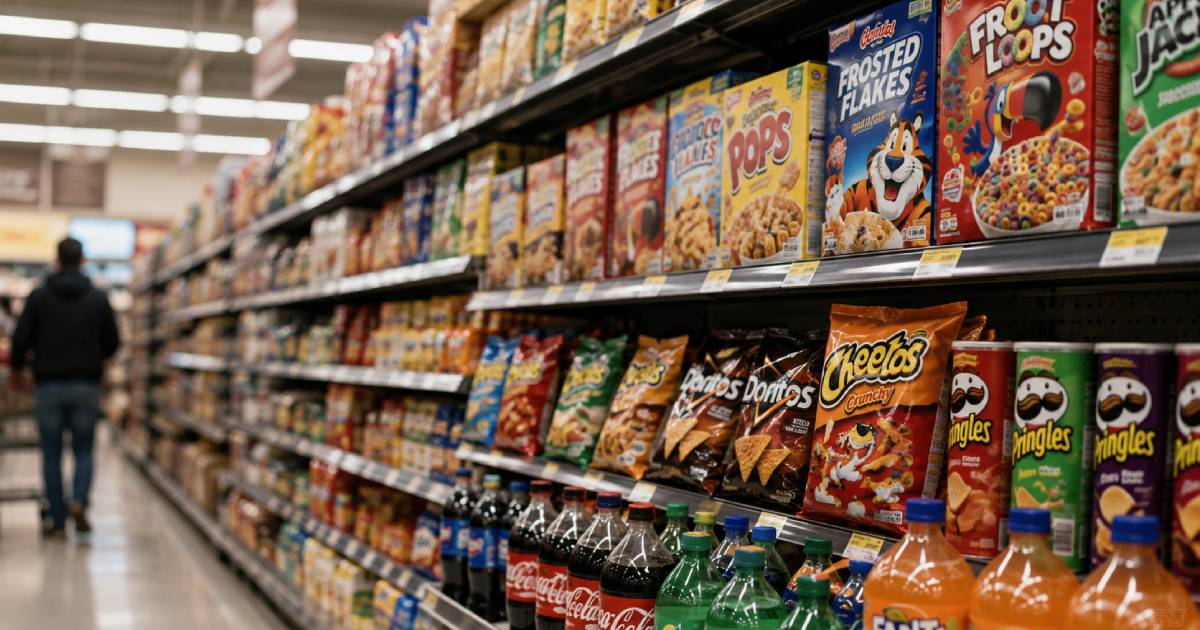
The second initiative addresses another issue that has gained increasing importance in the debate about food and chronic diseases in the United States: what exactly should be considered an ultra-processed food.
Until now, the federal government lacked a standardized definition, making it difficult to compare research and establish uniform criteria among the various agencies.
The proposed definition was developed following a public consultation process that incorporated feedback from stakeholders, including industry, consumer organizations, researchers, and citizens.
The objective is significant. Kennedy stated that about 60% of the diet of Americans consists of ultraprocessed foods, a figure that increases to approximately 70% among children.
The Secretary of Health linked the high consumption of these products to his administration's concern about the rise of chronic diseases and noted that more than one in five American children suffer from obesity. "We cannot reverse the epidemic of chronic diseases in the United States without transforming our food system," Kennedy stated.
The creation of a federal definition, however, does not mean that the United States will automatically prohibit or restrict foods that are classified as ultraprocessed.
Its initial purpose will be to establish a common framework that allows federal agencies to use the same criteria in nutrition and health research and that, eventually, can serve as a reference for future regulatory decisions.
The two initiatives could have significant consequences for the food industry.
The requirement for GRAS notifications would mean that manufacturers must document and report on ingredients that they previously could determine to be safe on their own, a process that could increase costs and regulatory obligations for companies.
Kennedy also acknowledged that there are limits to what the administration can change solely through Executive actions and urged Congress to approve legislation aimed at strengthening the oversight of the food supply.
According to the secretary, HHS and the FDA are using the legal authorities they currently have, but additional tools will be necessary to move forward.
Related videos:
Filed under: