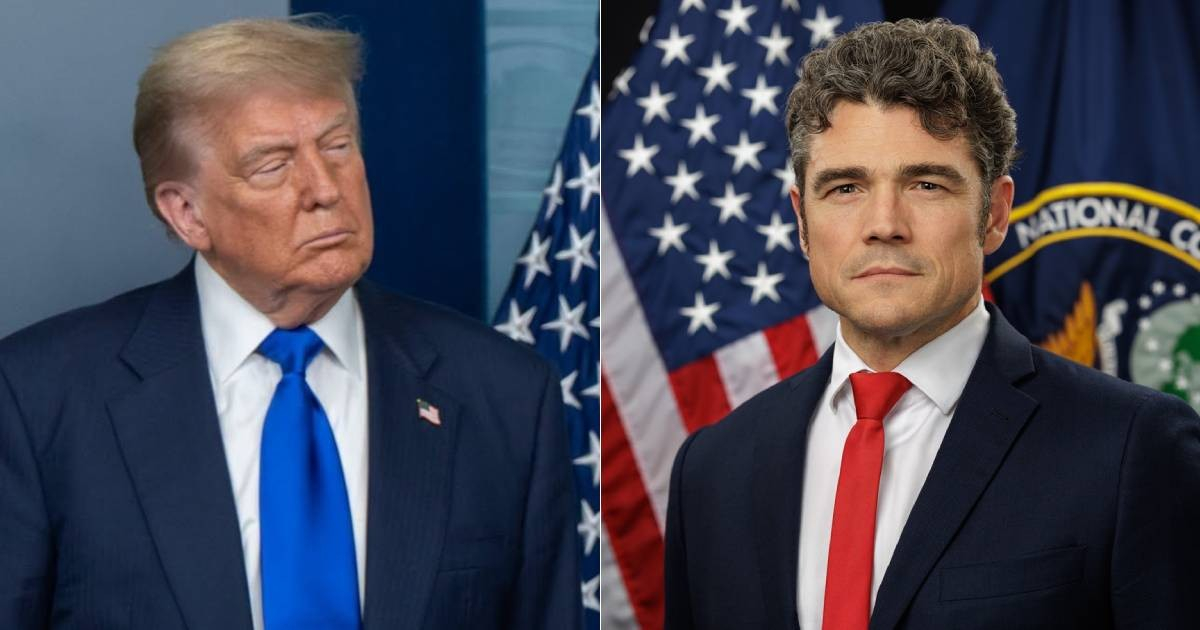
Joe Kent, former director of the U.S. National Counterterrorism Center, accused warlike sectors in Washington of pushing President Donald Trump toward war with Iran in order to undermine his agenda and destroy his political legacy.
In an extensive post on X, Kent, who resigned from his position in March 2026 due to his disagreements over the conflict, argued that Trump was on track to achieve much of his domestic agenda until the United States became militarily involved in Iran.
“Until the situation with Iran, Trump was on the right track to correct the course in domestic policy. The reality is that this warlike faction has always hated Trump, and they convinced him to get into this mess hoping it would destroy his legacy and derail his administration's promise to finally prioritize the needs of the American people,” he stated.
Her words represent a harsh criticism from the political environment that supported the leader and reflect the divisions that the war has caused among sectors of the movement that brought Trump back to the White House.
For Kent, the president's best option now is to withdraw the United States from the confrontation before a military escalation makes any resolution much more difficult.
The most powerful thing President Trump can do right now is simply step back; it’s his best option to end the war with Iran," he wrote.
According to the former official, to achieve this, Trump would have to withstand what he described as an anticipated pressure campaign from sectors in favor of sustaining or expanding U.S. intervention.
Kent added that the leader must "disregard the inevitable avalanche of pressure campaigns and cries from the pro-war neoconservative and Israeli group that he will undoubtedly face."
The former director of the National Counterterrorism Center even suggested a possible formula to end the confrontation: that Trump publicly declare victory and privately negotiate relief from sanctions and the unfreezing of Iranian assets in exchange for reopening the Strait of Hormuz.
The maritime passage is one of the critical points in the crisis due to its importance for global energy trade. Approximately 20% of the oil consumed worldwide passes through its waters.
Kent believes that prolonging the current naval confrontation also poses an increasing risk to U.S. forces deployed in the region. "Iran has shown that its ballistic missiles can reach our ships; we are one failed interceptor away from a mass casualty event that could drag us into a wider war," he warned.
His statements come at a time of peak tension around the strait.
During the weekend, the Supreme National Security Council of Iran presented six demands for its reopening, including a permanent end to the war, the withdrawal of U.S. naval and air forces from the region, the lifting of sanctions, and the payment of reparations.
Tehran has not committed to fully restoring transit while U.S. forces remain in the area.
Kent warned that Washington must avoid responding to those conditions with an escalation that could make an even greater war inevitable. He also urged an assessment of the consequences that some U.S. and Israeli operations may have had on Iranian society.
"We must consider the impact that killing the Ayatollah and bombing the girls' school had on the radicalization of Iranians," he wrote.
The current conflict began on February 28, 2026 with Operation Epic Fury, a joint offensive by the United States and Israel against Iranian targets in which the supreme leader Ayatollah Ali Khamenei was killed.
Since then, the war has gone through successive phases of attacks, attempts at negotiation, and ceasefires that failed to solidify, while the Strait of Hormuz became one of the main points of economic and military pressure.
But Kent's criticisms go beyond the military strategy in Iran and directly target the future of the political movement built around Trump.
Beyond this recent publication, Kent has disclosed in recent interviews and meetings that he is collaborating with Republican representatives Thomas Massie and Marjorie Taylor Greene to build a broader political coalition that, he claims, could even include leftist sectors opposed to military interventions.
Kent also noted that the creation of a new political party is among the possibilities being discussed, signaling the depth of the fractures that have emerged within the political space that has traditionally supported the president.
Despite the harsh criticism, the former official believes that Trump still has room to present a withdrawal from Iran as a political success and prevent the conflict from defining his presidency.
But, as he warned, that opportunity could close quickly. "Trump has the political power to present this maneuver as a victory, but his time to do so successfully is running out," he concluded.
Related videos:
Filed under: