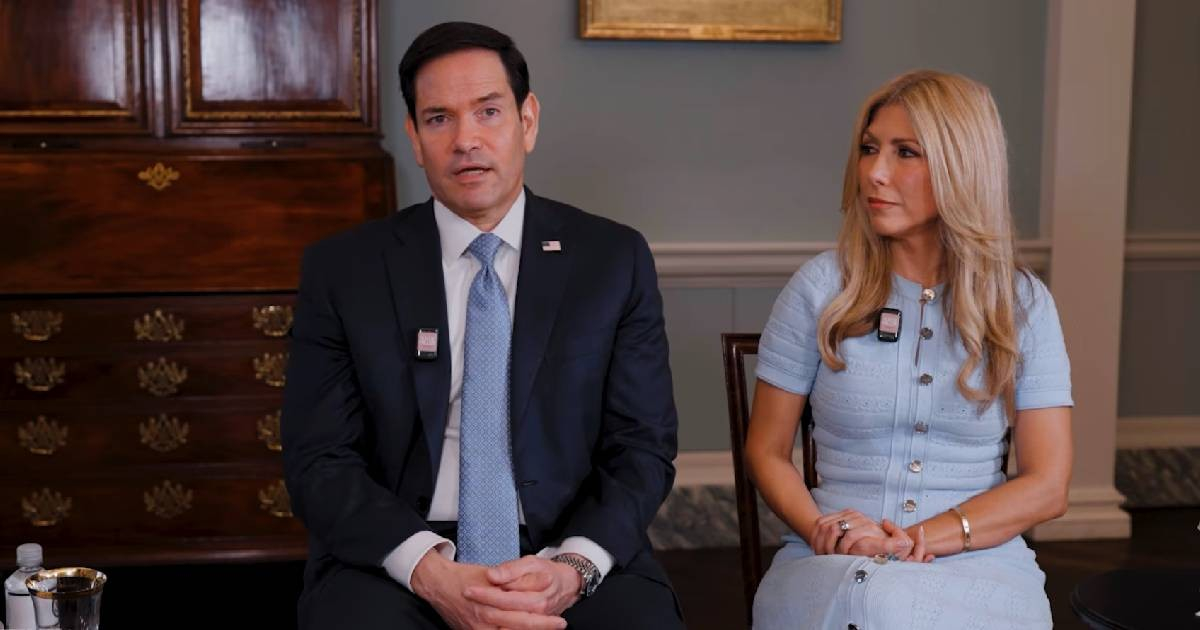
Marco Rubio made it clear this Tuesday what Washington's goal for Cuba is: that the island be "safe, stable, and aligned with the U.S.," a goal he framed as a matter of national security rather than a personal cause, according to comments on the podcast Katie Miller Pod.
"I remember that, at the end of the day, I work for the United States of America. I care about Cuba; I obviously have a personal connection to it, but I do not work for Cuba. I work for the United States, and I believe it is in the national interest of our country to have a Cuba that is safe, stable, and aligned with the U.S. The same sentiment I have about Venezuela," the official noted.
The Secretary of State's words came in response to host Katie Miller's direct question about whether Cuba would be "next" following the capture of Nicolás Maduro in Venezuela, which took place on January 3, 2026.
Rubio responded confidently: "I am sure that Cuba, before this administration ends, will be on an irreversible path towards a very different future."
Rubio warned, however, that change cannot be instantaneous given that the regime has been entrenched on the island for more than 70 years: "You can't have something in place for 70 years, that takes root, and think that overnight you are going to uproot everything and put something completely new in its place. There is a transition that must occur and a process to get there".
As a reference model, the Secretary of State cited the experience of Eastern Europe after the fall of communism: "Poland is probably the best example. It took them between three and five years to become what we know today." Rubio suggested that Cuba will follow a similar transformation process, with the goal of ensuring that this path is "well underway" before the end of the Trump administration.
Jeanette Rubio, the secretary's wife, also took part in the episode and revealed that in the weeks leading up to Maduro's capture, she sensed that something significant was in the works: "He was constantly going in and out. We didn't do anything during the holidays. I knew something was happening, but I didn't know exactly what it was."
The statements from the podcast are made in the context of a maximum pressure campaign against the Cuban regime that the Trump administration has executed since January 2026, with more than 240 sanctions imposed on the island, measures against over 40 entities —including the military conglomerate GAESA and the state-owned mining company Moa Nickel S.A.— and at least 38 individuals.
In early June, Rubio testified before the Senate that Cuba needs “new people in charge” for a real change to happen, and in July, he revealed that Washington offered assistance for reconstruction and a new bilateral relationship, contingent upon specific political and economic reforms.
This Tuesday, Díaz-Canel struck out against Rubio and accused the United States of interference, marking the regime's latest response to the increasing pressure from Washington.
Rubio, for his part, has described his strategy as "closing every mechanism" for the regime's evasion of sanctions, and he has warned that Washington will not tolerate military operations, intelligence activities, or hostile actions from the island.
Related videos:
Filed under: