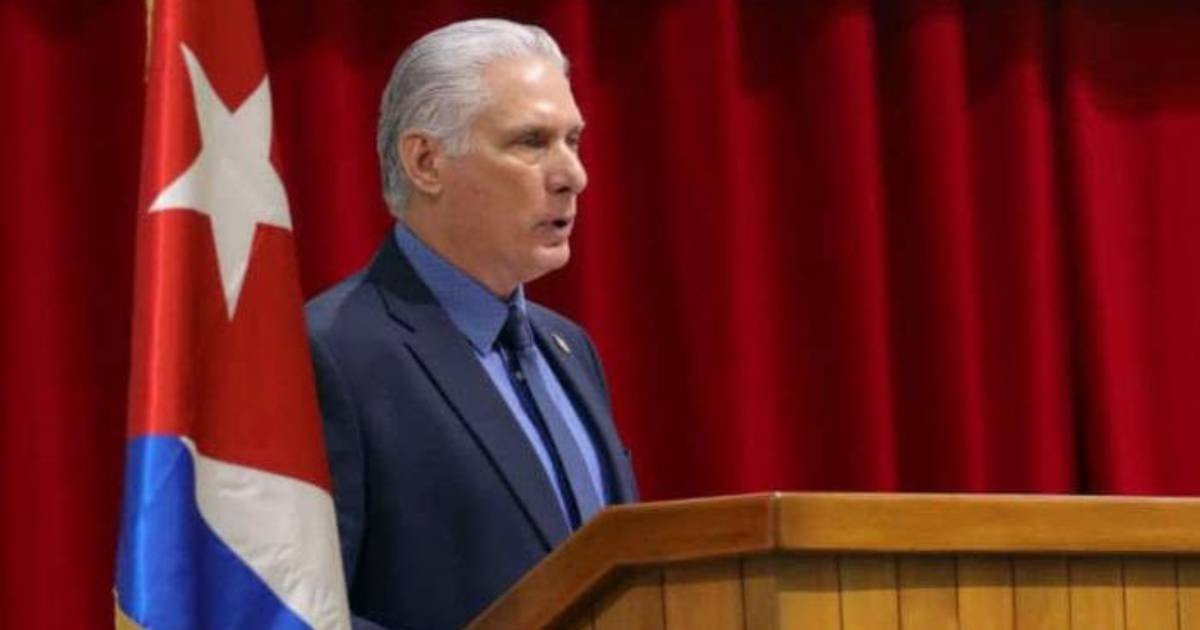
Miguel Díaz-Canel launched a strong attack against U.S. Secretary of State Marco Rubio, describing his recent statements regarding the tightening of pressure on Havana as an "open threat of genocidal extermination against an entire people."
The Cuban ruler made the accusation during the inauguration of the I International Colloquium "Fidel: Legacy and Future," held on Monday at the Palace of Conventions in Havana, just before the centenary of the birth of the dictator Fidel Castro.
Díaz-Canel’s target was an interview granted by Rubio to Axios on August 7th, in which the head of U.S. diplomacy made it clear that Washington intends to continue closing off avenues that would allow the Cuban government to mitigate the effects of its maximum pressure policy.
«What we are trying to teach them is that there are no escape valves», Rubio stated.
Díaz-Canel directly responded to those words during his speech.
"It is the height of cynicism that, when referring to the economic measures being taken against Cuba, the U.S. Secretary of State said: 'What we are trying to teach them is that there are no safety valves,'" he stated, according to the transcript published by the Cuban Presidency.
For the leader, that statement represents "the open threat of genocidal extermination of an entire people if they do not submit to the designs of the empire."
Rubio's words came just three days before the symposium, which brings together in Havana over 1,500 delegates from 63 countries, including more than 1,000 foreigners, as part of the official events to commemorate the centenary of Fidel Castro, celebrated on August 13.
Washington intensifies pressure on Havana
The verbal confrontation occurs amid a new escalation of measures by Washington against the Cuban government.
One day before Rubio's interview, the State Department announced sanctions against five entities linked to the Cuban military-industrial complex, including Tecnoimport, Duna S.A., and the Military Industry Union, as well as against eight officials.
Among those sanctioned are the Minister of the Revolutionary Armed Forces, Álvaro López Miera, and the head of the General Staff, Roberto Legrá Sotolongo, for their involvement in the acquisition of weapons and military cooperation between Havana and Russia and China.
Since January 2026, the administration of Donald Trump has deployed over two dozen actions against Cuba, with sanctions targeting more than 40 entities and at least 38 individuals. In June, the measures directly affected Díaz-Canel and his wife, Lis Cuesta Peraza.
The First International Colloquium "Fidel: Legacy and Future" will continue until August 13, marking the 100th anniversary of Fidel Castro's birth.
The anniversary has taken a central place in the political and communication agenda of the government during 2026, as the island approaches the centenary of the leader who governed Cuba for nearly half a century, while mired in a deep economic, energy, and social crisis and amid a growing confrontation with Washington.
Related videos:
Filed under: