Residents of the Cuban capital claim that contaminated water, resembling sewage, is flowing through the pipes in many neighborhoods of Havana.
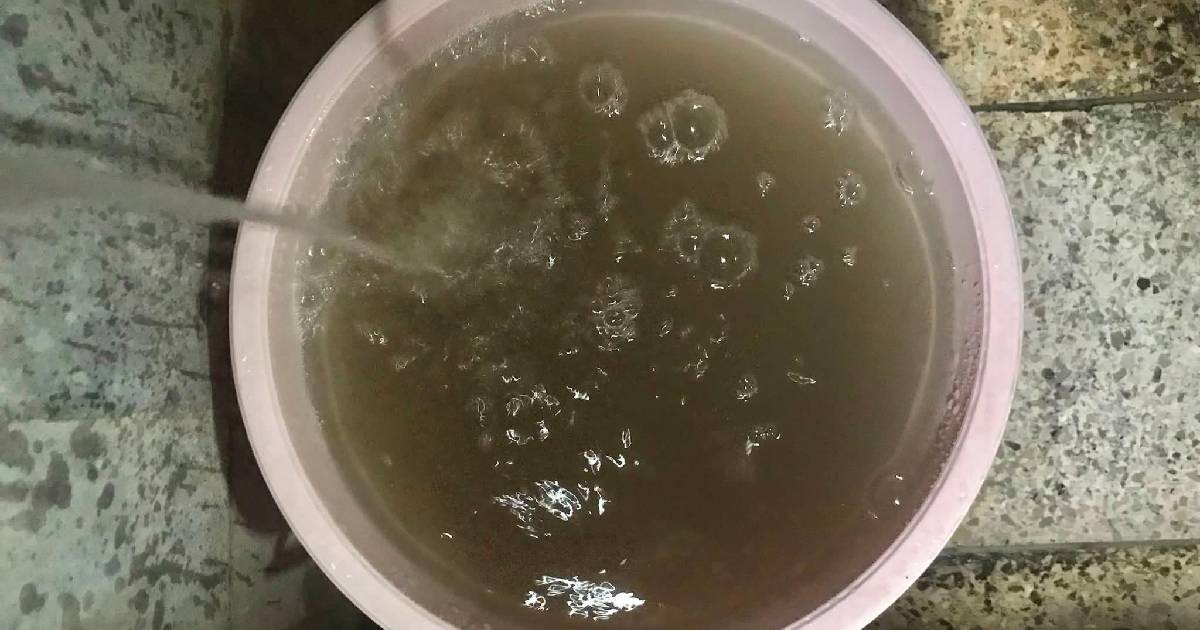
"Our pipes release wastewater", wrote an affected individual in the Facebook group "Victims of Aguas de La Habana," a report that gathered over 1,052 reactions and is accompanied by an image that speaks volumes: a white plastic bucket filling up with murky brown-green water.
The photograph, taken from above, shows the water streaming down onto a liquid that is far from drinkable, onto a stained floor and walls marked by dampness and decay. No laboratory analysis is needed to understand what that image represents.
The mechanism behind this contamination is known and documented. When water pressure drops —something that happens daily due to the blackouts that halt the pumps— cracked or damaged pipes draw sewage into the drinking water network.
Periodismo de Barrio explained it in detail in 2018, but the problem not only persists: it has alarmingly worsened.
The structural reason is that the sewage system of Havana was built between 1905 and 1915 for a city of about 600,000 residents. Today, it serves nearly two million people, with 1,755 kilometers of pipes in a state of obsolescence. The main conduits have accumulated between 60 and 70 years of continuous use without sufficient replacement.
This is compounded by the fact that 87% of the water supply system in the capital relies on the electrical grid, which makes each blackout a direct blow to the water supply. Additionally, between 40% and 70% of the water that is successfully pumped is lost to leaks before it reaches homes.
The number of affected individuals has only continued to rise. In April 2026, officials acknowledged around 200,000 residents of Havana facing supply issues. In May, the president of the National Institute of Hydraulic Resources, Antonio Rodríguez Rodríguez, confirmed that 376,055 people were affected, of which more than 309,000 were directly impacted by power outages.
In July, Aguas de La Habana specialists raised that figure to more than 500,000 consumers.
The health consequences are not hypothetical. In 2020, outbreaks of poisoning linked to the mixing of sewage systems with drinking water pipes were already being reported in Havana.
In March 2024, residents of Santiago de Cuba reported sewage blocking a drinking water access point with a phrase that left no room for doubt: "We are drinking shit water."
In January 2026, sewage flowed under the beds of patients at the Juan Bruno Zayas Hospital in Santiago de Cuba. That same month, residents of Jesús María, in Old Havana, reported streets flooded with wastewater and garbage. In April, a viral complaint showcased sewage flooding a street in Havana near educational institutions for children.
In July 2026, the Food Monitor Program warned of a public health emergency in the capital due to uncollected waste, collapsed sewers, and spills running along public roads, cautioning that "garbage and waste can mix with drainage and seep into local water bodies."
Meanwhile, a Cuban woman reported this month that she has gone nine months without receiving water in her neighborhood in Havana, a situation that the regime has neither been able to —nor does it seem willing to— resolve with the urgency it demands.
Related videos:
Filed under: