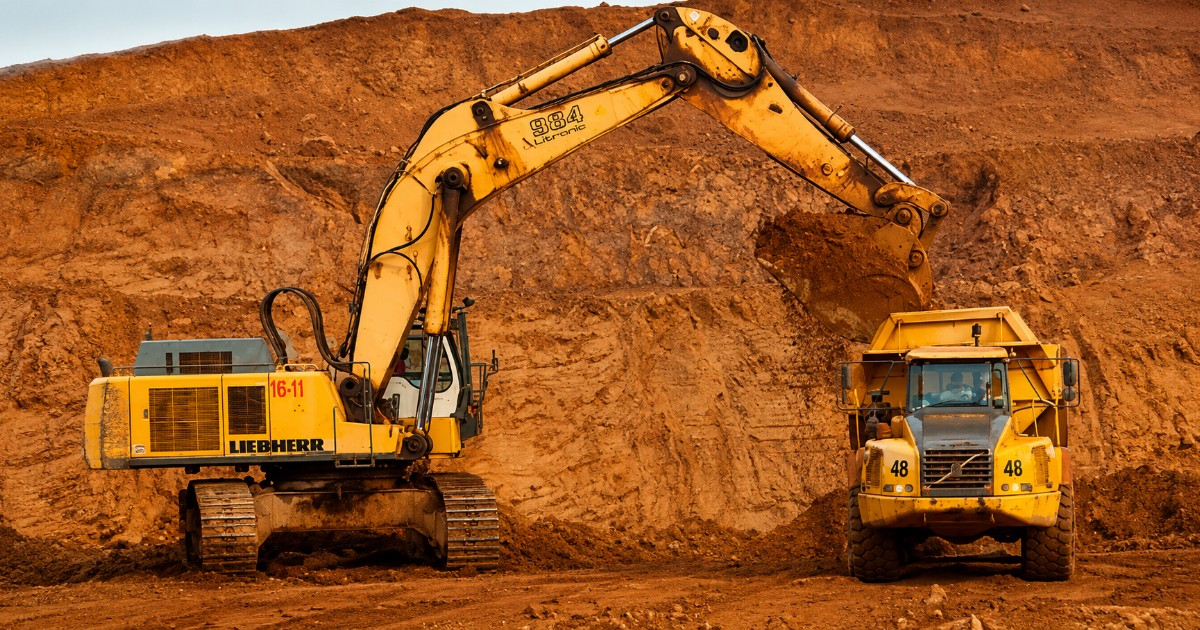
Two rival groups of American capital are competing to take control of the largest nickel and cobalt mining operation in Cuba, on land that Fidel Castro's regime confiscated from American and Cuban owners over six decades ago, according to an investigation by the Miami Herald.
Both offers target 55% of Sherritt International Corporation, the Canadian company based in Toronto that operates the Moa mines in the province of Holguín, in a 50% joint venture with the Cuban state-owned General Nickel Company.
The first to perform was Gillon Capital, LLC, associated with the Texan businessman Ray Washburne, who led the U.S. government development bank for foreign investments during Donald Trump's first term.
In May, Gillon reached a preliminary non-binding agreement to acquire that 55% of Sherritt, according to the U.S.-Cuba Trade and Economic Council.
Last Monday, a second consortium publicly revealed that it had submitted a competing offer to the board of directors of Sherritt since the end of June.
This group is composed of Kyma Capital (London), hedge fund investor Trifon Natsis, commodity giant Glencore, and a "prominent" American investor whose identity has not been disclosed.
Unlike Gillon's proposal, this offer includes cash upfront, at a price of 0.12 Canadian dollars per share.
If either of the two operations materializes, it would be the first mining company backed by U.S. capital in Cuba in six decades, as highlighted by the Miami Herald.
The Sherritt crisis was triggered by the sanctions from Washington. On May 1, Trump signed an executive order that expanded the powers of the U.S. to penalize foreign companies operating in Cuba's mining and energy sectors.
Six days later, the State Department sanctioned Moa Nickel S.A., the joint venture that Sherritt operates with the Cuban government.
Although the Canadian company was not directly designated, it suspended its participation in Cuba, withdrew its staff from the island, and witnessed the resignation of its chief financial officer, its auditor, and three members of its board.
Its refinery in Fort Saskatchewan, Alberta, halted production in June, and the company warned that it could run out of funds to operate without new investment.
The historical background adds a layer of enormous legal complexity.
The Moa Bay Mining Company, then controlled by Freeport Sulphur Company —one of the predecessors of the current Freeport-McMoRan—, was intervened by the Cuban government on August 19, 1960.
The United States Foreign Claims Settlement Commission later certified losses amounting to $88,349,000 related to its concessions and mining properties in Cuba.
This is joined by a lawsuit filed in July by the Cuban Electric Company —owned by Atlas Holdings, a Connecticut firm that also owns Office Depot— against the Cuban state electricity company and Energas S.A., a generation company in which Sherritt holds one third.
The certified claim of the Cuban Electric Company is the largest of all: 267.6 million dollars plus decades of accumulated interest.
Given that Sherritt holds a 33% stake in Energas, the U.S.-Cuba Trade and Economic Council believes that the demand could complicate a potential acquisition of the Canadian mining company or, conversely, open a pathway to simultaneously resolve two major claims related to properties confiscated in Cuba.
Among those affected is also William Pitt, a retired engineer residing in Miami, who claims that Sherritt expanded its operations beyond the original boundaries of Moa Bay, including mines that belonged to his father.
Pitt told the Miami Herald that he had already warned Gillon Capital about a potential legal action: "I have already written to Gillon and explained that we own those mines that border those of Sherritt and that Sherritt has been extracting from. When they purchase the 55% of Sherritt, we will be able to sue Gillon."
Any final transaction will require authorization from the State and Treasury departments, in addition to agreements with the holders of claims stemming from the confiscations of the 1960s.
According to the Miami Herald, both Gillon Capital and the rival consortium claimed that the State Department has not opposed their negotiations with Sherritt.
However, that agency did not respond to the newspaper's request for comments on Gillon's preliminary agreement.
Related videos:
Filed under: