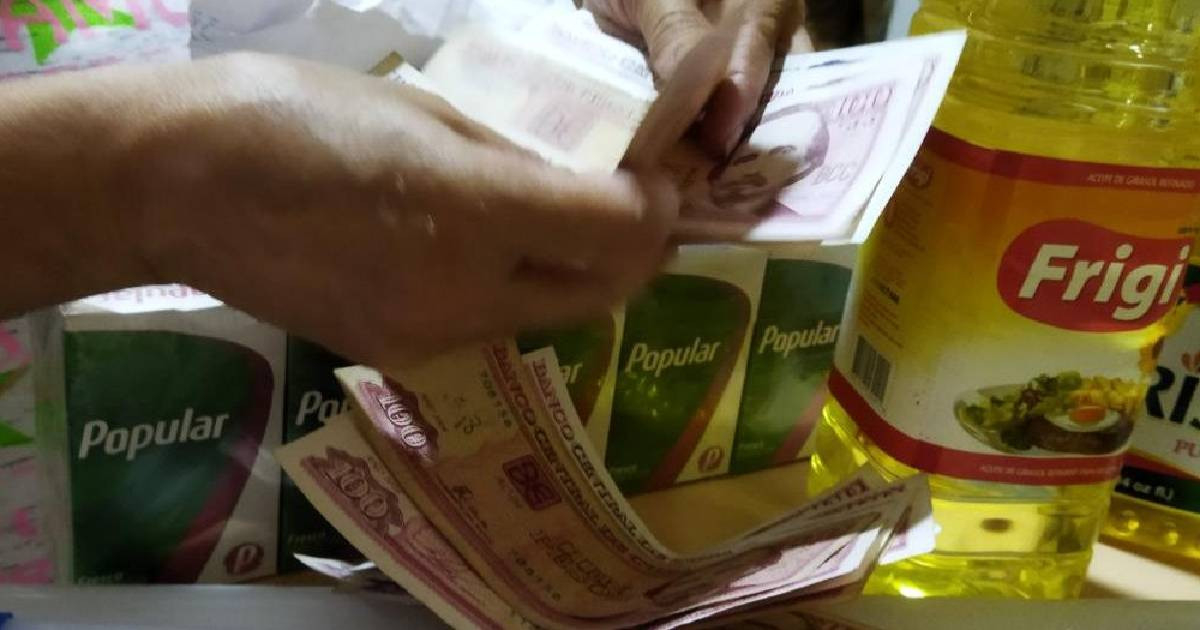
Authorities in Sancti Spíritus are currently conducting a massive inspection operation of private businesses, called "Comprehensive Visit to Economic Actors," aimed at reducing prices deemed excessive, strengthening fiscal oversight, and requiring the use of online payment gateways.
The teams responsible for inspections are composed of members of the Communist Party, representatives from provincial and municipal governments, officials from the Prosecutor's Office, the Comptroller's Office, Finance and Prices, the banking system, and the labor administration, among other agencies related to economic control, a report from the official newspaper Escambray detailed this Saturday.
Executives described the operation as "a direct exchange with economic actors" to understand price formation, identify distortions, and determine, when applicable, the existence of speculative margins or violations of current legislation.
The action is primarily focused on establishments that sell essential food items and hygiene products. Among the requirements are to reduce prices deemed excessive, make the necessary bank deposits, and accept electronic payments.
The deployment occurs just days after another operation in the province that resulted in over 200 fines and at least five establishments closed for infractions related to prices and electronic payments, according to the telecenter Centro Visión Yayabo.
Sancti Spíritus is part of an offensive of controls that extended during the first half of August to other provinces. Guantánamo, Villa Clara, Matanzas, Holguín, and Artemisa also initiated similar mechanisms to supervise private economic actors.
The new operation further increases state pressure on private businesses at a time when several provinces are implementing measures to control prices, monitor income, and accelerate the banking of commercial transactions.
This wave of provincial inspections directly clashes with the national policy approved just two months earlier. In June, the ruling Miguel Díaz-Canel acknowledged that price caps "caused shortages," and the Ministry of Finance and Prices lifted the maximum prices for products such as chicken, oil, powdered milk, pasta, and sausages through Resolution 150/2026.
The immediate consequence is that oil prices exceeded 4,000 Cuban pesos per liter in the informal market, double the reference price later set by Matanzas, which enabled phone lines for reporting.
In light of the inspectors' arrival, many business owners are proactively closing their establishments. The authorities in Sancti Spíritus warned that this reaction "directly affects the population by depriving them of basic services," and urged to keep sales points open.
The economist Pedro Monreal summed up the setback in three words: "They learned nothing." His colleague Elías Amor warned that administratively limiting prices and profit margins could lead to immediate shortages and shifts to the black market, repeating the well-known cycle in Cuba.
The magnitude of the official retaliation became clear on Wednesday in Havana, where a single day of inspections in Centro Habana resulted in 232 economic actors being inspected, 363 fines, 15 closures, 11 forced sales, and two licenses revoked.
Related videos:
Filed under: