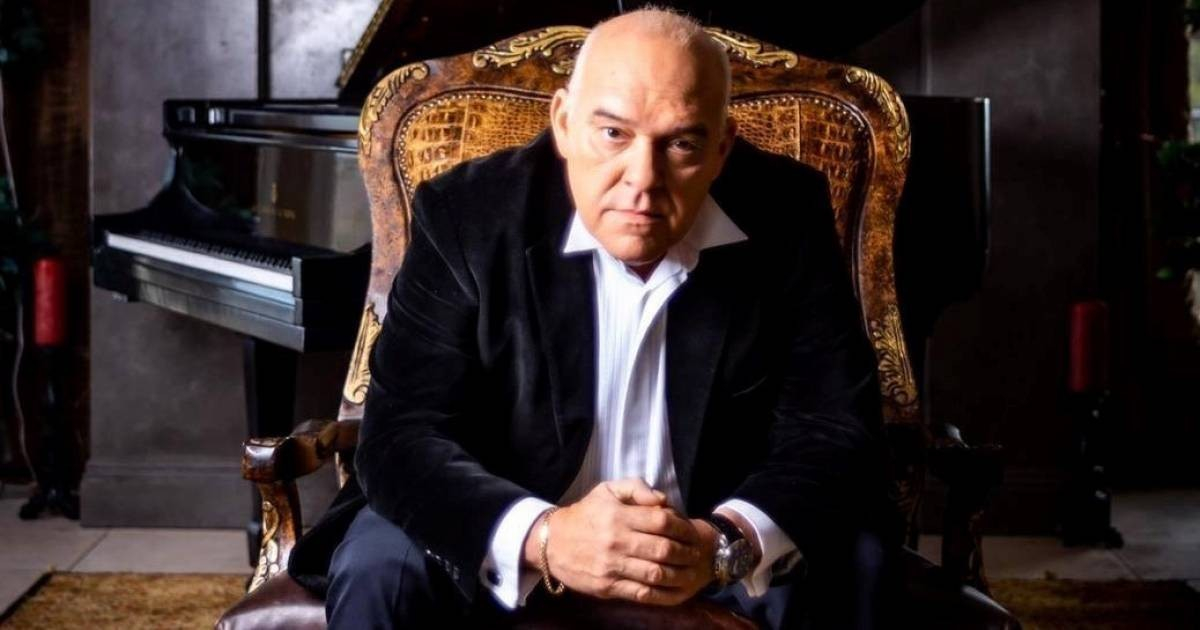
The Cuban singer Ulises Aquino Guerra published a reflection titled "You Cost a Lot" on Facebook, in which he dismantles the regime's economic policy point by point and accuses it of using inspections, price caps, and closures of private businesses to cover up the disaster it has caused.
Aquino begins his text by citing the economist Pedro Monreal, who asked whether any government official at the top understands economics, and answers bluntly: "In my opinion, they do not understand economics, but they know very well how to manage accounts to sustain a bureaucratic, dysfunctional, and unproductive structure at the expense of the people's money and taxpayers."
For the baritone, the intensified inspection offensive by the regime in 2026 against private businesses—resulting in fines of up to 72,000 pesos, seizures, and temporary closures—is not a solution, but a smokescreen.
"The economic disaster caused by all the constant economic mistakes is being covered up with inspectors, inspections, business closures, and license revocations, fully aware of the levels of corruption that accompany all those 'tasks,'" he wrote.
Aquino also points out an unacceptable double standard in regulation: while the state pursues and monitors the private sector, state-run businesses sell at exorbitant prices without anyone inspecting them, capping their prices, or revoking their licenses.
"We play the same game with different rules for each player. Where those who bear the costs of the game are always the ones who suffer," he summarizes.
The most detailed analysis of their publication points directly to the tax burden borne by self-employed workers and small and medium-sized enterprises (mipymes): taxes on hired personnel, on salaries, on sales, on net income, and on profits, which together represent—according to Aquino—almost 70% of business activity.
This tax pressure is compounded by the need to obtain foreign currency in the informal market to replenish supplies, which forces private actors to raise their prices to recoup their investments.
The artist also denounces that the monthly inspections of private businesses do not respond to complaints or actual irregularities, but rather to a mechanism of institutionalized extortion: “They are inspected every month, because that’s where the extra salary for the inspectors and others comes from, and the economic actors pay those bribes on top of all those taxes.”
In contrast to the regime's inspection strategy, Aquino proposes the opposite: to reduce the tax burden on the private sector, stimulate investment, and ensure that wages reflect the value of productive effort.
"The state cannot be more important than the people, because the state is simply a group of politicians who live off the taxes and contributions of the entire society," he concludes.
The publication comes weeks after the Extraordinary Plenary of the Communist Party approved in June a package of 176 economic measures that Aquino had already described at that time as ‘insufficient and overdue’ and which prompted his public demand for the resignation of the government.
This new release is a continuation of a critical line maintained over the past few months, in which Aquino has accused the Party and the Government of clinging to power without listening to the people and has questioned the feasibility of reforms without electricity.
He even wrote a letter to his revolutionary parents, who had already passed away, in which he said that "everything you believed and made us believe was wrong."
Related videos:
Filed under: