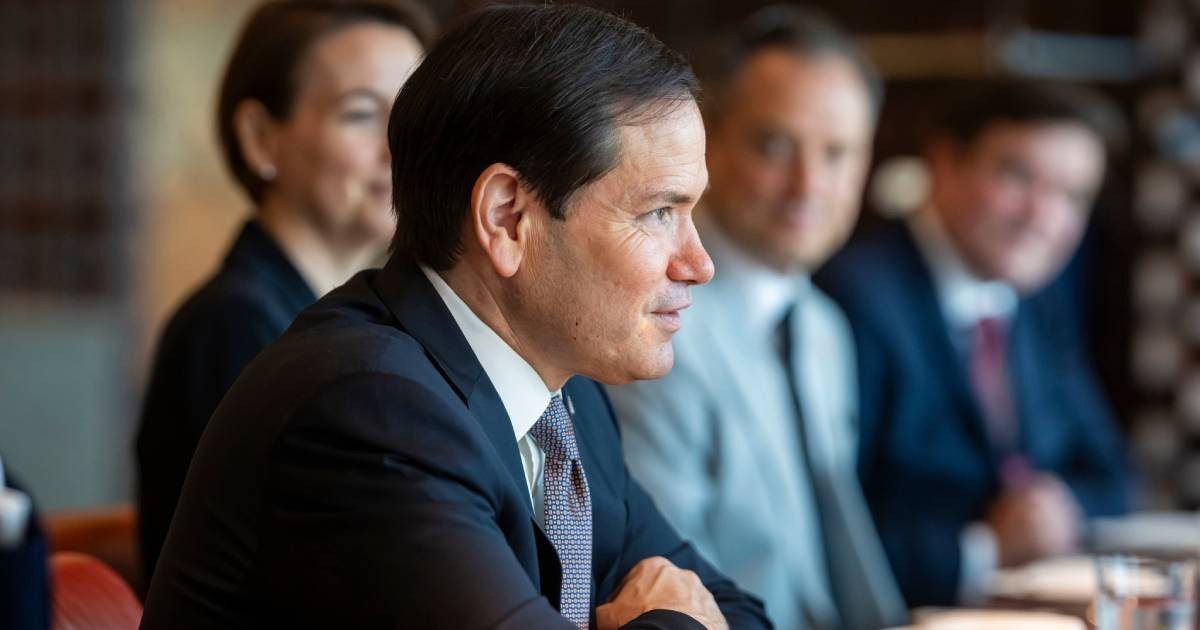
This Tuesday, Florida will hold the primaries to determine who will compete in the special election for the United States Senate, to occupy the seat that Marco Rubio held until January 2025, when he resigned to take on the role of Secretary of State in the Trump administration.
Rubio was re-elected for a second time as senator for Florida in 2022, for the term corresponding to the period 2023-2029.
Florida law requires that a vacancy in the state's representation in the United States Senate must be filled through an election. Meanwhile, the governor can appoint a temporary replacement.
On January 16, 2025, Ron DeSantis announced that Florida Attorney General, Ashley Moody, was the chosen one to replace Marco Rubio in the United States Senate.
The general election is scheduled for November 3, and the winner will serve the term until January 2029.
The Republican primary
Moody is the favorite in the Republican camp: she has the support of Trump and has raised over 14 million dollars in total fundraising.
Their three rivals exhibit very different profiles, as confirmed by Local 10.
Chris Gleason, a veteran of the Army and expert in data forensic analysis, presents himself as an independent voice: "I have a long and proven track record of trying to do the right thing and exposing corruption and fraud wherever I see it, regardless of which party it belongs to," he stated.
The doctor Neelam Taneja Perry is facing a legal battle - the state accuses her of prescribing medication to patients she never treated - but she claims she decided to run for office after encountering obstacles while trying to access treatment for a health issue.
"I fight for people's rights, not only in health matters but also against corruption at all levels and in all areas," he said.
Lastly, Pastor Ernest Rivera, who claims he will help address the housing affordability issues in South Florida. "Our campaign is based on faith, family, and 'Florida first'," he stated, emphasizing his collaboration with the first Trump administration.
The Democratic primary
On the Democratic side, state representative Angie Nixon and retired lieutenant colonel Alex Vindman are competing, known for his role as a witness in the impeachment trial against Donald Trump in 2019.
Nixon, a legislator for Jacksonville since 2020, has focused her campaign on the cost of living, with proposals aimed at achieving affordable housing and expanding social programs.
Vindman, former Director for European Affairs at the National Security Council, has a clear lead in fundraising: $16.27 million according to the Federal Election Commission, with $8.5 million raised in just the second quarter of the year.
Cuba in the campaigns
With over 1.6 million Cuban-Americans in Florida—concentrated in Miami-Dade and Broward—the stance towards the regime in Havana is an important factor for each candidate.
The Republican Moody maintains the toughest stance. In June, she accused previous administrations of having "consented to the Cuban communist regime", citing Obama's visit to a baseball game in Cuba and the release of spy Gerardo Hernández in 2014.
Co-sponsored with Senator Rick Scott the DEMOCRACY Act in November 2025, aimed at freezing assets and denying entry to Cuban officials.
In the blue camp, Vindman demanded in March agenuine change and rejected superficial solutions for Cuba: «We have the opportunity to do something real for the Cuban-American community, not just to put a light coat of paint over the Castro regime. I will always stand with the Cuban people and their struggle for real change and true freedom».
Nixon, for her part, took a more distant approach from the Republican consensus. As she stated to Diario Las Américas, “the regime does need to change,” but she opposes sanctions that exacerbate the people's shortages and supports a policy similar to that of former President Barack Obama.
On Saturday, he walked down Calle Ocho in Little Havana seeking the Cuban vote.
In statements to EFE, he described the embargo as a "failure" and mentioned that Cubans "are suffering from hunger," urging a return to Obama's approach to ease the connections between Cuban families.
He also advocated for a regime change that puts power in the hands of the people, and he expressed his opposition to communism and any form of authoritarianism.
Related videos:
Filed under: