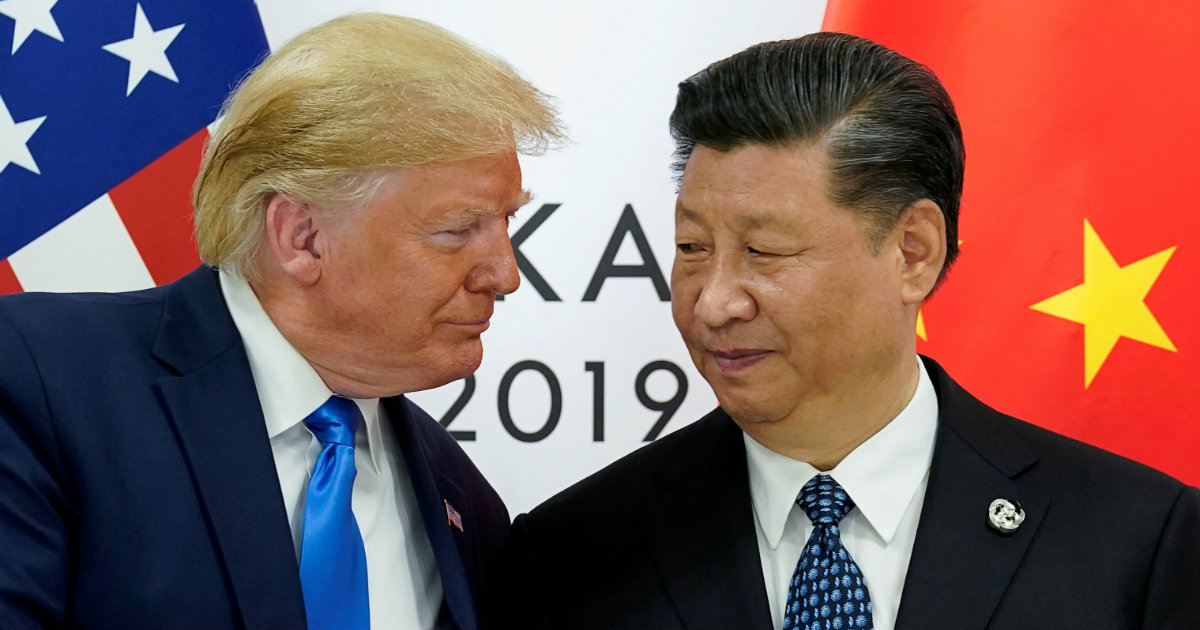
The state visit of Ecuadorian President Daniel Noboa to China, from August 16 to 23, 2026, offers a snapshot of the new Latin American geopolitical reality. Ecuador maintains a close political and security cooperation with the United States, but at the same time, it considers it essential to expand its economic relations with Beijing. During his talks with Xi Jinping, both governments discussed energy, mining, infrastructure, finance, digital economy, artificial intelligence, and new energy sources.
Ecuador is no exception. It is part of a continental trend that the United States must study and address carefully. China has around 1.405 billion inhabitants, a gigantic internal market, and continues to be the world's leading manufacturing power. It needs food, copper, lithium, oil, iron, soybeans, meat, and other raw materials that Latin America can provide, while simultaneously selling the continent automobiles, machinery, electronic products, solar panels, batteries, and an immense variety of manufactured goods.
Trade between China and Latin America and the Caribbean, which was just over 14 billion dollars at the beginning of the century, reached 500 billion in 2022 and has continued to grow. Beijing has established particularly significant positions in South America and has become an essential partner for Brazil, Chile, and Peru, among other countries.
The United States maintains a formidable position. In 2024, its trade in goods with the entire Western Hemisphere reached approximately two trillion dollars, with 889 billion in U.S. exports and 1.1 trillion in imports. With Latin America and the Caribbean alone, the United States imported around 661 billion dollars and exported 517 billion in 2024. Moreover, it possesses advantages that China can hardly replicate: geographical proximity, accumulated investment, financial markets, universities, technology, family ties, remittances, migration, and a vast military and security superiority.
The Trump administration aims to leverage these advantages to restore U.S. primacy in the hemisphere and counter China's aggressive expansion. Officials in his government have dubbed it the "Donroe Doctrine," a reinterpretation of the Monroe Doctrine designed to reduce China's strategic penetration, reinforce military alliances, combat criminal organizations, and prevent critical infrastructure, ports, and strategic sectors from coming under the influence of extraregional powers.
But the United States will hardly win this competition solely through political ties, diplomatic warnings, or military power. To regain a positive and lasting influence, it must compete economically.
This means producing more and better, exporting more, investing more, and something that is often overlooked: buying more Latin American products. A Brazilian farmer, an Ecuadorian shrimp producer, a Chilean mining company, or a Peruvian business all need markets. If China buys their products while Washington only asks them to reduce their ties with Beijing, Chinese influence will continue to grow.
The United States should promote a comprehensive hemispheric economic strategy: facilitating access for Latin American products to the U.S. market; incentivizing investments and shared manufacturing; relocating supply chains from Asia to Central America, the Caribbean, and South America; financing infrastructure, energy, ports, and technology; developing agreements on critical minerals and providing competitive alternatives to Chinese capital.
One of its greatest strategic advantages must also be safeguarded: the ability to attract people. A firm policy against illegal immigration does not have to mean closing or restricting doors to students, professionals, researchers, entrepreneurs, and necessary workers. Legal immigration, American universities, and the millions of Latin American families connected to the United States create a cultural and human influence that China does not possess. An excessively restrictive immigration policy would precisely weaken that extraordinary advantage.
Competition should not be framed for each Latin American government as an absolute choice between Washington and Beijing. Ecuador demonstrates why. Noboa can closely cooperate with the United States on security while simultaneously seeking markets, investments, and infrastructure from China.
China will likely continue to conduct business and increase its economic presence. The United States, for its part, still has greater tools to maintain hemispheric leadership, but it will need to use them wisely.
The competition for Latin America will not be won solely with aircraft carriers, sanctions, or speeches about the Monroe Doctrine. It will also be won in factories, ports, universities, markets, investments, and opportunities. The United States will be more influential not when it gets Latin America to buy less from China, but when it makes it more advantageous to produce, trade, invest, and thrive alongside the United States.
The future of freedom, democracy, and human rights in Latin America and the Caribbean, as well as the security of North America, will largely depend on who wins this battle.
Related videos:
Filed under:
Opinion piece: Las declaraciones y opiniones expresadas en este artículo son de exclusiva responsabilidad de su autor y no representan necesariamente el punto de vista de CiberCuba.