
Related videos:
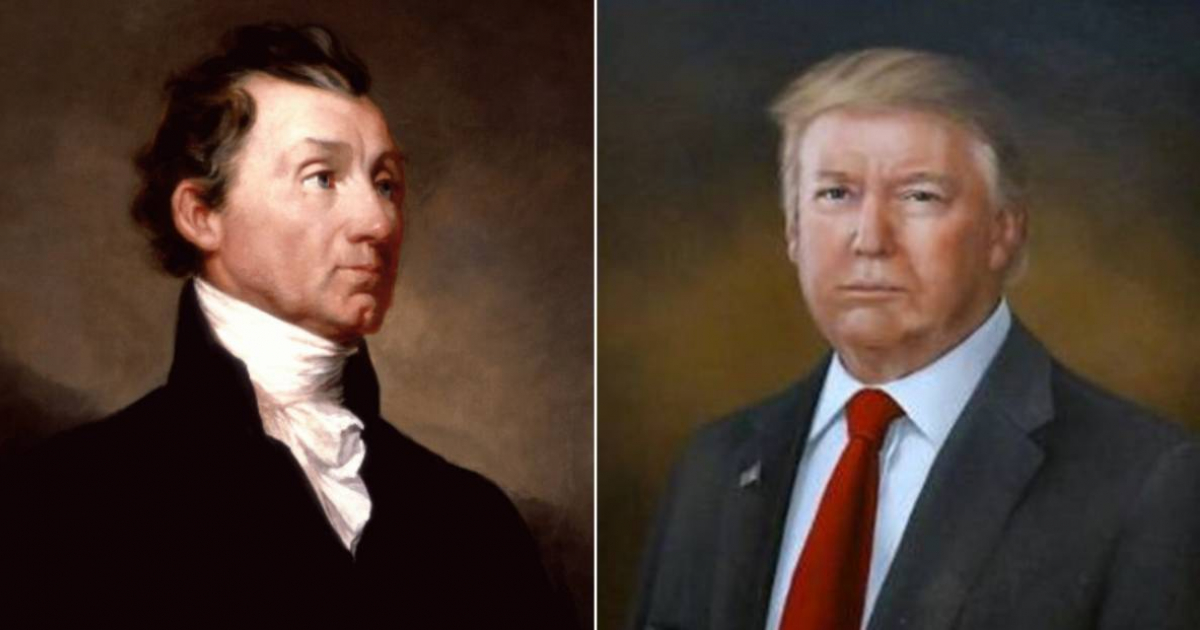
The Donroe Doctrine gets its name from the combination of Donald (for Donald Trump) and Monroe (for James Monroe), the U.S. president who proclaimed in 1823 that “America is for Americans.”
Two centuries later, Trump revived that idea under a tougher and more direct version. The United States is once again asserting its dominance in the Western Hemisphere, and Cuba is in the crosshairs.
From the Monroe Doctrine to the Donroe Doctrine
The Monroe Doctrine was established in 1823 with a straightforward message: Europe must stay out of America.
Its goal was to protect the independence of the new republics and prevent recolonization. At that time, the United States was just beginning to establish itself as a nation following its independence and the war against Great Britain, but it was already showing hemispheric ambitions.
During the 20th century, the doctrine evolved with the Roosevelt Corollary, which authorized Washington to intervene in Latin America to “maintain order.”
Later, with Eisenhower and the domino theory, it was used to combat communism and intervene in countries like Nicaragua, Cuba, Guatemala, Chile, or Grenada. Latin America became the "backyard" of the United States.
Trump revives and transforms the doctrine
In his second term, Donald Trump proclaimed in the National Security Strategy 2025 that the United States "will enforce the Monroe Doctrine to restore its preeminence in the Western Hemisphere."
The New York Post named this new version “Doctrina Donroe,” a blend of his name and Monroe's. Trump embraced it proudly and said, “We have surpassed it; now it is the Doctrina Donroe.”
Its essence is to reaffirm the authority of the United States over America, combat drug trafficking and illegal migration, curb China and Russia, and maintain military presence wherever necessary.
In the words of Defense Secretary Pete Hegseth: “America can project its will wherever and whenever it wants.”
Venezuela, the first laboratory
The Absolute Resolve Operation marked the debut of the Donroe Doctrine. In January 2026, U.S. forces captured Nicolás Maduro and his wife, Cilia Flores, in Caracas.
Washington announced that it will "govern" Venezuela until a democratic transition is completed, while Delcy Rodríguez assumed interim leadership under U.S. supervision.
The Venezuelan case is the first practical application of the new Trumpian corollary, characterized by strength, control, and rewards for allies.
Countries like Argentina, El Salvador, Ecuador, and Guatemala receive economic and trade benefits in exchange for their support.
Cuba, the next target
After the fall of chavismo, Cuba stands out as the last stronghold of the anti-American axis in Latin America.
Trump and Marco Rubio believe that the regime in Havana is the core of regional destabilization due to its influence in Venezuela and Nicaragua.
Analysts indicate that the Donroe Doctrine sets the stage for total pressure on Cuba. The main axes are: diplomatic isolation, cutting off oil supplies, sanctions against GAESA, and covert actions that could accelerate a transition.
While the Castro regime fears a forced change, the opposition and the exile community watch hopefully for a possible end to the communist system after more than 60 years of repression on the island.
In the words of Secretary of State, Marco Rubio: “America is our neighborhood, and we will protect it.”
The Donroe Doctrine is essentially the return of U.S. power to the hemisphere… and Cuba is at the center of the stage.
Filed under: