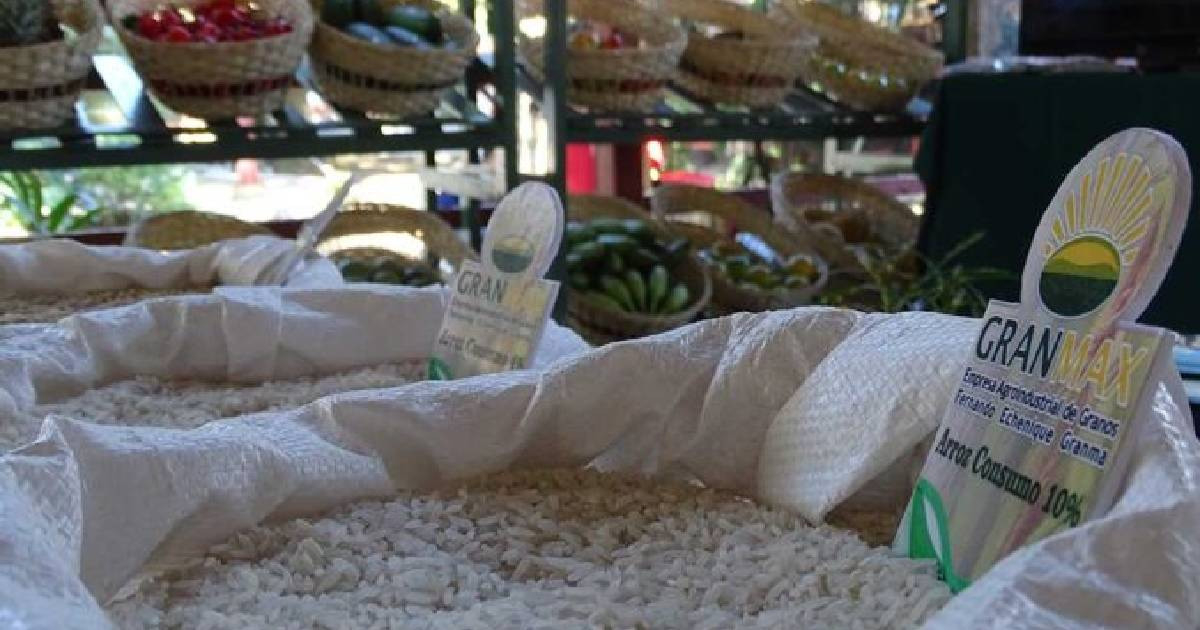
While a vast majority of Cubans lack adequate access to food and state markets remain empty, the Agricultural Industrial Company of Grains Fernando Echenique (Granmax), in the province of Granma, has begun training sessions for its staff for the launch of Bayamec.cu, its new virtual store for cereals and grains.
The training sessions began on Wednesday and aim to prepare employees in the use of the platform and customer service procedures, with the stated goal of ensuring a smooth online shopping experience from day one of operations, according to a report from the broadcaster Radio Bayamo.
The initiative stands in stark contrast to the magnitude of the food crisis affecting the island.
A survey conducted by the Food Monitor Program presented in May estimated that nearly 97% of the Cuban population lacked adequate access to food and that around 34% of households had at least one member who went to bed hungry in the 30 days prior to the survey.
The Minister of Food Industry, Alberto López Díaz, admitted in June that throughout the year it had not been possible to distribute oil, chicken, or yogurt through the regulated basket.
Cuba produces only about 111,000 tons of rice per year compared to a demand of 600,000, and imports between 70% and 80% of the food it consumes, at a cost of nearly 2 billion dollars annually.
Granmax, based in Bayamo, is historically the largest rice producer in the country and accounts for nearly 30% of the national rice consumption.
In November 2022, it obtained the concession to operate in foreign trade, becoming the first exporting and importing company of the eastern province.
In 2026, he participated in a joint project with the Vietnamese company TBAgri that delivered over 470 tons of rice grown in Yara.
Bayamec.cu is established under the framework of Decree 35 of 2021, which mandated the Ministry of Agriculture to develop e-commerce options for agricultural products, including online sales with delivery services.
However, the digital push comes at a time when the state is unable to supply physical sales points.
On Friday, ruler Miguel Díaz-Canel toured the Defense Council of the Cubanacán Zone, in the Playa municipality of Havana, and urged to turn every available piece of land into gardens to alleviate the shortage.
Days before, Prime Minister Manuel Marrero Cruz and Vice President Salvador Valdés Mesa visited the Santiago de las Vegas Defense Zone in the Boyeros municipality of the capital, where they also demanded an increase in local production.
None of those calls have, according to the available data, resulted in a significant recovery of agricultural production on the island.
Rice production in Cuba fell to 30% of the levels from 2018, with yields decreasing from four tons per hectare to just 1.7, a trend that no virtual store can reverse on its own.
Related videos:
Filed under: