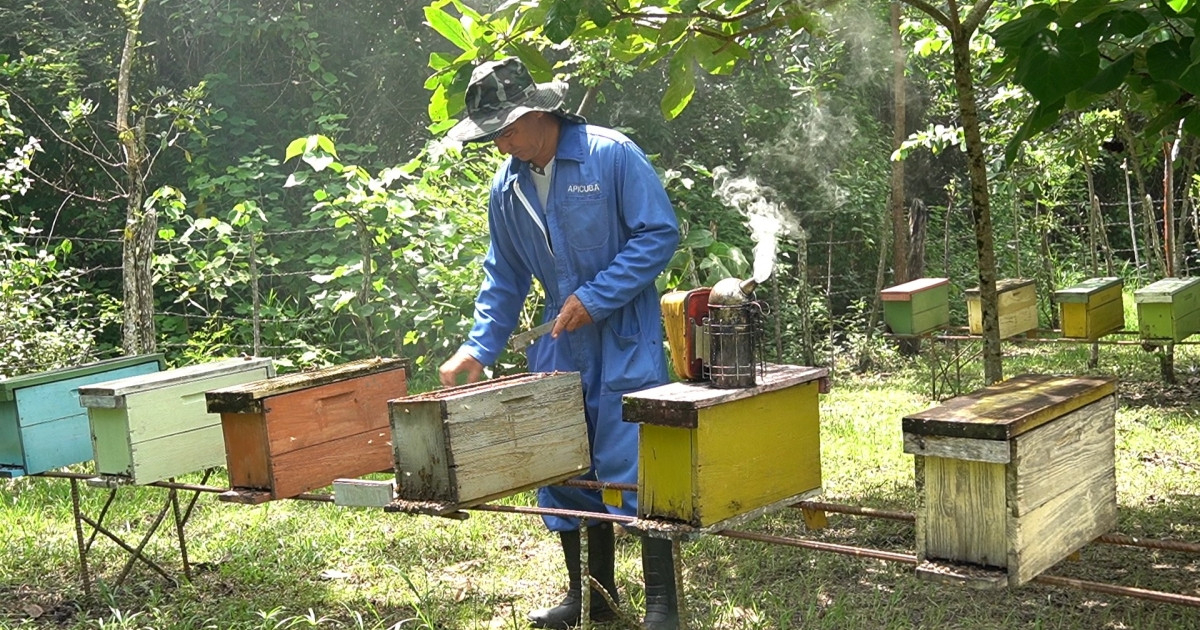
The provincial government of Villa Clara called on small and medium-sized enterprises (SMEs) in its region to join the Booster Program, an export acceleration initiative aimed at opening markets in Europe and North America for Cuban products such as coffee, honey, and processed fruits.
The call was made by the Directorate of Foreign Trade, Foreign Investment, and Cooperation of the province, which reminded local small and medium enterprises (mipymes) of the opportunity to apply for the program before the application deadline, set for August 21, as reported on Friday by the provincial broadcaster CMHW.
The program, lasting between nine and twelve months, operates under two modalities. The Sectoral Booster targets agri-food companies that produce coffee, honey, charcoal, and processed fruits with added value, aimed at markets in Mexico, Canada, Germany, Spain, and France.
The Geographical Booster, for its part, is targeted at information technology companies, cultural and creative industries, and renewable energy sources, focusing on the same priority markets.
"The aspiration is that the small and medium-sized enterprises of Villa Clara not only export but do so with all the necessary tools and knowledge to compete in the international market," declared Laritza Torres Niebla, director of Foreign Trade, Foreign Investment, and Cooperation of the Provincial Government of Villa Clara.
The selected companies will receive training in technical standards, tariffs, incoterms, market studies, traceability, financing, and quality certifications, as well as individualized advice and access to networks of international distributors and buyers.
The program also funds participation in trade missions and international fairs, and includes follow-up support to ensure the continuity of the exporting process.
To apply, SMEs must demonstrate at least two years of operation, exportable production capacity, economic and financial sustainability, and commitment to an intensive acceleration process.
The selection criteria include the efficient use of natural resources and renewable energies, the empowerment of women and youth, and circular economy practices.
The start of the program is scheduled for the upcoming October, following six weeks of file evaluation.
The Booster Program is an initiative funded by the European Union with 14 million euros, as part of the New Economic Actors (NAE) Project, and implemented in collaboration with the United Nations Development Programme, French Cooperation in Cuba, and the Ministry of Economy and Planning.
It was formally launched in June by the Cámara de Comercio de Cuba and is set against a backdrop where the Cuban private sector barely accounts for 3.2% of the country's exports, according to data from the end of 2025.
The program emerged in a context where the participation of the Cuban private sector in foreign trade was still very marginal. Data from the Cuban private sector in October 2025 estimated that private management forms accounted for only 3.2% of the country's exports, led by charcoal and IT services.
That landscape began to change timidly. In the first half of 2025, exports from non-state management entities grew by 30%, though they only reached about 21 million dollars from a very small base.
In June, the National Assembly approved reforms that allow private companies to export and import directly with state authorization, eliminating the mandatory intermediation by state enterprises that had been in place since 2020.
Related videos:
Filed under: