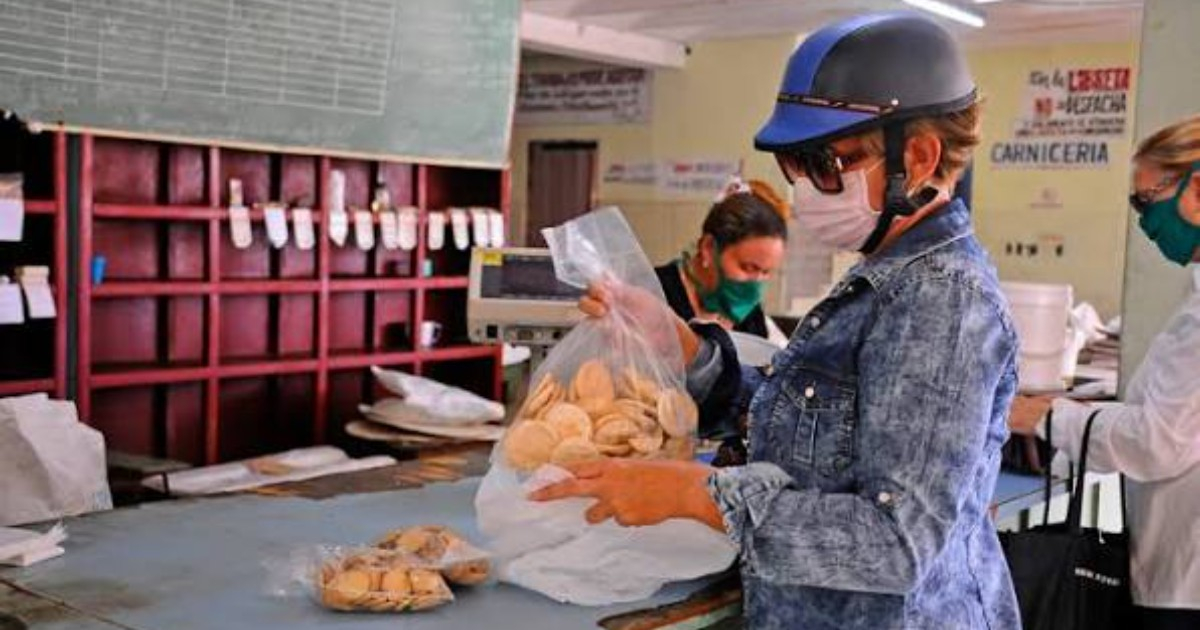
The Ciego de Ávila Municipal Commerce Company announced a public tender to transfer the management of six warehouses in the municipality to non-state economic actors, as part of the "Neighborhood Market" project that the Cuban government is replicating in different areas of the country.
According to the official announcement disseminated by the Business Group of Commerce of Ciego de Ávila, the establishments included in the process are the bodegas El Sueño, La Amarilla, La Afortunada, La Paz, La Cubana, and La California. Interested parties have 10 business days to submit their proposals to the Municipal Commerce Directorate, located at Chicho Valdés between Maceo and H. Castillo number 56.
Companies, micro, small, and medium enterprises (MIPYMES), non-agricultural cooperatives, self-employed workers, foreign investment modalities, and other authorized participants can take part.
The ownership of the properties remains with the State; what is put up for bid is solely the management of the premises.
The figure of the "Neighborhood Market" was created by the Resolution 16/2026 of the Ministry of Internal Trade (MINCIN), headed by Betsy Díaz Velázquez, published in the .
The regulation defines these markets as a form of mixed management in which non-state actors operate retail establishments under state supervision.
Among the principles that will govern the operation of the licensed warehouses is the application of "controlled or regulated sales, in accordance with the type of product, demand, and availability."
Additionally, it is expected to operate in Cuban pesos, promote e-commerce—with the possibility of payment from abroad—and prioritize the physical recovery of the premises, including the installation of alternative energy sources.
The contractual relationship between the state-owned enterprise and the winning non-state actor may be formalized through service management contracts, consignment, purchase-sale, or supply agreements, or through an economic partnership governed by Decree-Law 114/2026, which regulates the relationships between state and private business entities.
The Ciego de Ávila scheme joins a trend that the regime has been extending across the country.
The pilot of the "Mercado del Barrio" launched in Plaza de la Revolución, in Havana, on July 23, 2026. Days later, between August 15 and 16, Cienfuegos announced the bidding for 47 of its 69 butcher shops to non-state actors under a similar model.
The background of these measures is the practical collapse of the ration book, in place since 1962, which is facing a chronic shortage of products and lack of financing.
Since June 2026, the regime announced that the rationed basket will no longer be universal and will be reserved for retirees, individuals with chronic illnesses, and vulnerable people.
According to the government-supporting Granma, the "Barrio Market" model anticipates prices that are 10% to 15% lower than those of comparable establishments, although there is no independent verification of this figure.
The tax incentives include a 5% rebate on the Sales Tax for non-state actors and a total exemption from the tax for wholesale sales intended for the project.
Related videos:
Filed under: