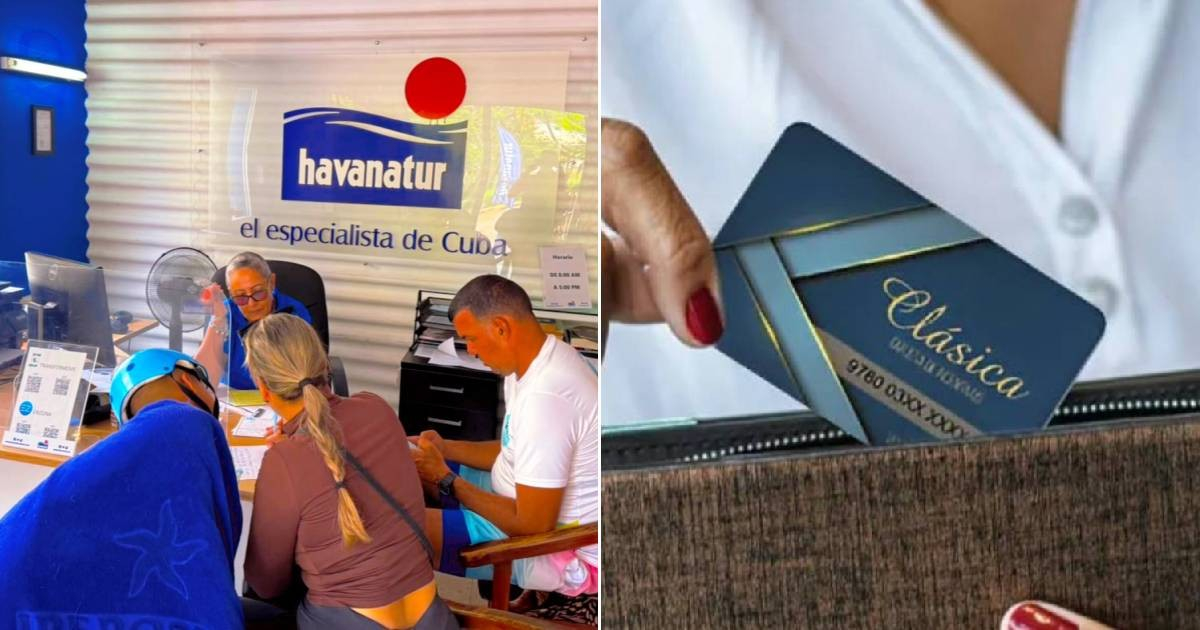
Havanatur SA announced this Monday that Cubans residing on the island can book hotels, experiences, and transfers through their national website using the Classic Card linked to the Transfermóvil app, through the MiTransfer platform.
The new feature, presented on Facebook as an advancement for the "online customer," hides an uncomfortable reality: prices are set in dollars, a currency that most Cubans do not have access to.
The prices published in the official Havanatur announcement highlight the extent of the economic barrier. The Cohibá Hotel starts at 142.50 USD per night, the Varadero Hotel from 156.50 USD, the Day Pass for the Brisas del Caribe Hotel from 80 USD, and experience packages such as Josone Jazz, Rumba, and Son from 100 USD. For a Cuban state worker earning an average salary equivalent to less than 20 dollars per month, these figures are unattainable.
The Classic Card, issued by Fincimex —a company of the military conglomerate GAESA— is a prepaid card in USD, anonymous and without the holder's name, costing four dollars and activated with a PIN.
According to data from the official Granma, by May 2025 there were over 200,000 units in circulation and more than one million transactions had been recorded. Its integration with Transfermóvil for tourist bookings represents a new phase of the dollarization of domestic tourism: the State aims to capture the remittances that Cubans receive through the state hotel system itself.
The strategy responds to the collapse of international tourism in Cuba, which in the first half of 2026 recorded only 387,591 foreign visitors, a decrease of 60.7% compared to the same period in 2025, according to data from the National Office of Statistics and Information (ONEI) collected by Infobae. The historical peak for the sector was in 2018, when the island welcomed 4.75 million tourists.
In response to that collapse, the regime has enabled a total of 18 properties in Havana and 22 in Varadero for the domestic market for the summer of 2026, including the Tryp Habana Libre, the Nacional de Cuba, the Meliá Cohiba, the Barceló Solymar, and the Brisas del Caribe. Transtur also offered routes to beaches for 10 USD from Havana and five dollars from Varadero, valid until August 31, 2026.
However, the focus on national tourism in foreign currency deepens the social divide on the island. Those who receive remittances from abroad can, in theory, access these services; those who rely exclusively on the Cuban peso are effectively excluded. Havanatur's announcement also includes the possibility of enrolling with accommodation packages for the 5th Edition of the Gran Retto Varadero Open Water Series 2026, suggesting that the regime is also trying to monetize sporting events through the same channel.
The measure comes in the context of a unprecedented economic and energy crisis, with chronic blackouts, widespread scarcity, and a massive population exodus. According to Reuters, Cuban tourist sites that once buzzed with foreign visitors are now "increasingly scarce" of foreign tourists. The regime, unable to reverse this decline, is now targeting the pockets of its own citizens.
Related videos:
Filed under: