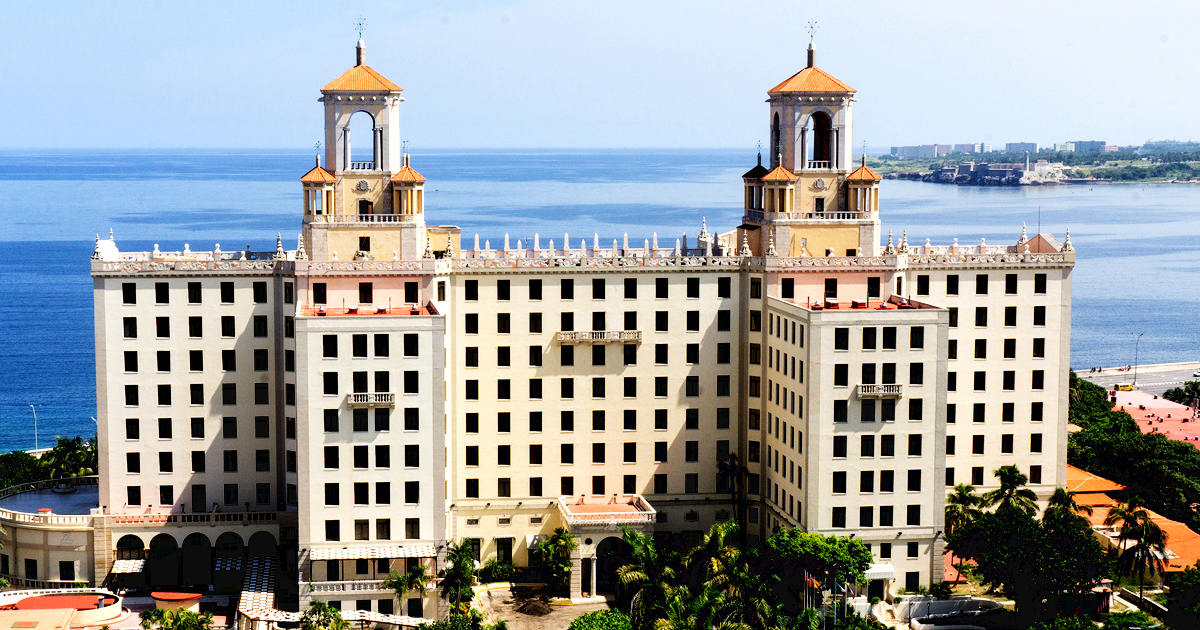
International tourism to Cuba plummeted by 60.7% in the first six months of 2026, according to official data published by the National Office of Statistics and Information (ONEI).
Between January and June, the island received only 387,591 international visitors, compared to 985,606 during the same period in 2025, a difference of nearly 600,000 people.
If all travelers are counted —including Cubans residing abroad who do not qualify as conventional tourists— the figure rises to 699,878 people, which represents merely 51.3% of the volume recorded in the same period last year: 664,522 fewer travelers.
The Canadian market experienced the largest decline in absolute terms: it fell from 428,118 visitors in the first half of 2025 to 126,937 in 2026, a loss of 301,181 people.
They were followed by the Cuban Community Abroad (45,799 fewer), the Russian Federation (42,775 fewer), and the United States (36,085 fewer).
The decline in Canadian travelers has a specific trigger: in February 2026, the shortage of Jet A-1 fuel at nine international airports in Cuba led Air Canada, WestJet, Air Transat, and Sunwing to suspend their flights to the island.
The result was that in March 2026, only 511 Canadians arrived, compared to nearly 99,000 in the same month the previous year.
To that operational collapse were added the U.S. sanctions against GAESA, the military conglomerate that controls Cuban tourism through its subsidiary Gaviota S.A.
The Executive Order signed by President Donald Trump on May 1, 2026, established secondary sanctions for foreign companies with commercial ties to that entity, and the State Department set June 5 as the deadline for severing those connections.
The response was a mass exodus of international hotel chains: Blue Diamond Resorts left Cuba on May 30, vacating 62 hotels and over 12,900 rooms without an operator; Iberostar ceased managing 12 of its 18 establishments as of June 1; and Meliá Hotels International confirmed the closure of its 34 hotels in July.
In total, seven international chains ceased operations, accounting for 46% of the rooms managed under that modality.
The Prime Minister Manuel Marrero Cruz acknowledged before the National Assembly at the end of July that "73% of the hotel facilities in Cuba remain closed" and that around 25,000 workers in the sector are in a state of availability.
The profile of the traveler arriving in Cuba has also changed radically. According to a report from the research center Cuba Siglo XXI prepared by Emilio Morales, almost half of those who arrived on the island in May 2026 were members of the diaspora, accounting for 47.6% of recorded entries, an unprecedented proportion.
These travelers do not stay in hotels or participate in tourist circuits; they arrive loaded with food, medicine, and remittances for their families.
Hotel occupancy fell to 12.9% in May 2026, down from the 23% recorded in March 2025, leaving the infrastructure built over the last decade essentially empty.
This decline occurs on an already weakened foundation: Cuba closed 2025 with just 1.81 million international tourists, the worst figure since 2002 and well below the official target of 2.6 million.
The Cuba Siglo XXI report concludes that "the combination of the internal economic crisis, the deterioration of basic services, the loss of competitiveness of the Cuba destination, and the recent U.S. sanctions against GAESA is accelerating the decline of a sector that for years was presented as the main engine of the national economy."
Related videos:
Filed under: