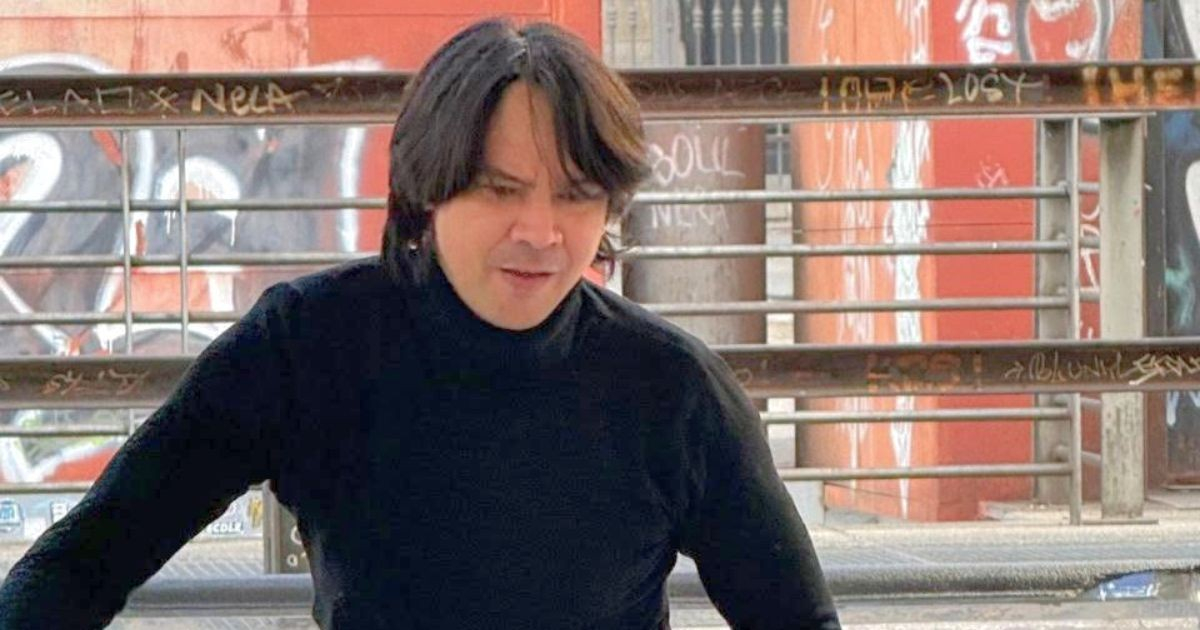
The Cuban playwright and activist Yunior García Aguilera published a column this Saturday in 14ymedio in which he warns that internal fragmentation and mutual attacks within the Cuban ranks are one of the main obstacles to the arrival of democracy on the island.
In the text titled "Everyone Against Everyone" and framed within his column "Cuba and the Night," García writes from Madrid that "there are days when one opens the Cuban social media and gets the impression that democracy is about to arrive, but it can't because we are all too busy attacking each other. The regime watches the spectacle with delight."
The activist, who has been exiled in the Spanish capital since November 2021 following the repression that followed the call for the Civic March for Change on November 15th, points out that the discrediting efforts no longer require effort from the official apparatus: “Now, part of the dirty work is done for free, from Miami, Madrid, Havana, or any corner with Wi-Fi. The official cyberclarias hardly need to push. We ourselves provide the fuel for discredit.”
To support his argument, García draws on a historical parallel: the great leaders of Cuban independence—Céspedes, Martí, Maceo, and Gómez—were also targets of defamation and friendly fire perpetrated by their own compatriots.
Carlos Manuel de Céspedes was removed from his position as president of the Republic in Arms in 1873 by his own comrades and died in isolation in San Lorenzo. García envisions that scrutiny in the digital age: "Céspedes would probably not have survived a week against the algorithm."
About Máximo Gómez, distrust did not only come from the Spanish enemy, but also from the independence fighters themselves, he writes. To José Martí, he states, it might have been even worse, as the Apostle faced accusations of being a coward and a loafer. In the case of Antonio Maceo, his own comrades accused him of favoring blacks in the ranks and conspiring to impose a "black dictatorship" in the future republic, he reflects.
The playwright clarifies that his argument is not meant to shield anyone from criticism, but rather to prevent each personal flaw from becoming a reason "to politically execute" those in leadership.
In his space "Cuba and the Night," García has developed valuable reflections in recent months. In July, he dismantled the supposed achievements of the regime, describing the Cuban dystopia as a mechanism to "turn hope into resignation, resistance into misery, and continuity into sinking." In April, he urged to rebuild the republic on civil, pluralistic, and legal foundations.
The columnist closes this recent piece with an image that encapsulates the entire thesis: "We are not waiting for a leader. We are waiting for a statue. And while we wait, we entertain ourselves by shooting the living."
Related videos:
Filed under: