
Related videos:
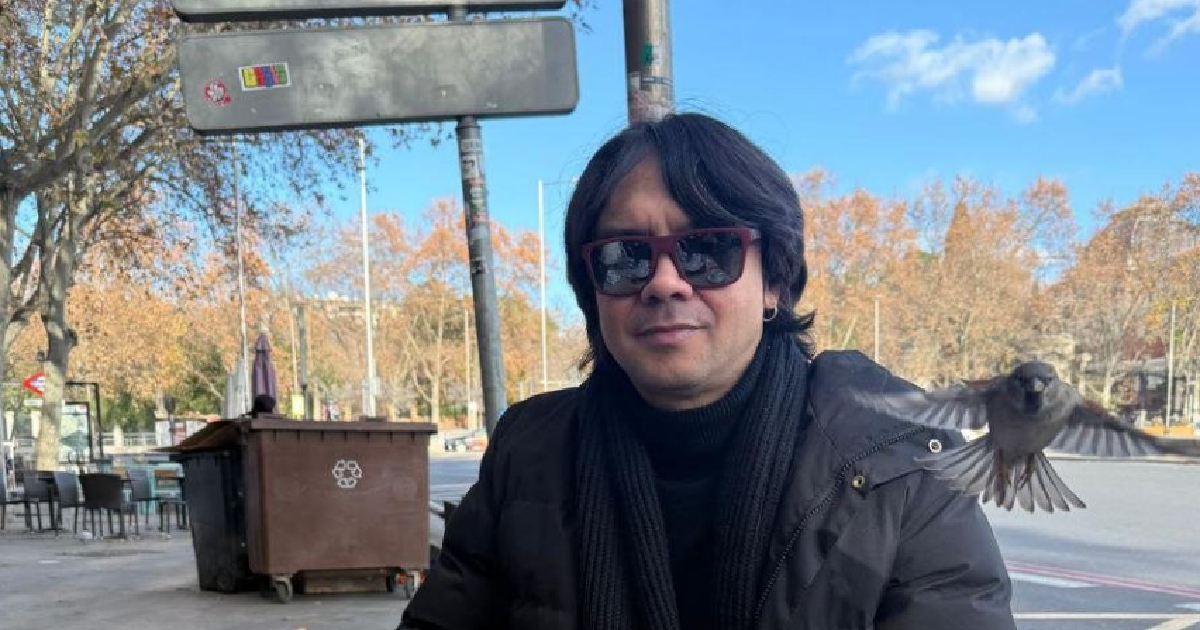
The "elementary right to live in freedom," the basic functioning as a country with legal and democratic guarantees: such are the urgent needs of Cuba, according to an article published by the Cuban playwright and activist Yunior García Aguilera
In the text, published in 14ymedio, García reflects on the moral dilemma faced by those who aspire to democratic change on the Island. Drawing from verses by José Martí in his youthful work Abdala —where love for the homeland is defined as "the invincible hatred towards those who oppress it" and "the eternal resentment towards those who attack it"— the activist argues that the nation remains trapped in this same emotional logic, distorted by more than six decades of Castroism.
Part of the Cuban population focuses its energy on rejecting the repressive apparatus of the dictatorship; another part, made up of the regime's continuists, clings to resentment towards the United States for "its threats, its real or imagined grievances, and the always-invoked hypothesis of intervention." "Between hate and resentment, Cuba runs the risk of never becoming a true project of freedom, but rather an eternal battlefield of resentments," García writes.
The activist, exiled in Madrid since November 2021, expresses his personal dilemma: "I do not want bombs to fall on the land where I was born. But I also do not wish for a regime that has destroyed the nation and oppresses its people to remain in power, condemning us to a slow extinction."
He also points out that in established democracies it would be absurd to call for foreign intervention, but that Cubans have been stripped of any institutional means for change. "In Cuba, the electoral system is hijacked by the Candidacy Commissions and State Security. There is not a single deputy who represents the opposition, even though its influence within society is now undeniable," he states.
Remember that the ballot used by the National Assembly in 2023 to "elect" a president contained only one name, that of Miguel Díaz-Canel, and concludes: "Calling elections a procedure like this is a mockery."
The article mentions the case of Oswaldo Payá, the opposition founder of the Christian Liberation Movement, who died in 2012 under circumstances that have never been clarified, and notes that the closure of all peaceful avenues explains why previously marginal ideas such as foreign intervention or annexationism have gained traction.
García also criticizes the international left that celebrates Cuban misery as a badge of dignity and appeals to the embargo as a universal excuse. He recalls that when Cuba received nearly unlimited resources from the USSR, it did not use them to modernize the country, but rather for military adventures abroad, and that the Venezuelan subsidy also did not rectify the structural flaws of the model. "Almost no one can seriously defend 'the achievements of the Revolution,' because hardly anything remains but rubble," he wrote.
The playwright also rejected the metaphor of Cuba as a "new Numantia," used by the ruling party to glorify its resistance, arguing that Numantia, in this case, would symbolize not dignity but rather "siege, hunger, degradation, and extermination."
The article is published days after García denounced what he called the "Operation Barrabás": the pardon of 2,010 common prisoners announced by the regime as a "humanitarian gesture," while keeping hundreds of political prisoners incarcerated.
According to the author, a transition is needed that combines internal resistance, fractures within the elite, and external pressure, but does not repeat historical vices. "The goal cannot be to replace one authority with another or to shift from one form of control to another. The aim must be to rebuild the republic on civil, pluralistic, and legal foundations," he stated.
"Cuba does not need the miserable immortality of a symbol. It needs the concrete life of a country," he summarized.
Filed under: