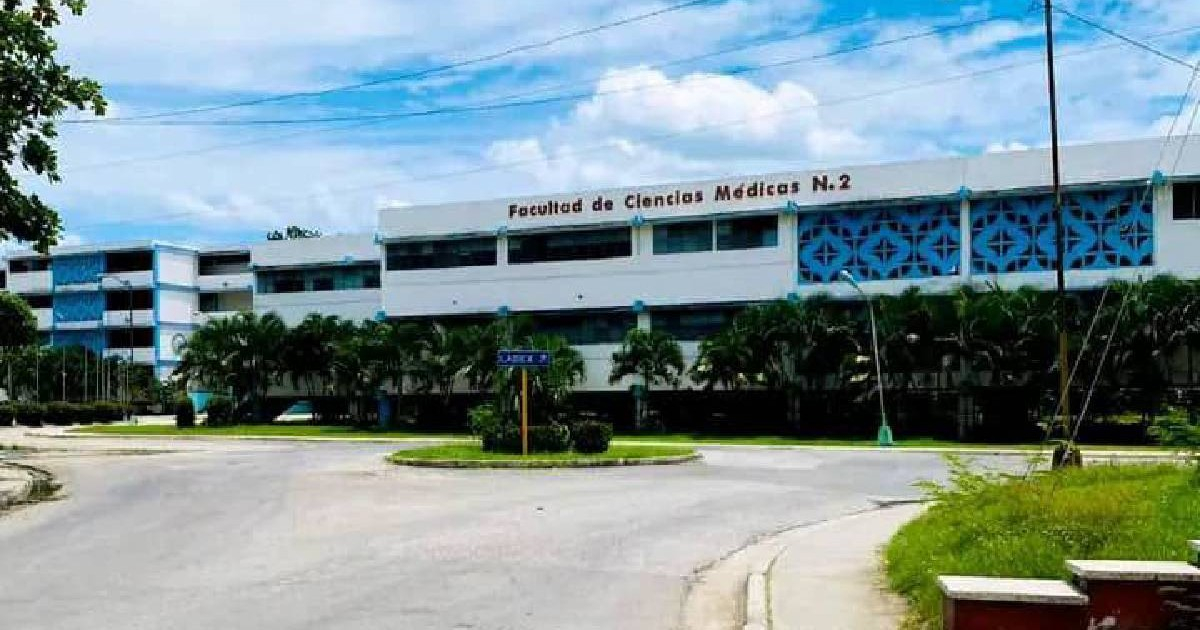
First-year Medical students from Songo-La Maya, Palma Soriano, and other municipalities in Santiago de Cuba denounced this Tuesday the decision to centralize their education at the Medical Sciences Faculty No. 2, in the provincial capital, which would require them to relocate and remain on scholarships to continue their studies.
The testimonies, collected anonymously by journalist Yosmany Mayeta Labrada due to students' fears of potential reprisals, reveal that the measure directly impacts families living on the economic edge.
According to the calculations made by the students themselves, a week in Santiago de Cuba —including transportation, meals, and basic items— could exceed 5,000 Cuban pesos per person.
"We are poor, the transport is terrible, the economy is awful, and don’t even get me started on the food," said one of the young people in a message sent to the journalist.
The dilemma they present is brutal: “Do we study or eat? Do we pay for transportation or buy food? Do we continue with Medicine or abandon it because our families cannot support us?”
The economic burden is compounded by the conditions of the student residence, which the students themselves describe as deteriorating: closed bathrooms and classrooms without blinds since the passage of Hurricane Melissa, which impacted the eastern provinces of Cuba between October and November 2025 and damaged more than 2,100 educational institutions across the country.
What has caused the most outrage among the students is the response they claim to have received from the dean identified as Yanet Victoria.
In conversation captures provided to Mayeta Labrada, the official reportedly argued: "These decisions are not unilateral; they are carefully analyzed with their pros and cons. Everyone has had their time to study. I was a student during very difficult times as well."
Young people reject this reasoning: the fact that previous generations have faced difficulties does not seem like a sufficient justification for them to accept conditions they consider unsustainable.
The measure also contrasts with what was announced just two days earlier by the Ministry of Higher Education, which on August 23 reported that the universities of Santiago de Cuba would begin the semester with hybrid and remote modalities to reduce travel, a policy that the local decision seems to directly contradict.
This complaint is not an isolated incident. Throughout 2026, medical students in Santiago de Cuba have led a series of protests: in March, they reported a lack of water and food shortages in dormitories; in May, the suspension of hospital practices for "Defense Preparation" activities; in June, the protest extended to several provinces demanding the cancellation of final exams due to lack of conditions; and in July, foreign students held a "cacerolazo" after more than 24 hours without electricity in the faculty itself.
Despite everything, the young people insist that they do not want to leave the program: "We don't want to abandon Medicine," they repeat in their messages.
The authorities of the University of Medical Sciences of Santiago de Cuba have not yet issued any public statement regarding the measure or the conditions reported by their own students.
Related videos:
Filed under: