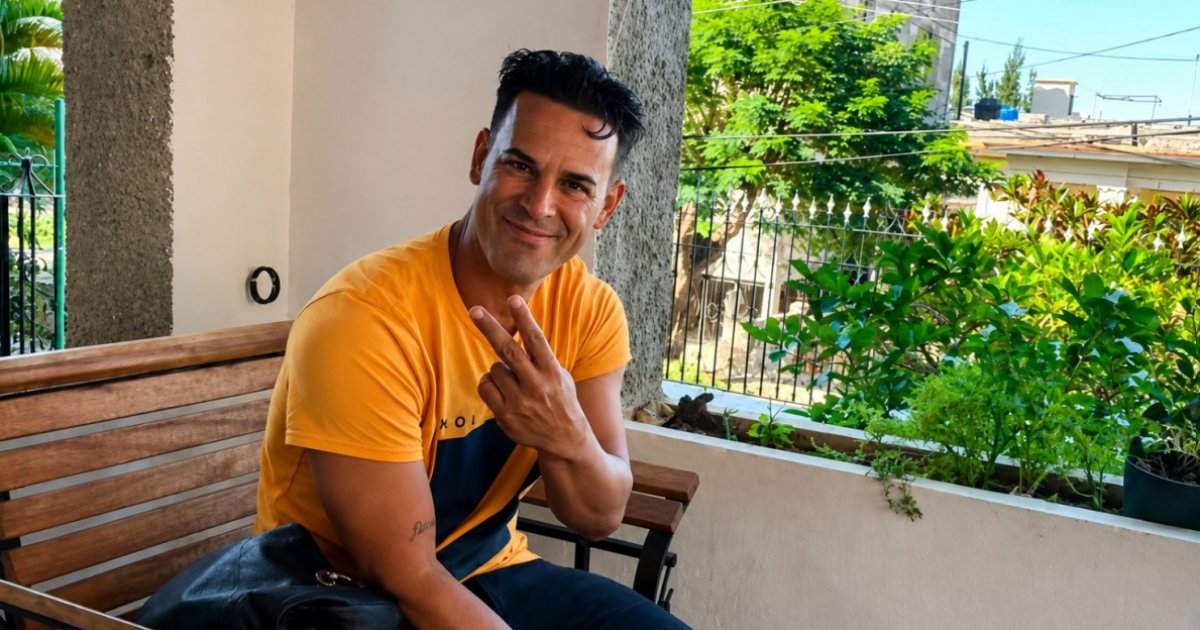
Amnesty International renewed its demand for the immediate and unconditional release of the Cuban political prisoner Roberto Pérez Fonseca, whom the organization classifies as a prisoner of conscience, following reports from his family about a severe deterioration in his health at the Quivicán prison in Mayabeque.
"The Cuban authorities must immediately and unconditionally release Roberto Fonseca, a prisoner of conscience jailed solely for exercising his human rights. We reiterate this call in light of reports from his family, which warn of a concerning deterioration in his health," published Amnesty International Americas on their account on X.
The organization warned that keeping Pérez Fonseca in detention without timely access to medical care "further exacerbates this violation of his rights."
It also demanded that, while in state custody, the authorities guarantee him "adequate, immediate, and unobstructed" medical assistance.
Amnesty International concluded its appeal with a statement that left no room for ambiguity: "Roberto must be free!"
Pérez Fonseca, 43 years old, is serving a 10-year prison sentence imposed by the Municipal Court of San José de las Lajas, Mayabeque, following his participation in the protests of July 11, 2021. He was arrested five days later in a raid involving more than 20 police officers at his home.
He was accused of charges of assault, contempt, incitement to commit a crime, and public disorder. His main "offense": breaking a portrait of the dictator Fidel Castro in the street along with other demonstrators.
His mother, Lisset Fonseca, described to Martí Noticias how his health began to deteriorate: "Since Monday, he called me saying he felt unwell, with fatigue. That's how it started. Then he started to develop a fever."
The situation worsened in the following days. "On Friday, he called me and said that he had been examined and told that he had pneumonia. This was said to him by an inmate who is a doctor, because there was no doctor in the prison. They started him on antibiotics, and since he had asthma, they were giving him the inhaler," he recounted.
The clinical picture—high fever, respiratory failure, and significant physical decline—is particularly concerning given the inmate's medical history, which includes asthma, chronic bronchitis, acute esophagitis, erythematous and congestive duodenitis, and bulboduodenal ulcers. These conditions have worsened during incarceration, particularly after being subjected multiple times to solitary confinement.
The non-governmental organization Cubalex warned this Monday that other inmates in Quivicán are showing similar symptoms - fever, headache, and diarrhea - which indicate a possible undiagnosed dengue outbreak, and that there are no doctors available in the prison infirmary after four in the afternoon.
The brother of Roberto, the activist Alberto Ortega Fonseca, based in Canada, was straightforward: "My brother is unjustly imprisoned for exercising his fundamental rights. But even putting aside the injustice of his incarceration, his precarious state of health is reason enough for him to have been released, and to receive specialized medical attention immediately."
International statements regarding this case have been reiterated, but they have been ignored by the regime.
The UN Working Group on Arbitrary Detention declared in 2023 that Pérez Fonseca's imprisonment is arbitrary and demanded his release. Amnesty International named him a prisoner of conscience in October 2024 alongside Félix Navarro, Sayli Navarro, and Luis Robles, and in February, it reported that authorities were delaying penitentiary benefits for health reasons.
Relatives, activists, and independent organizations have reported the inhumane conditions at the Quivicán prison. In December 2024, the inmate Yosvany Sánchez died there due to lack of medical care, and in July of this year, a mother revealed that the prison lacks water.
Cuba closed July 2026 with 1,327 political prisoners, a historic record according to the count by Prisoners Defenders. Meanwhile, Cubalex documented 19 deaths in state custody up to August 24.
Related videos:
Filed under: