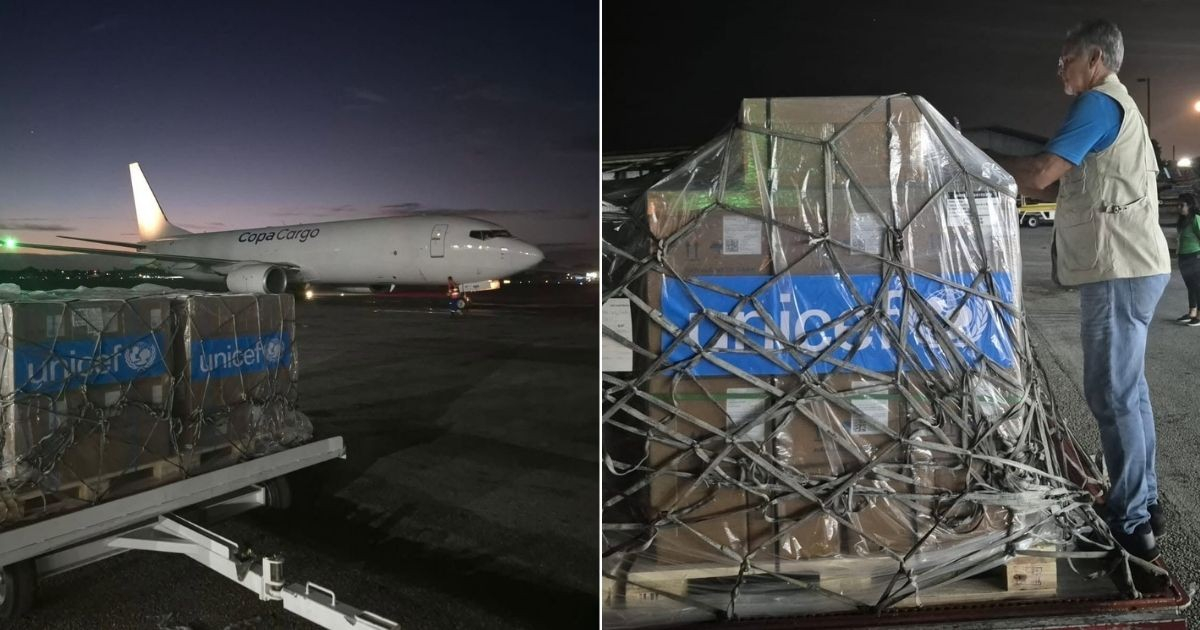
UNICEF sent 213,000 bottles of prenatal supplements to Cuba aimed at pregnant women and nursing mothers, at a time when the island's healthcare system is facing a severe shortage of medications and supplies.
The United Nations Children's Fund (UNICEF) reported this Friday that the shipment could enable around 30,430 pregnant and breastfeeding women to receive the complete treatment required during pregnancy and the breastfeeding stage.
"To ensure that essential supplies reach Cuba, UNICEF is seeking alternatives to navigate the current logistical challenges," the organization explained.
The products were purchased with funds provided by the Government of South Korea.
UNICEF explained that, due to the impossibility of transporting them by sea, it resorted to air transport between Panama City and Havana.
That change involved additional transportation costs that were covered with the organization's own resources.
South Korean cooperation with UNICEF on the island currently includes a project to strengthen the Cuban health system specifically aimed at pregnant women, newborns, and children, with an emphasis on the eastern region and Havana.
The initiative, active from October 2025 to September 2026, has a contribution of one million dollars from the Government of South Korea.
The shipment arrives amid serious challenges in maintaining the supply and operation of sanitary services.
In June, the Pan American Health Organization (PAHO) recognized issues in the logistics of aid targeted at Cuba, including rising costs, limitations in air transport, longer shipping times for maritime deliveries, and a reduction in trade routes to the country.
The PAHO also highlighted difficulties in retrieving donations from ports and airports and subsequently distributing them to the centers that need them, in a context marked by the energy crisis and disruptions to transportation.
The situation of the healthcare system has reached such a critical point that Miguel Díaz-Canel himself recently acknowledged that only about 30% of the essential medications are available.
During that intervention, the leader also acknowledged that 34,000 pregnant women are not receiving enough prenatal ultrasounds during their pregnancies and that about 67,000 children under the age of one are experiencing delays in their immunization schedule.
Díaz-Canel also acknowledged that there are 98,500 patients on the surgical waiting list, including around 12,000 children, and attributed some of the pending operations to a lack of resources and energy to keep the surgical rooms operational.
Months earlier, the United Nations had already warned that the prolonged energy crisis was putting significant pressure on healthcare.
The UN Resident Coordinator in Cuba, Francisco Pichón, noted in May that hospitals had to reduce operations as the lack of fuel affected the distribution of medication, water, and other essential supplies.
Related videos:
Filed under: