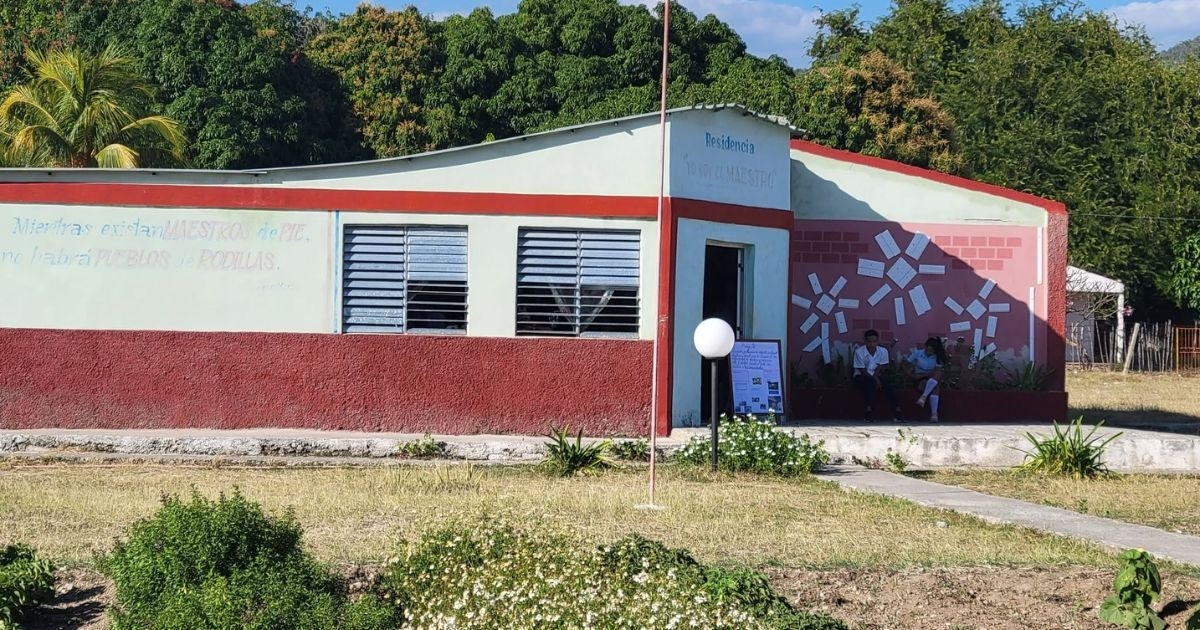
The United Nations Children's Fund (UNICEF) works alongside 30 schools in the eastern provinces of Guantánamo, Granma, and Santiago de Cuba to gradually improve water, sanitation, and hygiene conditions in these educational centers, as the organization announced on its social media on Friday.
The initiative, funded by the Government of Japan, will benefit more than 5,000 students and around 1,000 teachers through actions aimed at strengthening the resilience of the participating schools.
The program employs the "Three Stars" methodology, an approach developed by UNICEF aimed at guiding educational centers from basic conditions to the attainment of national standards in a gradual manner, addressing both the habits of the school community and the available services and infrastructure.
A key first step is the collection of data on actual access to water, hygiene, and sanitation in each school. According to UNICEF Cuba, this process is already underway: during July, schools in Granma such as "Ciro Frías Cabrera," "Camilo Cienfuegos," and "Conrado Benítez" in Pilón, as well as "Adalberto Pesant" and "Viet Nam Heroico" in Niquero, were visited, among others.
The program is part of a broader project formalized in December 2025, when Japan and UNICEF signed a cooperation agreement in Havana valued at approximately one million dollars with a planned duration of 24 months. This agreement also includes the improvement of maternal and child health services in vulnerable communities in eastern Cuba and anticipates an indirect benefit for around 145,000 people.
The intervention comes at a time of severe water and sanitation crisis in the region. In April 2026, the international organization itself acknowledged that 50 water supply systems in Santiago de Cuba were out of operation, and in that province, there have been cycles of up to 21 days without service in several communities.
In September 2025, over three million people in Cuba were suffering from a total or partial lack of water, a situation attributed to drought, energy shortages, and the deterioration of pumping infrastructure due to decades of neglect.
In Guantánamo, the damage caused by hurricanes has affected more than 270 schools, with over 20 of them having to operate in alternative locations. In October 2025, an alert was raised regarding a hepatitis outbreak in schools in Las Tunas, also in the east, directly linked to poor sanitary conditions.
It is not the first time that UNICEF has acted in the area. In November 2025, the organization installed three portable water purification plants in Granma capable of producing safe water for over 21,000 people daily, distributed more than 3,300 family hygiene kits, and donated materials to rebuild schools in Santiago de Cuba following the passage of Hurricane Melissa.
The "Three Stars" methodology progresses in stages: from low-cost improvements such as handwashing with soap and daily cleaning of bathrooms, to the gradual adaptation of facilities to meet national standards, with the aim of ensuring access to clean drinking water and gender-segregated restrooms at each center.
Related videos:
Filed under: