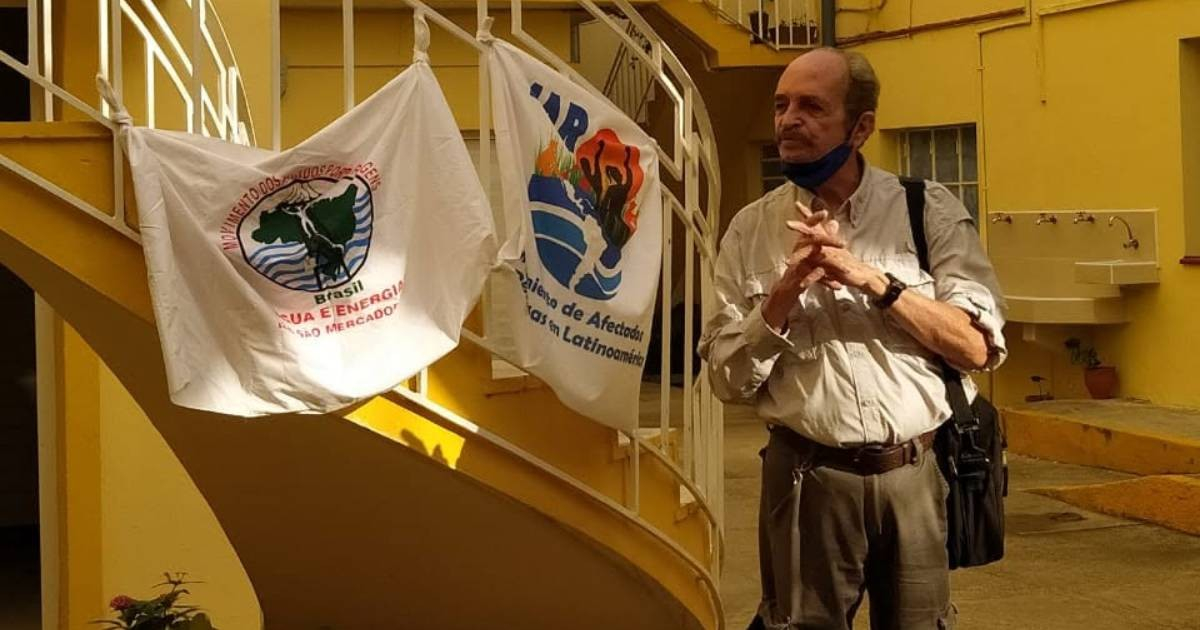
Cuban engineer Luis Bérriz Pérez, a pioneer in the development of solar energy in Cuba and president of Cubasolar since its founding in 1994, passed away this Thursday, as reported by the magazine Juventud Técnica.
The publication, with which the scientist collaborated for years, did not specify the causes of his death.
Bérriz dedicated over four decades to the study and promotion of renewable energy sources, long before solar generation became as prominent as it is today in a Cuba affected by a prolonged energy crisis and daily blackouts.
Graduated with a degree in Mechanical Engineering in Czechoslovakia in 1965, he later attained a doctorate in Technical Sciences. Throughout his career, he was affiliated with the University of Oriente, the Ministry of Food Industry, and various energy research projects.
One of his main contributions was the establishment, on May 11, 1984, of the Solar Energy Research Center (CIES) in Santiago de Cuba, regarded as the first specialized center in Cuba focused on this energy source.
A decade later, in November 1994, he founded Cubasolar, officially known as the Cuban Society for the Promotion of Renewable Energy Sources and Environmental Respect, an organization he chaired until his passing.
He also played a significant role in scientific dissemination. He founded the magazines Eco Solar and Energía y Tú and since the 1970s, advocated for Cuba's potential to harness solar radiation.
Among his works from that time is "Perspectives on the Utilization of Solar Energy in Cuba," in which he presented one of the first maps showing the distribution of solar radiation across the national territory.
"If the world has much more clean energy than we need, why then use the polluting kind?" Bérriz stated in an interview published in 2012, a phrase that encapsulated much of the vision he advocated throughout his career.
His research also addressed territorial development through the use of local energy resources and applications such as solar systems for heating water and solar dryers.
Bérriz received numerous accolades, including the Carlos J. Finlay Order, one of the main scientific distinctions awarded in Cuba, as well as the Commemorative Coin for the 30th Anniversary of the Academy of Sciences of Cuba.
Her death comes at a time when solar energy is playing an increasingly significant role in the island's electricity generation. The Cuban regime has promoted records in photovoltaic generation and is maintaining a program for the construction of new solar parks.
However, that deployment has not managed to end the prolonged blackouts that affect Cubans daily, amidst the deterioration of thermoelectric plants, fuel shortages, and limitations on storing electricity generated during daylight hours.
Related videos:
Filed under: