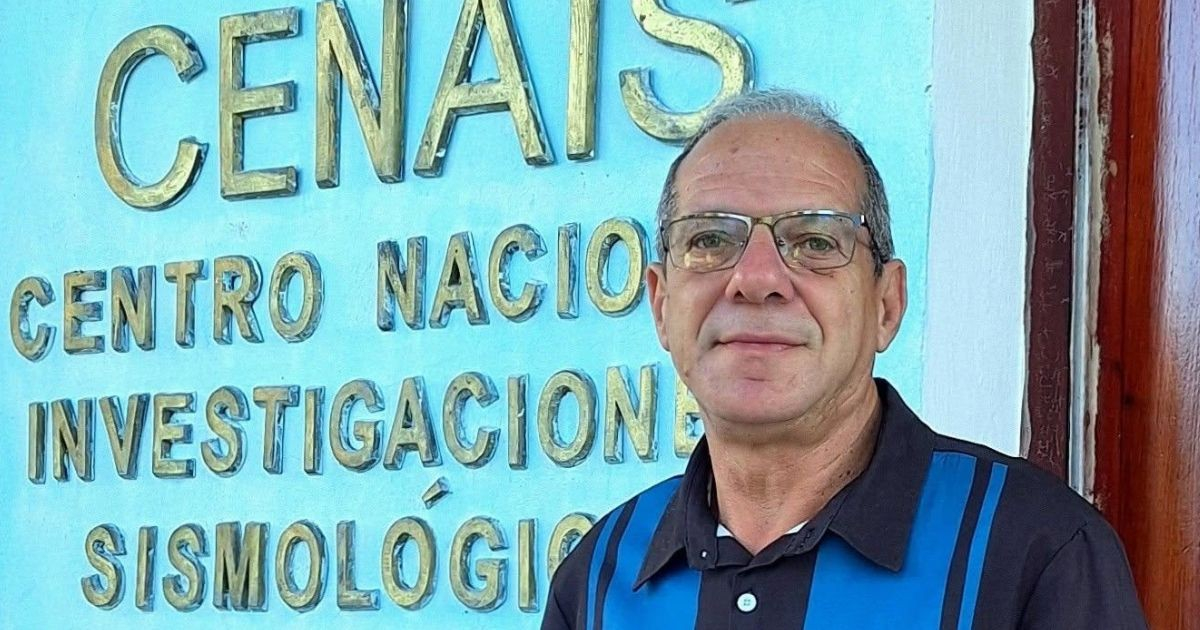
The Doctor of Science Enrique Diego Arango Arias, technical deputy director of the National Center for Seismological Research (CENAIS) and head of the National Seismological Service of Cuba, described the dissolution of the Ministry of Science, Technology, and Environment (CITMA), approved by the National Assembly of People's Power, as a "serious mistake".
In an extensive Facebook post titled "A Sad Day for Cuban Science," the seismologist presented a series of arguments that can be summarized in the following ideas:
- The elimination of CITMA was approved without consultation or debate with its workers and specialists.
- No scientifically validated study was presented to justify the restructuring or its advantages.
- The measure dismantles an institution with over 30 years of experience and national and international recognition.
- The change impacts the sense of belonging and motivation of scientists and researchers.
- Given the current crisis in Cuba, a reorganization of this magnitude seems untimely.
- Criticizes the lack of clarity regarding the future of institutions and their functions.
- It warns that the new structure could weaken strategic areas of science, the environment, and risk management.
- He describes the decision as a mistake both in terms of its execution and its substance, having been made without consensus.
The Cuban parliament approved the Law on the Organization of the Central State Administration on Thursday, which reduces the central government agencies from 27 to 21 and abolishes the Ministry of Science, Technology, and the Environment (CITMA), redistributing its functions among two new ministries:
- the Ministry of Higher Education, Science and Innovation
- the Ministry of Environment, Habitat, and Hydraulic Resources.
The regime presented the measure as part of a process to "reorganize, resize, and perfect" the state apparatus, according to the statement made before parliament by the Secretary of the Council of Ministers, José Amado Ricardo Guerra. As part of this reorganization, Prime Minister Manuel Marrero Cruz announced the elimination of more than 92,000 positions across four ministries.
Arango, one of the most recognized scientific figures in the country in the field of seismology, rejected both the substance and the manner of the decision. "Many of us at CITMA have been hurt by this decision made without consultation, behind everyone's backs, as if we were mere pieces in a game," he wrote.
The seismologist reported that at no time were workers or officials from the ministry summoned to discuss the measure, nor was a scientific study presented to support its advantages. "The vast majority of the workers in our organization are not even aware that CITMA is disappearing," he warned, noting that he had previously sent those objections to the National Assembly without receiving a response.
Among the technical inconsistencies highlighted by Arango is the classification of CENAIS solely as an "Early Warning" institution, overlooking its role as an Entity for Science, Technology, and Innovation.
He also noted a contradiction in the distribution of nuclear competencies: the control over the peaceful use of nuclear energy would remain with the Ministry of Higher Education, while the Center for Radiation Protection and Hygiene, which is specifically responsible for radiological safety, would move to the Ministry of Environment. "It seems that those making these decisions are unaware of the mission and functions of the institutions subordinate to CITMA," he stated.
The bill was published for public consultation on June 8, 2026, although Arango noted that this consultation was "very rushed" and did not reach the workers of the affected ministry. "It has been a serious mistake, both in form and in content in the way it was handled, and in this sense, we will have to see the consequences. At this moment, the objective and subjective factors for these changes do not exist," concluded the seismologist.
CITMA was established on April 21, 1994, during the Special Period, at the initiative of Fidel Castro. Its first minister was Rosa Elena Simeón.
Related videos:
Filed under: