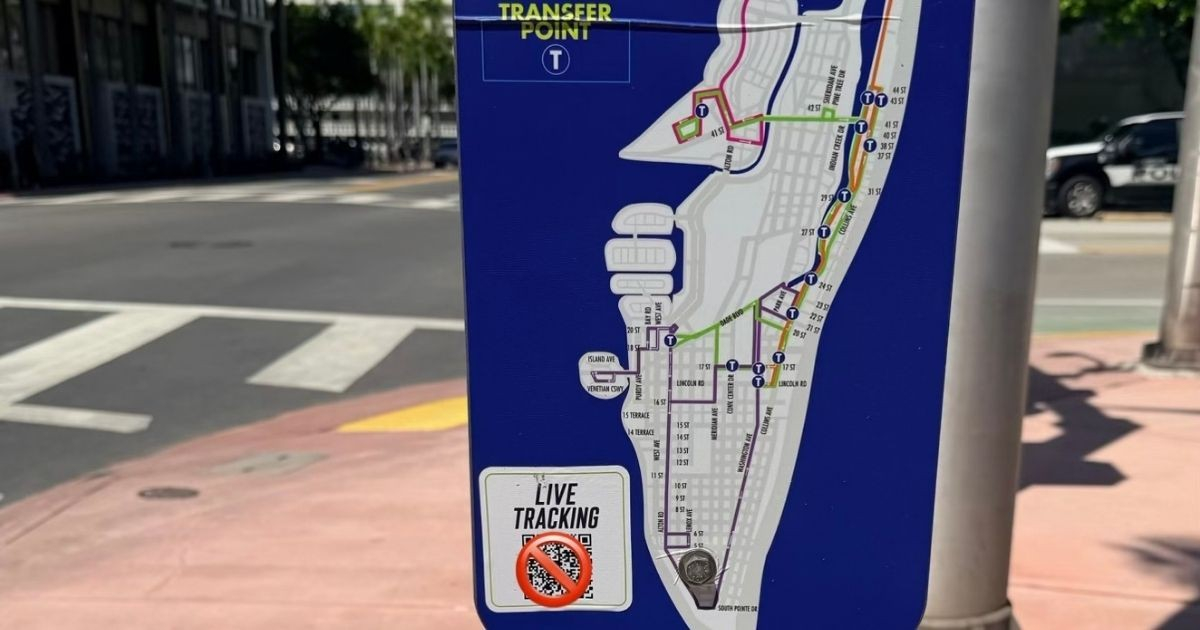
The city of Miami Beach issued a warning to residents and visitors this Sunday after detecting unauthorized QR codes placed on some signs for its tram service, which may lead users to an app unrelated to the local government and ask for money.
The alert was shared by the official account of the city of Miami Beach on X, which reported that its teams are already working to remove the stickers found on the signage.
According to the warning, by scanning those codes, users are directed to an application that is not sponsored by Miami Beach, even though it claims to provide real-time tram tracking and requests a payment for that supposed service.
The authorities emphasized that Miami Beach does not charge for inquiring about information, routes, or real-time tracking of its trams.
In fact, the Miami Beach trolley service is free and operates daily from 8:00 a.m. to 11:00 p.m., with an average frequency of about 20 minutes on its four routes.
The city itself also provides official tools to check the location of vehicles.
Miami Beach also states on its official website that passengers can use their Trolley Tracker or the Transit app to track the vehicles.
The city even covers the cost of the premium subscription "Royale" from Transit for users checking the trams in Miami Beach, so there is no need to pay to access tracking.
"The City of Miami Beach DOES NOT charge for information or tracking of the trolleys," emphasized the local government, which recommended consulting only the official channels for route, schedule, and update information.
The city did not disclose how many stickers were found, in which specific areas they appeared, nor whether any user made payments or suffered financial losses through the stated application.
However, the incident recalls a type of fraud involving QR codes that has already compelled other authorities in South Florida to take extraordinary measures.
In December 2024, the Miami Parking Authority began to remove QR codes from over 7,000 parking signs after detecting fake stickers placed over legitimate codes.
The authorities then warned that they could lead to fraudulent sites capable of compromising the drivers' banking data.
The measure was later expanded to remove QR codes from Miami's parking signage, specifically so that any sticker of that type could be immediately identified as suspicious.
Also in Fort Lauderdale, authorities warned in November 2024 about fake QR codes on parking meters and payment signs.
The stickers led to pages designed to try to obtain banking information, and the city requested to use only codes printed directly on official signage.
In 2025, the Orlando police discovered a similar operation in the downtown area: approximately 200 fraudulent QR codes were found on parking meters, with links that directed drivers to fake pages to obtain personal and financial information.
Scams involving QR codes have already raised alerts among residents of South Florida.
In August 2024, a Cuban resident in Miami warned about an unsolicited package that included a suspicious QR code asking for personal information, due to the risk that this information could end up in the hands of scammers.
A month later, another alert drew attention to QR codes included in unexpected packages, with the recommendation not to scan links from unknown sources that could compromise personal information.
The warning came from Cuqui La Mora: "I'm going to share this so it doesn't happen to you. I've seen on social media that there is a scam where they send you a product from Amazon to your home in your name, with all your details, and when you open it, it's something you didn't order," she explained.
Related videos:
Filed under: