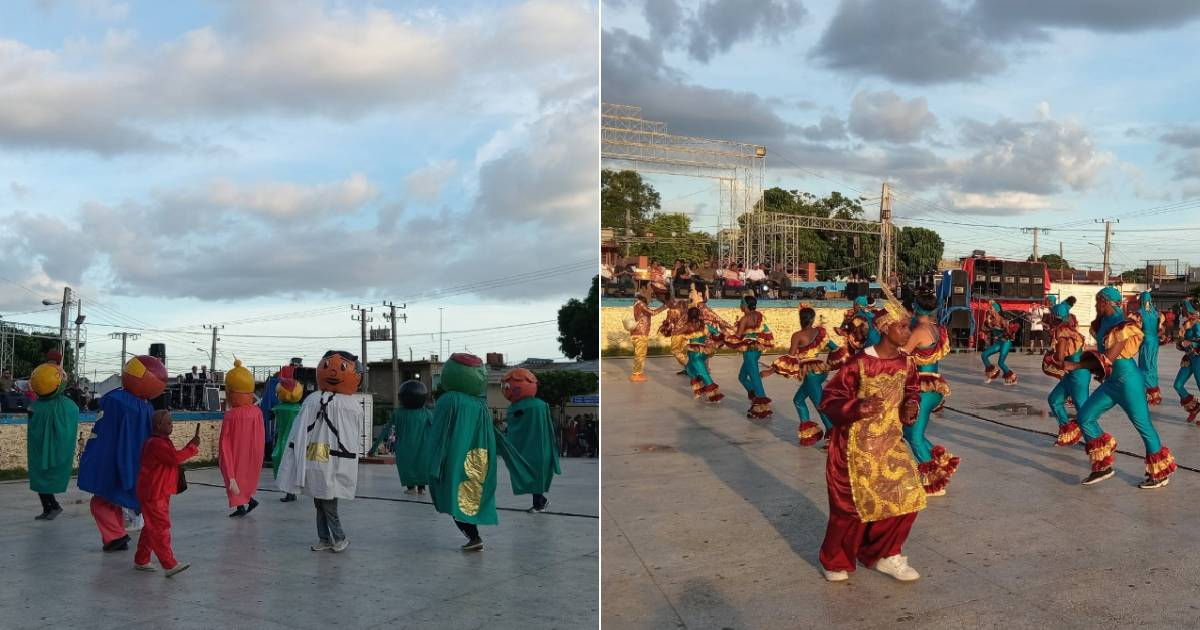
The authorities in Guantánamo organized a closing event for Summer 2026 this Saturday, featuring roasted pork, churros, piña colada, and cultural activities. However, on the same day, public transportation was paralyzed in several settlements due to a lack of fuel, according to an official statement.
The Municipal Administration Council reported that, "due to the fuel shortage," there would be no transportation provided by the UEB Urban Buses during the day, affecting the neighborhoods of Paraguay, Maqueisito, and other communities in the second ring. The entity requested that residents organize their travels in light of the situation and displayed the official profile Mi Guantánamo on Facebook.
The suspension of the service coincided with the Guantanamera Night, an event scheduled between 6:00 pm and midnight on Calixto García Street, featuring food offerings, music, and recreational activities for families, reported the source itself.
In the Plaza 24 de Febrero, the restaurants El Saltadero, León de Oriente, and La Avellaneda operated, along with stalls run by self-employed workers selling cotton candy, toys, small bicycles, churros, and piña colada.
Along the street, establishments such as Jaibo, La Bodeguita, Noche Azul, Bayatiquiri, Guamá, Antillas, 1870, Los Corales, La Criolla, Venus, and México Lindo, among others, also participated.
The program also included screenings of videos and musical films at the Cine Huambo and the traditional Retreta in Parque Martí. Throughout the day, other activities took place, including a recreational sports festival at the Pedro Agustín Pérez multifunctional plaza, performances by the Carpandilla Variety Company at the Elpidio Valdés amusement park, and a Saturday of books at the Asdrúbal López bookstore, according to a report from the Cuban News Agency.
The coincidence exposes the unequal distribution of available resources amid the crisis facing the province. While entire communities were left without transportation due to the lack of fuel, the authorities maintained a recreational schedule that included cultural, gastronomic, and commercial activities throughout the day.
The fuel deficit has also affected other essential services in Guantánamo. During August, the lack of fuel hampered garbage collection by trucks and forced a reliance on hand carts and animal-drawn methods.
The shortage has also impacted agricultural activity. Tons of mangoes went to waste in Río Seco because the collection agencies did not have the means to gather the harvest.
The provincial energy context worsened on August 27, when the entire eastern region of Cuba was disconnected from the National Electric System, following the simultaneous shutdown of three thermoelectric units.
The easternmost province of Cuba relies on a single 110 kilovolt line from Santiago de Cuba to connect to the national grid, a situation that increases its vulnerability to system outages.
This Saturday's events presented a challenging image for the residents of the province. While some communities had to seek alternatives for transportation due to the suspension of public transport attributed to a fuel shortage, the center of Guantánamo hosted a closing summer program featuring restaurants, vendors, music, and recreational activities.
The pattern was repeated in other provinces during the summer. In Holguín, the closing festivities sparked outrage because they were held in a context of high energy deficits that have condemned several areas to blackouts lasting over 50 continuous hours.
The Fiestas de San Joaquín in Guantánamo, celebrated in mid-August, had already set the tone. The official newspaper Venceremos acknowledged at that time that the program was "adapted to the current real conditions of the territory," a formula that summarizes the entire summer in Guantánamo.
Related videos:
Filed under: