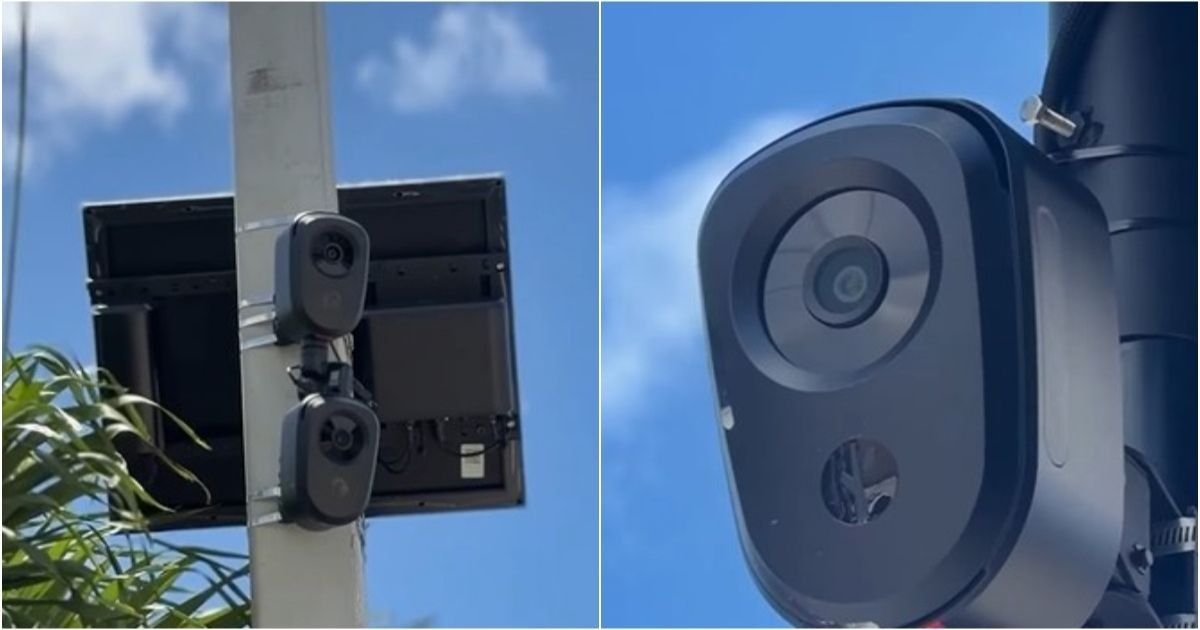
The south of Florida has become one of the areas with the highest density of license plate reader cameras in the country: according to the map from the independent site DeFlock, more than a thousand Flock devices are currently operating in the region, and this figure raises concerns.
In Miami-Dade, there are about 372 units, a significantly lower number than the 863 installed in Broward. This has sparked a growing debate about mass surveillance and citizen privacy.
What are Flock cameras and why are many people not fond of them?
Unlike conventional cameras, Flock's automatic license plate readers do not merely photograph vehicles; they capture the license plate, make, model, color, and even specific characteristics of the car such as dents, roof racks, and bumper stickers. They record the exact date, time, and location of every car that passes by.
"You pass by a location where there is a camera, the camera scans and records that you passed by, that is basically metadata," explained to Univisión 23 Rod Soto, a cybersecurity researcher, who added that this data allows tracking the complete journey of a vehicle.
Martha Torres, spokesperson for the organization Iniciativa Libre Florida, questioned the use of that information. "We don’t know who controls it, how it is controlled, to whom it is sold, and who is managing this information about citizens."
Her concern is well-founded. According to the Institute for Justice, by mid-July 2026, at least 24 cases had been documented of police officers using the Flock network to track ex-partners or other individuals without legal justification.
Among the most severe cases is that of an officer from Orange City who tracked his ex-girlfriend's license plate at least 69 times during the summer of 2024, and that of an agent from Haines City who accessed his ex-wife's vehicle information 717 times over more than two years, fabricating investigative justifications.
The portal DeFlock warns that these cameras collect data on millions of cars, even if the driver is not suspected of a crime. “They are marketed as essential tools for fighting crime, but they overlook the powerful tools that the Police already have to track criminals, such as mobile phone location data, creating a legal loophole that does not require a judicial warrant.”
The rejection of Flock has also been expressed in a more radical manner: in July, two cameras were vandalized in Fort Lauderdale -melted and cut-; such actions have also been reported in other cities across Florida and the country.
What is the government's position?
Governor Ron DeSantis entered the debate this week with strong statements. "These cameras, the license plate readers, I believe they are out of control," he stated during an event at Florida International University (FIU) in Miami, where he urged the state legislature to approve regulations to protect citizens' privacy.
"I am fully in favor of law enforcement having tools to hold criminals accountable. But I do not want this to turn into a surveillance state," stated the governor, who suggested using New Hampshire's legislation as a model, which mandates the deletion of captured data within just three minutes unless it is linked to an active case.
However, DeSantis's stance is at odds with decisions made by his own administration: according to El Nuevo Herald, over the past year, his cabinet approved approximately $2.5 million in state grants—funded by migration resources—for six local police agencies to acquire Flock cameras. Additionally, the Florida Highway Patrol used that network more than 250 times between March and May 2025 for immigration control operations.
Flock Safety, founded in 2017 in Atlanta by Garrett Langley, operates over 120,000 cameras in 49 states. In response to criticism, the company announced in August a reduction of the data retention period from 30 days to seven days, although critics argue that this measure is insufficient without binding legal regulation.
DeSantis acknowledged that any real change would have to go through the state Legislature and urged voters to directly pressure their representatives, although so far there is no bill in Florida that specifically regulates these cameras.
Related videos:
Filed under: